Tenant Doorbell Camera Privacy in Shared Rental Areas
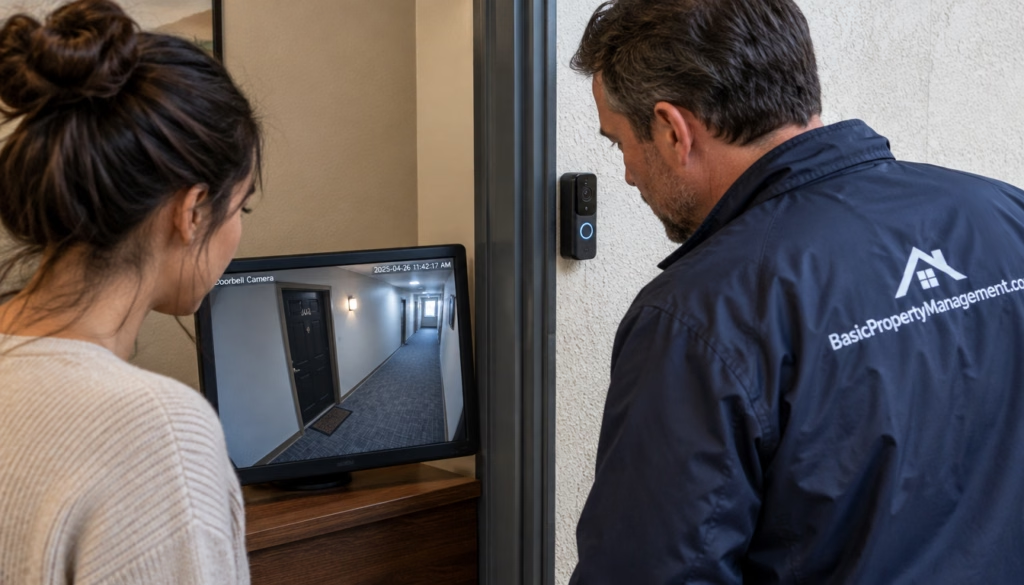
A resident complains that the camera across the hallway records everyone entering and leaving their apartment. Another says the microphone captures voices near the elevator. Management then discovers that the tenant screwed the device into a door frame without approval. Those are three different problems, and each may require a different fix.
Tenant doorbell camera privacy complaints become easier to resolve when management separates the camera’s field of view, audio settings, and physical installation. Document what the device can actually capture, review how the tenant attached it to the building, and identify the narrowest change that addresses the complaint. Management may resolve the issue by repositioning the camera, disabling audio, changing motion zones, approving a different mount, or requiring removal.
Build a Stronger Rental Property Business
Subscribe to our 2X weekly newsletter to learn more about managing tenants, protecting cash flow, improving rental operations, and making better real estate investment decisions.
Record the Camera Position, View, Audio, and Mounting
Start with the installation exactly as management finds it. Photograph the device from the hallway, record where the tenant mounted it, and document any screws, wiring, adhesive, brackets, or other alterations to the door, frame, wall, or trim.
Ask the tenant which functions they use. A smart doorbell may activate through motion detection, record when someone presses the button, provide a live view, capture audio, or store clips in the cloud. When practical, ask the tenant to show management the current live view without opening unrelated stored recordings.
A short comparison keeps the review focused:
| Issue | What management should verify | Possible correction |
|---|---|---|
| Field of view | Whether another unit’s door or interior dominates the image | Repositioning, wedge mount, privacy mask |
| Audio | Whether the microphone records speech in the hallway | Disable audio |
| Motion detection | Whether ordinary traffic repeatedly triggers recording | Narrow motion zones |
| Installation | Whether the tenant drilled, rewired, or altered building components | Approved mount, repair, or removal |
| Account security | Whether the tenant protects recordings from unauthorized access | Strong credentials and multi-factor authentication |
Check Whether the Camera Centers on Another Tenant’s Door
A hallway camera will often capture some shared-area activity. The harder complaint arises when the tenant points the device directly at another resident’s entrance or records the interior whenever that door opens.
Stand at the device and examine the relationship between the units. Directly opposing apartments create a different situation from doors offset down the hall, and wide-angle lenses can capture more than the camera housing suggests.
Look for a narrower configuration before requiring removal. A wedge mount may redirect the lens toward the tenant’s approach path. Privacy zones can block part of an image, while motion zones can reduce recording triggered by an elevator, stairwell, or neighboring doorway.
Management does not need to eliminate every incidental image of someone using a common hallway. The goal is to avoid concentrating surveillance on another resident’s home when the tenant can reasonably monitor their own entrance with less coverage.
Determine Whether the Camera Records Audio
Audio needs a separate review because recording spoken conversations can raise issues that video alone does not.
Federal law in 18 U.S.C. § 2511 regulates interception of oral communications and contains consent-related provisions, while states may impose their own requirements. Florida’s communications interception statute separately regulates interception and disclosure of oral communications, which shows why management should check the rules that apply where the property sits instead of relying on one national assumption.
From an operational standpoint, management may solve the complaint by requiring the tenant to disable the microphone while leaving video enabled. Check whether the device allows that setting and decide whether any approval should require the tenant to keep audio off.
Management does not need to decide whether a particular hallway conversation qualified for legal protection. Focus on what the device records and what operating conditions make sense for the property.
Review How the Tenant Attached the Device to the Building
A camera can create a property issue even when its viewing angle causes no concern. Check the lease, building rules, and modification procedures to determine whether the tenant needed permission before changing the door, frame, wall, wiring, or existing doorbell equipment.
Inspect the actual installation rather than assuming a battery-powered camera caused no alteration. Screws can penetrate a door or frame, adhesive can damage finishes, and a hardwired replacement may interfere with existing low-voltage wiring. A removable over-the-door mount may create fewer property concerns than drilling or rewiring.
Also establish what the tenant must restore at move-out. Written approval should leave no doubt about who repairs holes, damaged trim, wiring changes, or abandoned brackets.
Correct the Camera View, Audio, or Mounting Before Requiring Removal
Once management understands the view, audio setting, and mounting method, address the actual problem rather than defaulting to removal.
If the lens centers on the opposite apartment, ask the tenant to reposition it. If the video angle works but the microphone records hallway conversations, require the tenant to disable audio. When excessive motion recording creates the problem, the tenant may be able to narrow motion zones or reduce sensitivity. An acceptable camera with an unauthorized bracket may simply need a different mount.
Removal makes more sense when the device cannot meet the building’s conditions, the tenant refuses necessary adjustments, or the installation creates property damage management will not approve.
Give the tenant a correction that management can verify. “Reposition the camera so the opposite doorway falls outside the primary field of view and disable audio recording” gives everyone a clearer target than “fix the privacy issue.”
Put Approved Camera Conditions in Writing
Verbal permission becomes difficult to administer when another complaint arises or a different tenant asks to install a similar device.
A written approval should identify the location, mounting method, relevant video or audio restrictions, required privacy or motion settings, and the tenant’s responsibility for removal and restoration. It should also state whether moving the device or replacing it with a materially different model requires another review.
Keep the approval tied to conditions management can verify. Management can confirm where the camera points and whether the tenant enabled audio; it cannot promise that another resident will never appear in shared-hallway footage.
Apply the same criteria to comparable installations throughout the building.
If the building allows these devices broadly, standardize what tenants may attach to a door or frame. Management may allow removable mounts while prohibiting drilling, and hardwired replacements may require prior review by management or a qualified contractor. Consistent installation standards reduce disputes and simplify move-out inspections.
Respond to the Neighbor Without Sharing Recordings
The complaining resident should know management investigated the concern, but management does not need to give that resident access to another tenant’s camera account or footage.
Ask what prompted the complaint. A camera aimed at their door, a recording indicator that activates whenever they leave, audible two-way communication, or evidence that someone shared clips elsewhere each points to a different problem.
After reviewing the device, explain the corrective action at a useful level. Management can say that it required the tenant to reposition the camera, disable audio, or change the mounting method without disclosing credentials or unrelated recordings.
Verify compliance directly rather than asking one tenant to monitor another.
Require Basic Security for Internet-Connected Cameras
A connected camera can create another privacy problem if someone gains unauthorized access to its account or stored recordings.
The FTC’s guidance for securing home security cameras recommends unique passwords, software updates, encryption, and two-factor authentication when available, which gives management a reasonable basis for basic account-security expectations.
Do not collect the tenant’s password or administrator credentials. Instead, require the tenant to secure the device, install updates, and control account access as a condition of approval.
Reinspect After Repositioning, Modification, or Removal
Close the complaint only after management verifies the agreed correction. Check the camera’s new direction, visible mounting changes, and any settings that formed part of the resolution.
Our rental property inspection scheduling guide explains how landlords can schedule targeted follow-up inspections around specific property concerns rather than changing the inspection schedule for every unit.
If management required removal, inspect the door, frame, wall, or wiring afterward. Open a separate maintenance item for any remaining damage instead of assuming that removal solved the installation problem.
Require Approval Before Future Hallway Camera Installations
Repeated complaints usually mean tenants do not know which devices require approval or what information management needs before installation.
A simple request process can ask for the device model, proposed location, mounting method, audio capability, wiring needs, and a photograph showing the intended direction. Management can review those details before a tenant drills into a door frame or creates a dispute with the apartment across the hall.
Distinguish cameras that tenants use entirely inside their units from devices mounted on doors, exterior walls, balconies, or other locations that affect shared space or building components.
Tenant doorbell camera privacy complaints become more manageable when landlords separate recording functions from physical installation. Check what the camera sees, whether it records audio, how the tenant attached it, and which adjustment will resolve the specific complaint.
When management allows the device to remain, document the approved setup and verify the correction. If the camera cannot meet the building’s conditions, require the tenant to remove it and restore the affected property through the same process management uses for other unauthorized installations.