How Often Should You Inspect a Rental Property? [Free Checklist]
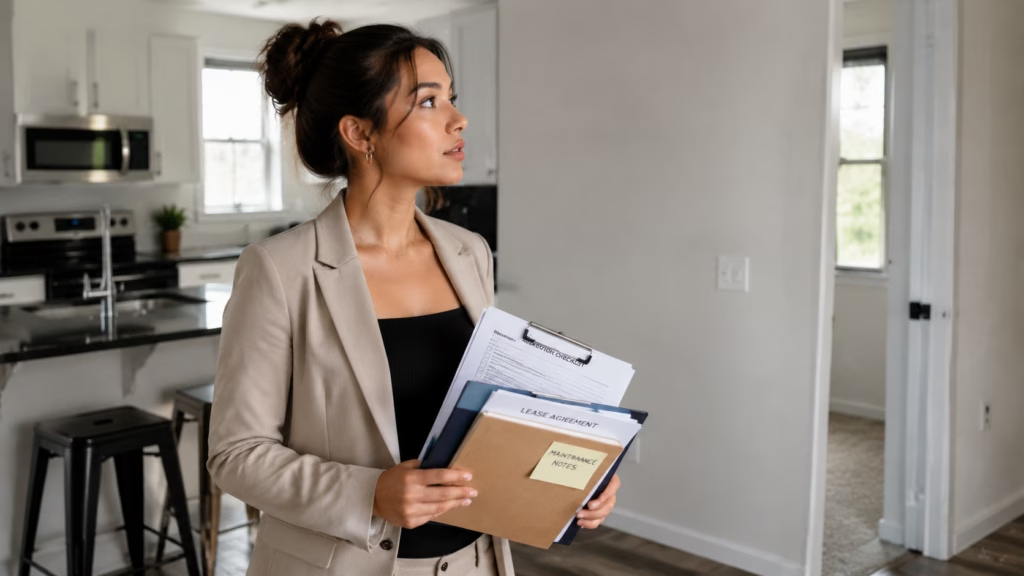
Rental property inspection frequency is not one-size-fits-all. Some properties may need only a few scheduled inspections each year. Others may need closer oversight because of age, tenant history, maintenance problems, weather exposure, or local compliance rules.
If you inspect too rarely, small issues can turn into expensive repairs. If you inspect too often, you may frustrate a good tenant or violate local notice requirements. The goal is to create a reasonable inspection schedule that protects the property while respecting the tenant’s right to quiet enjoyment.
Free Rental Property Inspection Checklist
Download our free Rental Property Inspection Checklist in editable Word and PDF formats when you sign up for our 2X weekly newsletter. You’ll also receive practical property management and real estate investing tips designed to help landlords protect rental income, reduce surprises, and manage properties with more confidence.
Build an Inspection Schedule Around Risk, Not Habit
A common approach is to inspect a rental property at move-in, once or twice during the lease term, and again at move-out. That may be enough for a newer, well-maintained property with a responsible long-term tenant. But it may not be enough for an older rental, a property with repeated maintenance issues, or a tenant who has already shown signs of poor care.
Instead of choosing a fixed number and applying it to every property, build your inspection frequency around risk. Ask yourself what the property needs based on condition, tenant behavior, lease obligations, and local rules.
A practical inspection schedule may include:
- Move-in inspection
- 90-day inspection after a new tenant moves in
- Mid-lease inspection
- Seasonal maintenance inspection
- Renewal inspection
- Move-out inspection
You may not need every inspection for every rental. But you should know which inspection serves which purpose.
Start With the Lease and Local Law
Your Lease Should Define Access Procedures
Your lease should explain when inspections may occur, how much notice you will provide, how entry will be handled, and what types of inspections are allowed. This does not mean you can ignore state or local law. The lease should work with the law, not around it.
Before setting an inspection schedule, confirm that your lease gives you clear access rights for repairs, maintenance, safety checks, and property condition reviews. If the lease is vague, renewal is a good time to improve the language.
Local Notice Rules Control the Process
Landlord entry rules vary by state and sometimes by city. Some jurisdictions require specific advance notice before entering a rental unit, while others use broader “reasonable notice” standards. Emergency access is usually treated differently from routine inspections.
Because landlord access is not uniform nationwide, your schedule should be built around the notice rules, permitted reasons for entry, and tenant privacy protections reflected in state landlord access laws. That keeps inspections from feeling arbitrary and reduces the risk of disputes.
Adjust Frequency by Property Type
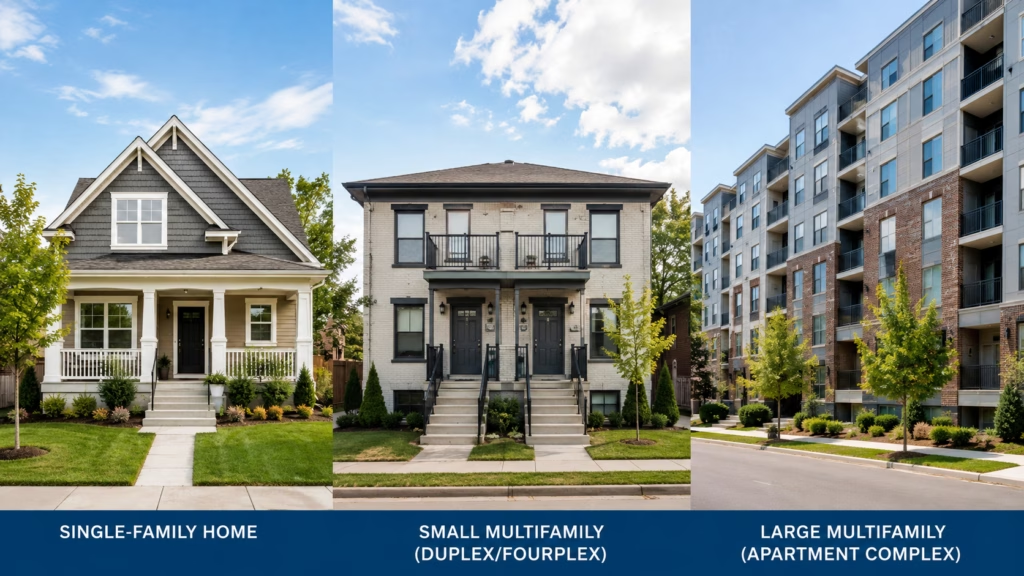
Single-Family Rentals
Single-family rentals usually require attention to both interior and exterior condition. You may need to inspect landscaping, fencing, gutters, exterior paint, roof condition, appliances, HVAC filters, plumbing fixtures, and tenant-caused wear.
For a stable single-family rental, one mid-lease inspection plus move-in and move-out documentation may be enough. If the tenant is new, the home is older, or the property has expensive exterior systems, a 90-day inspection after move-in can help you catch early issues.
Small Multifamily Properties
Small multifamily properties create more shared-area concerns. You may need to monitor common entries, stairways, laundry areas, lighting, parking, trash areas, exterior drainage, and shared plumbing.
With duplexes, triplexes, and fourplexes, you may inspect common areas more frequently than unit interiors. This helps you identify building-level issues without unnecessarily entering occupied units.
Larger Multifamily Properties
Larger multifamily properties usually need a more formal inspection process. Unit interiors, common areas, mechanical systems, life-safety items, exterior conditions, and tenant-reported maintenance should all be tracked.
HUD’s NSPIRE inspection standards focus heavily on health, safety, and functional defects rather than cosmetic appearance. Even if your property is not HUD-assisted, that framework is useful because it reminds you to prioritize issues that affect habitability, safety, and building performance.
Adjust Frequency by Tenant History
New Tenants
A 90-day inspection is often useful after a new tenant moves in. This gives you a chance to confirm the tenant understands maintenance responsibilities, is reporting issues properly, and is caring for the property.
This inspection does not need to feel confrontational. Position it as an early property condition check and an opportunity to address small maintenance concerns.
Reliable Long-Term Tenants
If a tenant pays on time, reports repairs early, keeps the property clean, and follows the lease, you may not need frequent interior inspections. A mid-lease or annual inspection may be enough, along with seasonal maintenance visits when appropriate.
Good tenants still need oversight, but they usually don’t need excessive monitoring.
Higher-Risk Tenants
If you have documented concerns, such as repeated lease violations, unauthorized occupants, unauthorized pets, poor housekeeping, repeated tenant-caused repairs, or refusal to report problems, you may need more frequent inspections within the limits of the lease and local law.
Be careful to stay consistent and document your reasons. Inspection frequency should be based on property protection and lease compliance, not personal conflict.
Use Seasonal Inspections to Prevent Bigger Repairs
Seasonal inspections are especially useful in markets with extreme heat, freezing weather, heavy rain, humidity, or pest pressure.
In spring and summer, focus on HVAC performance, drainage, landscaping, pest activity, roof leaks, and exterior wear. In fall and winter, check heating systems, gutters, weatherstripping, exposed pipes, smoke and carbon monoxide alarms, and signs of moisture intrusion.
Moisture deserves special attention. The EPA’s guidance on mold and moisture control reinforces a simple but important point for landlords: controlling moisture is the best way to reduce mold risk. Regular inspections can help you catch leaks, ventilation problems, damp areas, and tenant habits that may create larger property damage.
Document Every Inspection
Each inspection should produce a written record. Take date-stamped photos where appropriate, note the condition of major rooms and systems, identify needed repairs, and record tenant-related concerns separately from ordinary wear.
Your inspection notes should answer three questions:
- What condition is the property in today?
- What needs repair or follow-up?
- What changed since the last inspection?
This documentation protects both you and the tenant. It also makes security deposit decisions, maintenance planning, and lease renewal discussions easier.
Use a Rental Property Inspection Checklist
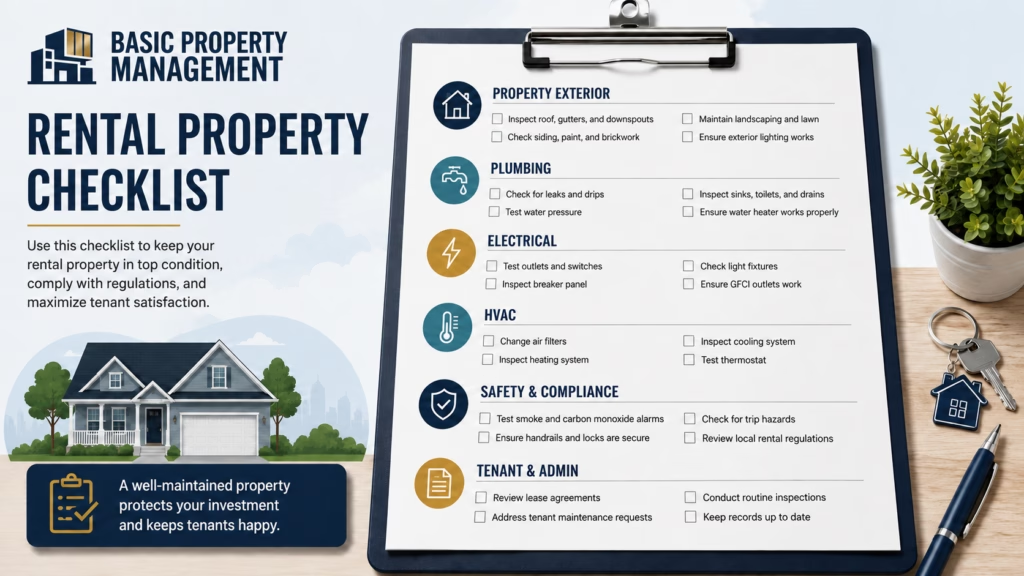
A written inspection checklist helps you stay consistent from one inspection to the next. It also reduces the chance that you overlook important items such as HVAC filters, plumbing leaks, appliance condition, smoke alarms, exterior drainage, pest activity, or tenant-caused damage.
This is especially useful if you own more than one rental property or work with a property manager. Instead of relying on memory, you can use the same checklist each time and compare property condition over time.
A good rental property inspection checklist should include:
- Property details and inspection date
- Type of inspection, such as move-in, seasonal, renewal, or move-out
- Interior condition by room
- Exterior and common-area items
- Safety and habitability concerns
- Maintenance issues requiring follow-up
- Tenant responsibility items
- Photos or notes for documentation
- Priority level for needed repairs
The goal is not to make inspections complicated. The goal is to create a repeatable process. When you use the same checklist consistently, it becomes easier to spot changes, document problems, plan repairs, and support lease renewal or security deposit decisions.
Free Rental Property Inspection Checklist
Download our free Rental Property Inspection Checklist in editable Word and PDF formats when you sign up for our 2X weekly newsletter. You’ll also receive practical property management and real estate investing tips designed to help landlords protect rental income, reduce surprises, and manage properties with more confidence.
Final Thoughts on Rental Property Inspections
Rental property inspection frequency should be reasonable, legal, and risk-based. Start with your lease and local notice rules. Then adjust based on property type, tenant history, seasonal exposure, and the condition of major systems.
For many rentals, move-in, mid-lease, seasonal, renewal, and move-out inspections provide a strong framework. For lower-risk properties, you may use fewer. For older or higher-risk properties, you may need more.
When you inspect consistently and document clearly, you are not just looking for problems. You are protecting the property, supporting tenant communication, and reducing the chance that small issues become expensive surprises.