How to Write Landlord Utility Agreement With Tenants [Template]
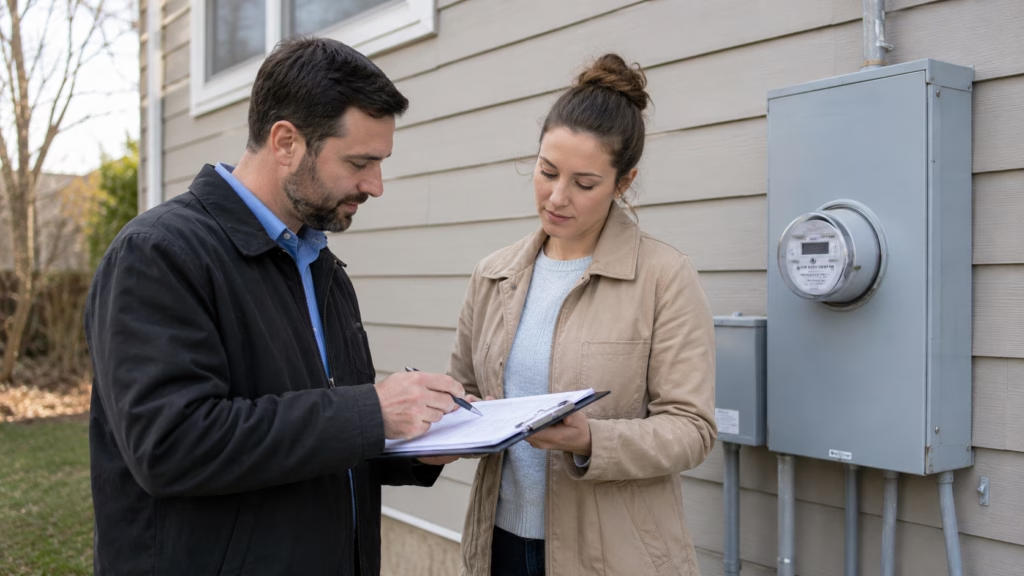
A landlord utility agreement with tenants is one of the most important lease addenda a rental property owner can use. Utilities affect monthly housing costs, tenant expectations, property operations, and potential disputes. If the lease does not clearly explain who pays for electricity, gas, water, sewer, trash, internet, or other services, disagreements can develop quickly.
A strong utility agreement does not need to be complicated. It should explain which utilities are included in rent, which utilities are paid directly by the tenant, how shared utilities are divided, when payments are due, and what happens if a bill is unpaid. For landlords, the goal is clarity before move-in, not conflict after the first bill arrives.
Get the Free Landlord Utility Agreement Template
Want a cleaner way to document who pays for electricity, gas, water, sewer, trash, and shared utilities? Sign up for our 2X weekly newsletter and get the free landlord utility agreement template instantly. You’ll also receive practical tips on real estate investing, rental property operations, tenant management, and property management best practices.
What Is a Landlord Utility Agreement?
A landlord utility agreement is a written lease clause or addendum that explains how utility services will be handled during the tenancy. It may be included inside the main lease or attached as a separate utility addendum.
The agreement usually covers:
- Electricity
- Gas
- Water
- Sewer
- Trash collection
- Internet or cable
- Lawn irrigation
- Common-area utilities
- Utility billing fees or administrative charges
- Procedures for starting, transferring, or ending service
The agreement should be signed by both landlord and tenant before occupancy. It should also match local law, the property’s metering setup, and the actual utility billing practices used at the property.
What Landlords Should Know About Utility Agreements
Utilities are often treated as a minor lease detail, but they can create significant financial and operational problems, including increased vacancy risk.
A poorly written utility arrangement can lead to unpaid bills, disputes over shared meters, service interruptions, or claims that charges were unclear. In multi-unit properties, shared utilities can be especially sensitive because tenants may question whether they are paying more than their fair share.
The U.S. Department of Housing and Urban Development recognizes that utility costs can materially affect housing affordability, especially where tenants pay some utilities separately from rent.
HUD’s discussion of utility allowances is focused on assisted housing, but the broader lesson applies to private landlords as well: utility costs should be transparent, reasonable, and clearly understood before the tenant commits to the rental.
Common Utility Billing Structures
Tenant Pays Utilities Directly
This is the simplest structure when each rental unit has separate meters. The tenant opens an account with the utility company and pays the provider directly.
This arrangement works well for electricity, gas, internet, and sometimes water. The lease should state which utilities must be placed in the tenant’s name, the deadline for transferring service, and whether proof of account setup is required before keys are released.
Landlord Pays Utilities and Includes Them in Rent
Some landlords include utilities in the rent. This can make the rental easier to market and simpler for tenants to budget. It is common in accessory dwelling units, rooms for rent, older buildings, or properties where separate meters are not available.
The drawback is cost risk. If tenants have no direct responsibility for usage, they may be less careful with heating, cooling, water, or electricity. If utilities are included, the lease should define reasonable use and explain whether excessive or wasteful use may trigger additional charges, where permitted by law.
Landlord Bills Tenant Separately
In some properties, the landlord receives the utility bill and then charges tenants for all or part of the cost. This may happen with water, sewer, trash, heating fuel, or master-metered buildings.
This arrangement requires careful drafting. The agreement should explain the billing formula, billing cycle, due date, documentation provided, and whether the landlord may charge administrative fees. Landlords should avoid vague language such as “tenant pays utilities” if the tenant is not paying the utility provider directly.
Shared Meter or Allocation Formula
Shared meters are common in older duplexes, triplexes, small multifamily buildings, and converted properties. A shared-meter utility agreement should be especially precise.
The agreement should state:
- Which units or areas are served by the shared meter
- How the bill will be divided
- Whether the formula is based on occupants, bedrooms, square footage, or another method
- Whether vacant units are included in the calculation
- How common-area usage is handled
- Whether the tenant may review the actual utility bill
The National Conference of State Legislatures explains that utility submetering allows multi-unit properties to bill occupants based on individual usage through additional meters behind the main utility meter. Where submetering is used, landlords should confirm that the billing system complies with state and local rules.
What to Include in a Landlord Utility Agreement
A Complete List of Utilities
The agreement should list each utility separately. Do not rely on broad language. A clear agreement might state:
Tenant is responsible for electricity and gas directly with the provider.
Landlord is responsible for water, sewer, and trash.
Tenant reimburses landlord for 50% of monthly water and sewer charges.
Internet, cable, and telephone service are optional and tenant’s responsibility.
This avoids confusion about services that are sometimes overlooked, such as trash, sewer, stormwater fees, pest-related utility charges, or propane tank refills.
Start and End Dates for Responsibility
The agreement should say when tenant responsibility begins and ends. For example, the tenant may be required to place electric service in their name before move-in and keep service active through the lease end date.
For move-out, the agreement should explain whether the tenant must keep utilities on until the final inspection is complete. This is important because landlords may need power, water, or heat to inspect the property, clean the unit, prevent freezing pipes, or complete repairs.
Billing and Payment Procedure
If the landlord bills the tenant for any utility, the agreement should explain the exact process. Include the billing frequency, payment due date, acceptable payment methods, late fee rules if allowed, and whether unpaid utility charges are treated as additional rent.
If the landlord charges based on an allocation formula, include a simple example. Tenants are less likely to dispute charges when the calculation is understandable from the beginning.
Service Interruptions and Nonpayment
The agreement should not threaten improper shutoffs. Utility shutoff rules vary by state and municipality, and landlords should be cautious. In many situations, landlords cannot interrupt essential services as a collection tactic.
Instead, the agreement should explain that unpaid utility reimbursements may be handled through the remedies allowed under the lease and applicable law. This may include late fees, notices, deductions from the security deposit where permitted, or other lawful collection steps.
Conservation and Reasonable Use
Utility agreements can also encourage responsible use. For example, tenants may be required to report leaks promptly, avoid running heat or air conditioning with windows open, and use appliances in a reasonable manner.
ENERGY STAR notes that landlord and tenant cooperation can improve building performance, and its guidance on successful landlord-tenant relationships emphasizes the value of working toward shared energy efficiency goals. For landlords, this supports a practical lease approach: set clear expectations, maintain efficient systems, and encourage tenants to report waste or malfunctioning equipment.
Mistakes to Avoid

Using Informal Verbal Agreements
Utility responsibilities should never be handled casually. A verbal promise that “utilities are usually about $150” or “we split water later” can become a problem if bills rise or a tenant disputes the arrangement.
Put the agreement in writing and make sure it matches the property’s actual utility setup.
Failing to Address Shared Areas
Common-area lighting, laundry rooms, garages, irrigation systems, and exterior outlets can create disputes. If a tenant is paying a bill that also serves shared areas, the agreement should explain how those costs are treated.
Charging Fees Without Checking Local Rules
Some states and cities regulate utility billing, submetering, administrative fees, and shared-meter arrangements. Before charging tenants for utilities beyond direct provider billing, landlords should check local law or speak with a qualified landlord-tenant attorney.
Not Updating the Agreement
Utility arrangements can change. A landlord may install submeters, change trash providers, add solar panels, upgrade heating systems, or begin billing separately for water. When that happens, the utility agreement should be updated at renewal or through a properly signed lease amendment.
Sample Utility Agreement Language
Here is a simple example landlords can adapt:
“Tenant shall be responsible for placing electricity and gas service in Tenant’s name before the lease start date and maintaining those services through the end of the tenancy. Landlord shall pay water, sewer, and trash service. Tenant shall reimburse Landlord for 50% of the monthly water and sewer bill within 10 days after Landlord provides a copy of the bill. Utility reimbursements are considered additional rent to the extent permitted by applicable law. Tenant shall promptly report leaks, running toilets, utility malfunctions, or unsafe conditions affecting utility service.”
Get the Free Landlord Utility Agreement Template
Want a cleaner way to document who pays for electricity, gas, water, sewer, trash, and shared utilities? Sign up for our 2X weekly newsletter and get the free landlord utility agreement template instantly. You’ll also receive practical tips on real estate investing, rental property operations, tenant management, and property management best practices.
Are You Looking To Connect With Property Owners, Landlords, and Real Estate Investors?
Grow your business by connecting with property professionals with our cost-effective advertising options.