Rent Roll for Rental Property Made Simple [Template Download]

A rent roll is one of the most useful documents a landlord can keep. It provides a clear snapshot of rental income, tenant status, lease terms, and property performance in one place.
For small landlords, a rent roll does not need to be complicated. It can be a simple document or spreadsheet that lists each rental unit, the tenant occupying it, the rent being charged, the lease dates, and whether the tenant is current or behind.
Used properly, a rent roll helps landlords stay organized, prepare for financing, evaluate property performance, and make better management decisions. It is also one of the first documents a buyer, lender, property manager, accountant, or real estate agent may ask to see when reviewing a rental property.
Get the Free Rent Roll Template
Sign up for our free twice-weekly newsletter and get instant access to the rent roll template. You’ll also receive practical rental property tips, landlord tools, and investor-friendly updates delivered to your inbox twice per week.
What Is a Rent Roll?
A rent roll is a summary of rental income and tenant information for one or more rental properties. It shows who is renting each unit, how much rent is owed, when the lease starts and ends, and whether the unit is occupied, vacant, or delinquent.
For a single-family rental, the rent roll may only have one line. For a duplex, fourplex, apartment building, or larger portfolio, the rent roll may include many units across multiple properties.
At its simplest, a rent roll answers several important questions:
What units are rented?
Who are the tenants?
How much rent is being charged?
When do the leases expire?
Are tenants paying on time?
Are there vacant units?
How much income should the property produce each month?
That makes the rent roll both a management tool and a financial document.
Why a Rent Roll Matters for Landlords
A rent roll helps landlords move from memory-based management to record-based management. Instead of trying to remember lease dates, rent amounts, late balances, or renewal timing, the landlord can review one document and see the current status of the property.
This becomes more important as a rental portfolio grows. A landlord with one property may remember most of the details. A landlord with several tenants, different lease dates, and varying rent amounts needs a reliable tracking system.
It Helps Track Rental Income
The most obvious benefit of a rent roll is income tracking. The rent roll shows expected monthly rent for each unit and total scheduled rent for the property.
This helps the landlord compare expected rent against actual payments received. If the rent roll shows that a tenant owes $1,500 per month but only $1,000 has been received, the landlord can quickly identify the shortfall.
It Helps Monitor Lease Expiration Dates
Lease expiration dates are easy to miss without a tracking system. A rent roll makes renewal planning easier because each lease end date is visible.
This gives the landlord time to decide whether to renew the lease, increase rent, inspect the property, offer a new lease term, or prepare for turnover.
It Helps Identify Vacancies and Delinquencies
A good rent roll should show whether each unit is occupied, vacant, late, or under notice. This helps the landlord quickly understand where income may be at risk.
Vacancy and delinquency are two of the biggest threats to rental property cash flow. A rent roll makes both easier to see.
It Helps With Financing and Property Sales
Lenders and buyers often request a current rent roll when reviewing an income-producing property. They use it to understand current rental income, occupancy, lease stability, and potential cash flow.
A clean, accurate rent roll can make a property look more professionally managed. A messy or incomplete rent roll can raise questions.
What Should Be Included in a Rent Roll?
A rent roll can be simple, but it should include enough information to be useful. The goal is not to create a complicated accounting report. The goal is to create a clear property snapshot.
For most small landlords, the following fields are enough:
Property address
Unit number or unit description
Tenant name
Lease start date
Lease end date
Monthly rent
Security deposit held
Rent due date
Current balance due
Occupancy status
Notes
These fields give a practical view of the rental property without making the document too complex.
Optional Rent Roll Information
Some landlords may want to include additional fields, such as:
Move-in date
Late fee amount
Pet rent
Utility charges
Parking fees
Last rent increase date
Market rent estimate
Property manager name
Tenant contact information
These fields can be useful, but they are not always necessary. If too much information is added, the rent roll may become harder to maintain.
Rent Roll vs. Lease Agreement
A rent roll is not the same as a lease agreement.
The lease agreement is the legal contract between the landlord and tenant. It contains the full rental terms, rules, responsibilities, payment obligations, and legal language.
The rent roll is a summary document. It does not replace the lease. It helps the landlord quickly review the key financial and occupancy details for the property.
For example, the lease may include several pages of terms about maintenance, pets, utilities, notices, deposits, and default procedures. The rent roll may simply show that Unit 2 is rented to Jane Smith for $1,450 per month, with a lease ending on June 30.
Both documents are important, but they serve different purposes.
Rent Roll vs. Profit and Loss Statement
A rent roll is also different from a profit and loss statement.
A profit and loss statement shows income and expenses over a period of time. It may include rent received, repairs, insurance, property taxes, management fees, utilities, and net income.
A rent roll focuses mainly on rental income and tenant occupancy. It shows what rent should be collected and which tenants or units are producing that income.
In simple terms, a rent roll shows tenant and rent details. A profit and loss statement shows income, expenses, and profit.
Landlords should ideally keep both.
How Often Should a Rent Roll Be Updated?
A rent roll should be updated whenever something important changes.
This includes when:
A tenant moves in
A tenant moves out
Rent increases
A lease is renewed
A tenant falls behind
A tenant catches up on payment
A unit becomes vacant
A security deposit changes
A lease term changes
For active rental properties, reviewing the rent roll once per month is a good habit. This monthly review can be done at the same time rent payments are checked.
For larger portfolios, the rent roll may need to be updated more frequently.
How Landlords Can Use a Rent Roll
A rent roll is useful because it supports better decisions. It is not just a recordkeeping document.
Reviewing Monthly Cash Flow
A landlord can use the rent roll to calculate scheduled monthly rent. This is the amount the property should produce if all tenants pay as agreed.
For example, assume a fourplex has the following monthly rents:
Unit 1: $1,300
Unit 2: $1,350
Unit 3: $1,400
Unit 4: $1,450
The scheduled monthly rent is $5,500.
If the landlord receives only $4,100 in a month, the rent roll helps identify which unit caused the shortfall.
Planning Rent Increases
A rent roll can also help with rent increase planning. By listing lease end dates and current rent amounts, the landlord can see which leases are coming up for renewal.
The landlord can then compare current rent to market rent and decide whether an increase is appropriate.
Preparing for Taxes and Accounting
A rent roll does not replace accounting records, but it can help organize income information. It gives the landlord a quick way to review expected rent, missed rent, and tenant balances.
This can be helpful when preparing records for a bookkeeper, accountant, or tax preparer.
Evaluating a Property Purchase
Investors often review the rent roll before buying a rental property. The rent roll helps them understand whether the property is fully occupied, whether rents are below market, and whether lease expirations create risk or opportunity.
A property with below-market rents may offer upside if rents can be increased legally and responsibly over time. A property with multiple leases expiring soon may require more careful planning.
Rent Roll Template for Rental Property
Property Owner: _______________________________
Property Address: _______________________________
Prepared By: _______________________________
Date Prepared: _______________________________
Property Summary
Property Type: _______________________________
Number of Units: _______________________________
Total Occupied Units: _______________________________
Total Vacant Units: _______________________________
Total Scheduled Monthly Rent: $_______________________________
Total Current Balance Due: $_______________________________
Unit 1
Unit or Property Address: _______________________________
Tenant Name: _______________________________
Lease Start Date: _______________________________
Lease End Date: _______________________________
Monthly Rent: $_______________________________
Security Deposit Held: $_______________________________
Rent Due Date: _______________________________
Current Balance Due: $_______________________________
Status: Occupied / Vacant / Late / Notice Given
Notes:
Unit 2
Unit or Property Address: _______________________________
Tenant Name: _______________________________
Lease Start Date: _______________________________
Lease End Date: _______________________________
Monthly Rent: $_______________________________
Security Deposit Held: $_______________________________
Rent Due Date: _______________________________
Current Balance Due: $_______________________________
Status: Occupied / Vacant / Late / Notice Given
Notes:
Unit 3
Unit or Property Address: _______________________________
Tenant Name: _______________________________
Lease Start Date: _______________________________
Lease End Date: _______________________________
Monthly Rent: $_______________________________
Security Deposit Held: $_______________________________
Rent Due Date: _______________________________
Current Balance Due: $_______________________________
Status: Occupied / Vacant / Late / Notice Given
Notes:
Unit 4
Unit or Property Address: _______________________________
Tenant Name: _______________________________
Lease Start Date: _______________________________
Lease End Date: _______________________________
Monthly Rent: $_______________________________
Security Deposit Held: $_______________________________
Rent Due Date: _______________________________
Current Balance Due: $_______________________________
Status: Occupied / Vacant / Late / Notice Given
Notes:
Monthly Rent Summary
Total Scheduled Monthly Rent: $_______________________________
Total Rent Collected This Month: $_______________________________
Total Rent Still Outstanding: $_______________________________
Total Late Fees Owed: $_______________________________
Total Other Charges Owed: $_______________________________
Vacancy Summary
Vacant Unit or Units: _______________________________
Date Vacant: _______________________________
Advertised Rent: $_______________________________
Expected Availability Date: _______________________________
Marketing Notes:
Lease Renewal Notes
Leases Expiring in the Next 30 Days:
Leases Expiring in the Next 60 to 90 Days:
Landlord Notes
Maintenance Issues Affecting Rent or Occupancy:
Tenant Follow-Up Needed:
Rent Increase or Renewal Considerations:
Get the Free Rent Roll Template
Sign up for our free twice-weekly newsletter and get instant access to the rent roll template. You’ll also receive practical rental property tips, landlord tools, and investor-friendly updates delivered to your inbox twice per week.
Rent Roll Best Practices
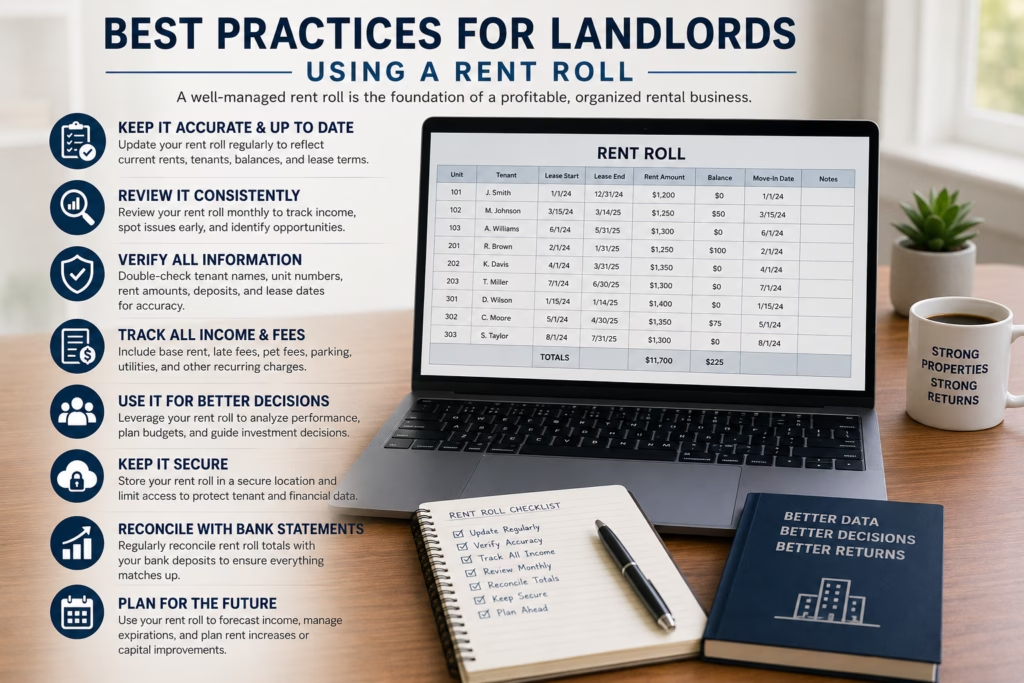
A rent roll is only useful if it is accurate. Landlords should treat it as a living document.
The best approach is to keep the rent roll simple, update it regularly, and compare it against actual rent payments each month.
Keep Tenant Records Consistent
Use the same naming format for each tenant and property. If one unit is listed as “Unit A,” do not list the same unit elsewhere as “Apt A” unless that is your standard format.
Consistency reduces confusion and makes the rent roll easier to review later.
Separate Scheduled Rent From Collected Rent
Scheduled rent is what should be collected. Collected rent is what was actually received.
Do not confuse the two. A rent roll should make it easy to see both the expected income and any unpaid balance.
Review Lease Dates Monthly
Lease dates are one of the most important parts of the rent roll. Reviewing them monthly helps avoid last-minute renewal decisions.
This also gives the landlord time to communicate with tenants in a professional and organized way.
Include Vacant Units
Vacant units should still appear on the rent roll. A vacancy directly affects the property’s income, so it should not be left out.
For a vacant unit, the landlord can list the unit address, status, advertised rent, date vacant, and expected availability date.
Do Not Add Too Much Detail
A rent roll should be easy to read. If a landlord tries to include every possible detail, the document can become cluttered.
Keep detailed lease terms in the lease agreement. Keep detailed income and expense records in accounting software or bookkeeping files. Use the rent roll as a practical summary.
Common Rent Roll Mistakes to Avoid
One common mistake is failing to update the rent roll after a lease renewal or rent increase. This can cause confusion later, especially when comparing rent records or preparing documents for a lender.
Another mistake is leaving out vacant units. Vacant units matter because they reduce actual income and may show leasing risk.
A third mistake is failing to track unpaid balances. If a tenant is late, the rent roll should show the balance due. This makes collection follow-up easier and keeps the landlord aware of potential cash flow problems.
A fourth mistake is using the rent roll as a replacement for proper bookkeeping. A rent roll is helpful, but it is not a full accounting system. Landlords should still maintain accurate income and expense records.
Ready to Turn Your Real Estate Investments Into Profit Machines?
Get ready to build a thriving rental portfolio. Get instant access to professional property management guides and start implementing proven strategies!

Master the art of real estate investing with The Real Estate Property Management Guide: Premium Edition – your comprehensive roadmap to successful property management.
Whether you’re a novice investor or seasoned professional, this guide covers everything from selecting the right investment properties to tenant management and property marketing.
The author, Jeff Rohde writing as Jeffrey Roark, is a professional with over 25 years of real estate experience.
This Premium Edition includes the valuable bonus book Investment Real Estate Analysis: A Case Study to help you identify hidden opportunities and evaluate properties like a professional.
Access practical, actionable strategies for both residential and commercial properties, from single-family homes to office buildings and shopping centers.