Top Rental Property Markets for 2026

Rental property investing in 2026 requires a more selective approach than it did during the low-rate, high-growth years that followed the pandemic. In many markets, rents are no longer rising fast enough to offset higher mortgage rates, higher insurance premiums, property taxes, maintenance costs, and slower home-price appreciation. At the same time, renter demand remains durable in many parts of the country because affordability challenges continue to keep many households from buying homes.
That creates a divided market. Some cities still offer strong population growth, deep employment bases, and long-term rental demand. Others look attractive on the surface because prices have softened, but the rental math may be pressured by oversupply, weak rent growth, or rising ownership costs.
This list of the top rental property markets for 2026 was built using a practical investor screen rather than a single national ranking. We looked at population growth, employment strength, rent trends, affordability, institutional investor sentiment, foreclosure and distress signals, and operating-cost risk. The goal is not to identify the flashiest housing markets. The goal is to identify markets where investors may still find durable rental demand and reasonable long-term fundamentals.
How This List Was Created
A good rental market is not just a place where people are moving. It also has to support the numbers. Investors need enough renter demand to keep occupancy strong, enough wage and job growth to support rent payments, enough acquisition opportunity to avoid overpaying, and enough stability to reduce long-term operating risk.
To build this list, we used several authority sources. The U.S. Census Bureau’s Vintage 2025 population estimates were used to identify metro areas with meaningful population growth. Census data showed that metro areas continued growing faster than micropolitan and non-metro areas between 2024 and 2025, although the pace of growth slowed compared with the prior year.
Rental trends were evaluated using sources such as Zillow’s March 2026 rent report, Apartment List’s April 2026 National Rent Report, Cotality’s Single-Family Rent Index, and RealPage rental market forecasts.
Zillow reported that typical asking rents rose only 1.8% year over year in March 2026, while single-family rents rose 2.5% and multifamily rents rose 1.3%. Apartment List reported that national rents were down 1.7% year over year in April 2026, which reinforces why investors need to evaluate local conditions carefully rather than assuming national rent growth will support every deal.
Home-price and affordability trends were considered using the National Association of REALTORS, the FHFA House Price Index, and HUD’s FY 2026 Fair Market Rent system. HUD’s Fair Market Rent documentation is especially useful because it gives investors a standardized rent reference by metro area and county.
We also reviewed investor sentiment from the PwC and Urban Land Institute Emerging Trends in Real Estate 2026 report. PwC and ULI rank markets by investment and development prospects across property types, making the report useful as a broad institutional sentiment check rather than a rental-only ranking.
Finally, we considered acquisition opportunity and distress signals using ATTOM’s Q1 2026 foreclosure market report. Foreclosure data is not a reason by itself to choose a rental market, but it can help investors understand where motivated-seller opportunities may appear. Rising foreclosure activity can create opportunity, but it can also indicate local financial stress.
What Makes a Strong Rental Property Market in 2026?
The top rental property markets for 2026 tend to fall into one of three categories.
The first category includes large growth markets with strong employment bases. These are cities such as Dallas-Fort Worth, Houston, Charlotte, and Raleigh. They benefit from population growth, business expansion, and long-term rental demand. The downside is that competition can be intense, and insurance, taxes, and acquisition prices may reduce cash flow.
The second category includes affordable growth markets. These are smaller or mid-sized metros such as Huntsville and Northwest Arkansas. They may not have the national profile of Dallas or Phoenix, but they can offer more reasonable entry prices and strong local economic momentum.
The third category includes mature rental markets with stronger rent stability. These include Chicago, Philadelphia, Detroit, and Kansas City. They may not offer explosive population growth, but they can offer large renter bases, more stable pricing, and potentially better income-to-price ratios in the right neighborhoods.
The important point is that 2026 is not a year for lazy market selection. A city can have strong population growth and still be a poor rental investment if supply is too high or ownership costs are rising faster than rents. Likewise, an older Midwest market can be attractive if rents are stable, prices remain reasonable, and the investor understands neighborhood-level risk.
1. Dallas-Fort Worth, Texas

Dallas-Fort Worth remains one of the most important rental property markets in the country because of its scale, economic diversity, and continued population growth. The region benefits from corporate relocations, logistics, healthcare, technology, finance, and a large base of middle-income renters. It is not a low-competition market, but it remains one of the deepest rental markets in the United States.
The Census Bureau identified Dallas-Fort Worth as one of the largest numeric population-gain metros between 2024 and 2025. That matters for landlords because population growth expands the pool of renters, supports household formation, and can help stabilize occupancy even when rent growth moderates. The PwC and ULI Emerging Trends in Real Estate 2026 report also ranked Dallas-Fort Worth as the top U.S. market to watch for 2026, reflecting continued institutional confidence in the metro.
For rental investors, Dallas-Fort Worth works best when underwriting is disciplined. The metro is large enough that broad market averages can be misleading. A suburban single-family rental near schools, job corridors, and transportation access may perform very differently from an urban condo or a property in an area with heavy new apartment supply.
Investor Takeaway
Dallas-Fort Worth is a strong 2026 rental market for investors who want scale, liquidity, and long-term demand. The main risks are acquisition competition, property taxes, insurance costs, and neighborhood-level oversupply. Investors should underwrite conservatively and avoid assuming aggressive rent growth.
Read our report on the Top Dallas-Fort Worth Property Management Companies….
2. Houston, Texas

Houston is another major Texas market with strong long-term rental fundamentals. It offers a massive employment base, a relatively affordable housing stock compared with many coastal metros, and a large renter population. Houston also has one of the most diverse economies in the Sun Belt, with energy, healthcare, shipping, aerospace, education, and professional services all playing major roles.
According to the Census Bureau, Houston was among the largest population-gain metros between 2024 and 2025. The PwC and ULI report also placed Houston among the top U.S. real estate markets to watch for 2026. For rental investors, that combination is meaningful because it suggests both demographic demand and broader real estate industry confidence.
Houston may also offer acquisition opportunities because of its size and property turnover. ATTOM’s foreclosure data has shown elevated foreclosure activity in several large metros, including Texas markets, which may create opportunities for investors who can buy carefully and solve property-level problems.
That said, Houston requires serious risk management. Flood exposure, insurance costs, property taxes, and neighborhood selection are central to the investment case. A property that looks strong on rent-to-price ratio can quickly become less attractive if insurance, drainage issues, or deferred maintenance are not properly accounted for.
Investor Takeaway
Houston belongs on the 2026 list because of its scale, population growth, and relative affordability. It is best suited for investors who can evaluate flood risk, insurance costs, and submarket fundamentals with precision.
Read our report on the Top Houston Property Management Companies….
3. Charlotte, North Carolina
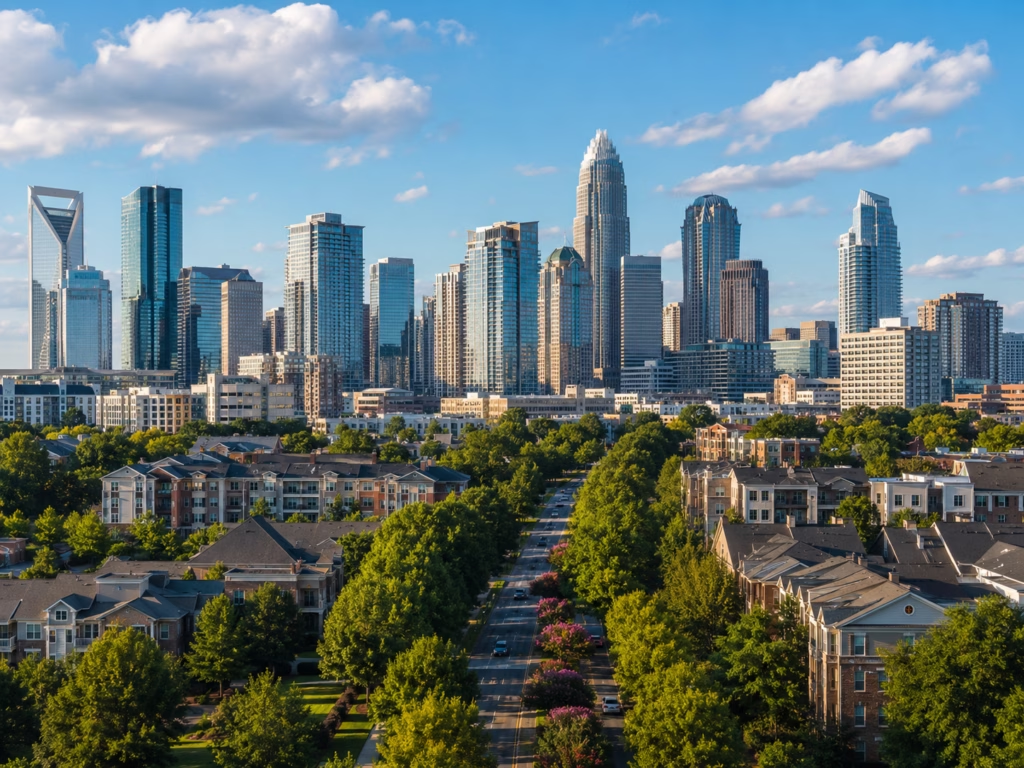
Charlotte continues to stand out as one of the strongest rental property markets in the Southeast. The region combines population growth, job growth, financial-sector strength, and a steady inflow of new residents. For rental investors, Charlotte offers a useful balance: it has enough economic depth to support long-term demand, but it remains more approachable than many higher-cost coastal markets.
Charlotte’s rental demand is supported by banking, healthcare, logistics, technology, and professional services. The metro also benefits from a strong regional draw across the Carolinas, making it attractive to young professionals, relocating families, and workers seeking a lower cost of living than larger East Coast metros.
Investors should still be selective. Charlotte is not undiscovered, and popular neighborhoods can price out cash-flow buyers. The better opportunities may be in surrounding suburbs, workforce housing areas, and neighborhoods with access to employment centers rather than in the most expensive core submarkets.
Investor Takeaway
Charlotte is one of the better 2026 rental markets for investors seeking long-term demand with a Southeast growth profile. The challenge is finding properties where the purchase price still supports realistic cash flow after financing, taxes, insurance, and maintenance.
Read our report on the Top Charlotte North Carolina Property Management Companies….
4. Raleigh-Cary, North Carolina
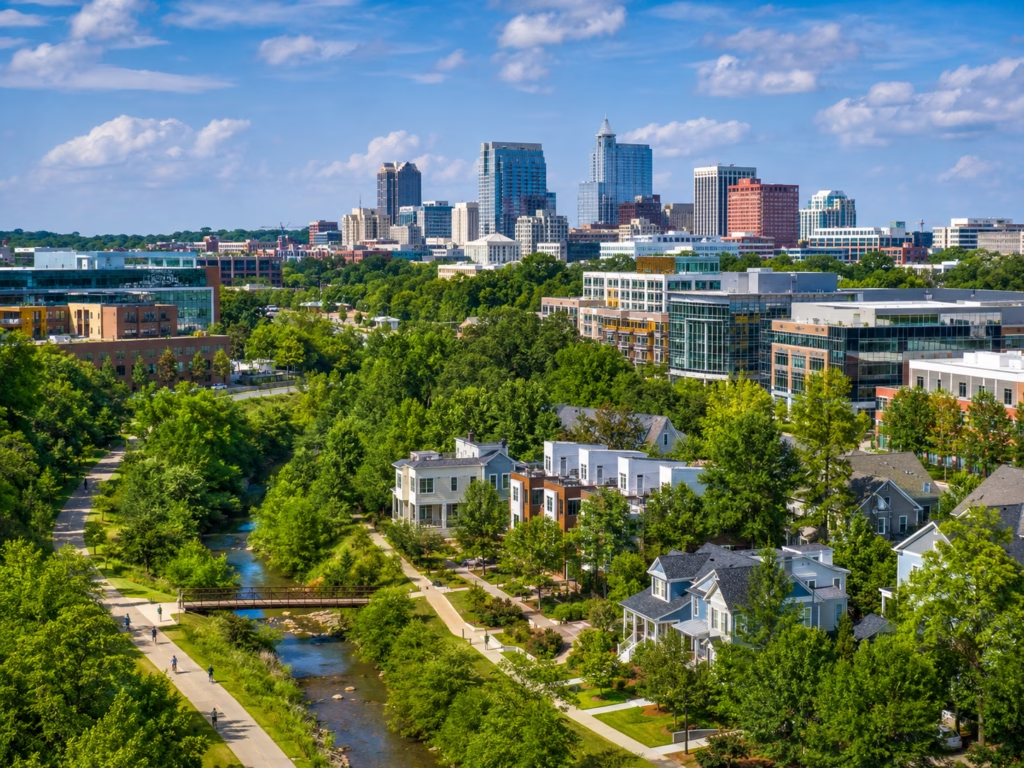
Raleigh-Cary is one of the most compelling growth markets for rental property investors in 2026. The metro benefits from population growth, strong educational institutions, a technology-oriented employment base, healthcare, research, and a highly educated workforce. It also has a strong quality-of-life appeal, which supports long-term renter and buyer demand.
The Census Bureau’s 2025 population estimates identified Raleigh-Cary among the fastest-growing large metros by percentage growth. That kind of growth can be especially attractive for rental investors because it often reflects both job creation and household formation. When new residents arrive faster than ownership affordability can absorb them, rental demand can remain strong.
The main challenge in Raleigh is pricing. High-quality markets often command higher acquisition costs, which can make traditional cash flow harder to achieve. Investors may need to focus on small multifamily properties, townhomes, or suburban single-family rentals where the numbers are more workable.
Investor Takeaway
Raleigh-Cary is a strong long-term rental market, especially for investors focused on durable demand and tenant quality. Cash flow may be thinner than in lower-cost markets, so conservative financing and careful rent assumptions are essential.
Read our report on the Top Raleigh-Cary Property Management Companies….
5. San Antonio, Texas

San Antonio offers a different profile than Dallas or Houston. It is large, growing, and more affordable than many major metros, but it also requires caution because of recent rental supply pressure. For investors, San Antonio may be more attractive as a selective single-family rental market than as a broad multifamily growth story.
The Census Bureau identified San Antonio among the largest population-gain metros between 2024 and 2025. The metro benefits from military employment, healthcare, education, tourism, logistics, and a relatively low cost of living. Those factors support long-term housing demand.
However, investors need to be careful with rent-growth assumptions. Several Sun Belt markets have experienced pressure from elevated apartment construction, and San Antonio has not been immune. In supply-heavy submarkets, tenants may have more choices, concessions may increase, and rent growth may remain muted.
The investor case for San Antonio is strongest when the property serves a stable renter segment that is less directly exposed to new luxury apartment competition. Well-located single-family rentals, small multifamily properties, and workforce housing can make more sense than buying solely on population-growth headlines.
Investor Takeaway
San Antonio is a good 2026 candidate for investors seeking affordability and long-term population growth, but it is not a market where rent growth should be assumed. The best deals will likely depend on buying at the right basis and avoiding oversupplied submarkets.
Read our report on the Top San Antonio Property Management Companies….
6. Orlando, Florida

Orlando remains one of the most important rental markets in Florida because of its population growth, tourism economy, healthcare expansion, education base, and large renter population. It also attracts both domestic migration and international attention, which helps support long-term housing demand.
Census data placed Orlando among the largest numeric population-gain metros between 2024 and 2025. That supports the demand side of the rental thesis. However, Orlando should not be viewed as a simple high-growth, high-return market. Florida investors face rising insurance costs, storm risk, property tax considerations, HOA issues in some communities, and competition from both long-term and short-term rental investors.
Orlando also has submarket complexity. A rental property serving stable local workers near healthcare, education, logistics, or suburban employment centers may behave differently from a property dependent on tourism or short-term rental demand. Investors should separate long-term rental underwriting from vacation-rental assumptions.
Investor Takeaway
Orlando belongs on the list because of population growth and rental demand, but it requires a careful operating-cost screen. Insurance, HOA rules, storm exposure, and local supply conditions should be reviewed before making an offer.
Read our report on the Top Orlando Property Management Companies….
7. Huntsville, Alabama
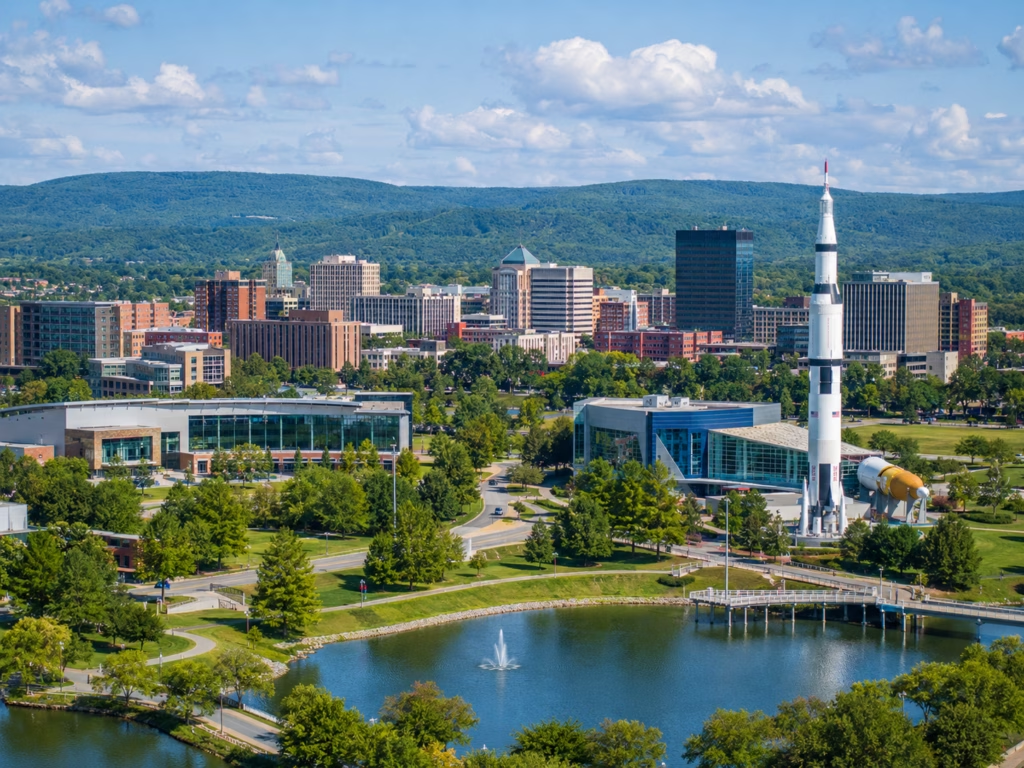
Huntsville is one of the more attractive mid-sized markets for 2026 because it combines population growth, affordability, and a strong employment base. The metro benefits from aerospace, defense, engineering, technology, advanced manufacturing, and research-related employment. For rental investors, that can create a tenant base with stable incomes and long-term housing needs.
The Census Bureau identified Huntsville among the fastest-growing metro areas by percentage growth. That matters because Huntsville still offers a more approachable entry price than many larger Sun Belt markets. Investors who have been priced out of Nashville, Austin, Charlotte, or Raleigh may find that Huntsville offers a better balance between growth and affordability.
The key risk is that smaller markets can be less liquid than major metros. Investors need to be careful not to overpay based on growth headlines. Neighborhood selection, school districts, commute patterns, and employer concentration matter.
Investor Takeaway
Huntsville is a strong 2026 rental market for investors looking for growth without major-market pricing. It may be especially attractive for single-family rentals and small multifamily properties serving professional and workforce tenants.
Read our report on the Top Huntsville Property Management Companies….
8. Fayetteville-Springdale-Rogers, Arkansas-Missouri
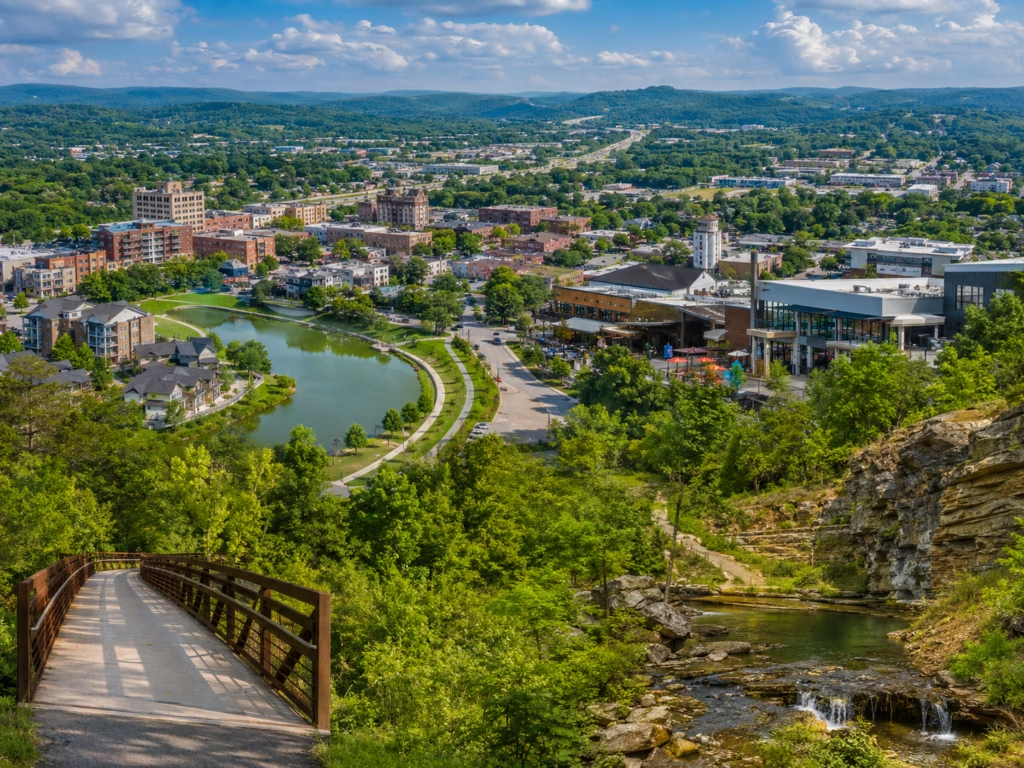
Northwest Arkansas has become a serious rental investment market because of population growth, corporate presence, quality-of-life appeal, and relative affordability. The Fayetteville-Springdale-Rogers metro benefits from major employers, including retail, logistics, food production, supplier networks, healthcare, and education.
The Census Bureau identified Fayetteville-Springdale-Rogers among the fastest-growing metro areas by percentage growth. That growth is important because it reflects a market that continues to attract residents while still offering more reasonable pricing than many larger metros.
For rental investors, Northwest Arkansas may offer a compelling combination of renter demand and long-term appreciation potential. The region has been gaining national attention, but it is still smaller and more local than the largest Sun Belt markets. That means investors need to understand city-by-city differences across Fayetteville, Springdale, Rogers, Bentonville, and surrounding communities.
Investor Takeaway
Northwest Arkansas is a strong 2026 market for investors willing to study local submarkets carefully. The best opportunities may be in well-located single-family rentals, townhomes, and small multifamily properties near employment corridors.
Read our report on the Top Fayetteville Springdale Rogers Property Management Companies….
9. Chicago, Illinois

Chicago may surprise some investors because it is not usually grouped with high-growth Sun Belt markets. However, in 2026, Chicago deserves attention because of rent stability, a large renter base, and strong single-family rent growth relative to many other major metros.
Cotality’s February 2026 Single-Family Rent Index showed Chicago and Philadelphia with the highest single-family rent growth among major metros at 4.8% year over year, followed by Detroit at 3.7%. Zillow also identified Chicago as one of the stronger rent-growth markets in a period when national rent growth had slowed. That local strength matters because many faster-growing Sun Belt markets are dealing with elevated supply and softer rents.
Chicago has significant advantages for rental investors: a huge renter population, diverse employment base, public transportation, neighborhood variety, and relatively lower entry prices than New York, Boston, Washington, D.C., Los Angeles, or San Francisco. However, the risks are also real. Property taxes, local regulation, older housing stock, and neighborhood-level variation can materially affect returns.
Investor Takeaway
Chicago is a strong 2026 rental market for investors who value rent stability and a large tenant base over headline population growth. It is best suited for investors who understand local neighborhoods, tax exposure, and property condition.
Read our report on the Top Chicago Property Management Companies….
10. Philadelphia, Pennsylvania

Philadelphia is another mature market that deserves more attention from rental investors in 2026. Like Chicago, it is not a classic boomtown. Its appeal comes from a large renter population, strong regional employment anchors, education and healthcare demand, and relatively affordable entry points compared with other major Northeast markets.
Cotality reported that Philadelphia matched Chicago for the highest single-family rent growth among major metros in February 2026. That is important because single-family rental demand has remained comparatively resilient even as national rent growth has slowed. Philadelphia also benefits from being part of a large Northeast corridor, with access to employment and transportation connections that support long-term housing demand.
Investors should be careful with block-by-block underwriting. Philadelphia is a neighborhood-specific market, and property taxes, older building systems, permitting, tenant regulations, and maintenance can vary significantly. The strongest opportunities may be in stable working-class neighborhoods, small multifamily properties, and areas with access to transit, universities, hospitals, and employment centers.
Investor Takeaway
Philadelphia is a strong candidate for investors seeking cash-flow potential in a large, established rental market. It is not a passive market, but well-bought properties in stable neighborhoods can offer durable rental demand.
Read our report on the Top Philadelphia Property Management Companies….
11. Detroit, Michigan
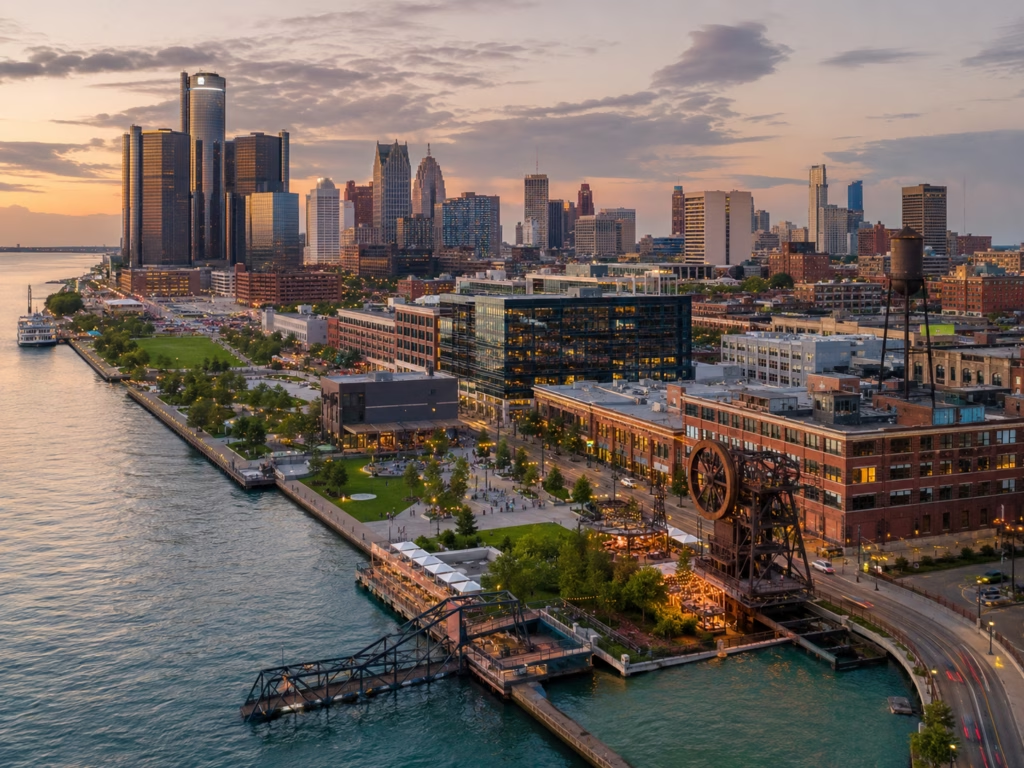
Detroit has moved back onto the investor radar because of affordability, rent-growth signals, and improving perception in parts of the market. It is not a low-risk market, but it can be attractive for investors who know how to evaluate neighborhoods, property condition, tenant demand, and local management quality.
Cotality’s single-family rent data showed Detroit among the stronger major markets for rent growth in early 2026, behind Chicago and Philadelphia. RealPage also identified Detroit among markets expected to show stronger rent growth in 2026. That combination makes Detroit worth considering, especially when compared with more expensive markets where acquisition prices make cash flow difficult.
Detroit’s biggest advantage is entry price. Investors may be able to buy rental property at a lower basis than in many major metros. The challenge is that low price alone does not make a good investment. Older housing stock, vacancy risk, maintenance, local management, property taxes, and neighborhood selection are critical.
Investor Takeaway
Detroit is a higher-risk, higher-underwriting market. It can work for investors focused on cash flow and value-add opportunities, but it is not a market for casual out-of-state buying without strong local support.
Read our report on the Top Detroit Property Management Companies….
12. Kansas City, Missouri-Kansas

Kansas City offers a practical rental investment profile for 2026: relative affordability, a central location, a diverse employment base, and a large enough metro economy to support steady rental demand. It does not have the explosive population growth of Dallas, Raleigh, or Orlando, but that can be an advantage for investors seeking less overheated pricing.
Kansas City was also identified by RealPage as one of the markets expected to show stronger rent growth in 2026. In a national environment where rent growth is modest, markets with stable or improving rental fundamentals deserve attention.
The metro offers several types of rental opportunities, including single-family rentals, duplexes, small multifamily properties, and workforce housing. Investors should compare Missouri and Kansas submarkets carefully, as taxes, regulations, school districts, and tenant profiles can differ across the metro.
Investor Takeaway
Kansas City is a solid 2026 rental market for investors who want affordability and steady demand rather than rapid-growth speculation. It may be especially appealing for cash-flow-oriented investors.
Read our report on the Top Kansas City Property Management Companies….
Markets to Watch Carefully Before Buying
Not every well-known market belongs on a top rental property list for 2026. Some markets still have strong long-term fundamentals but require more caution because of near-term supply, pricing, or operating-cost pressures.
Austin, Texas
Austin remains a strong long-term economic market, but 2026 rental investors should be careful. Apartment supply, rent softness, and high acquisition prices have made the rental math more difficult. Zillow and Apartment List have both pointed to slower rent growth and supply-related pressure in many high-construction markets. Austin may become attractive if pricing resets enough, but it should not be treated as an automatic top rental market in 2026.
Phoenix, Arizona
Phoenix has long-term population growth and a large rental base, but rent growth has cooled in many Mountain West and Sun Belt markets where new supply increased. Phoenix may still offer opportunities in select submarkets, but investors should be careful with rent assumptions, water concerns, heat-related operating costs, and insurance.
Tampa and Miami, Florida
Tampa and Miami remain important Florida markets, and Miami in particular has shown strong rent-growth signals in some forecasts. However, Florida investors must underwrite insurance, storm risk, HOA exposure, taxes, and acquisition costs carefully. High rent does not automatically mean strong cash flow if ownership costs are rising quickly.
Nashville, Tennessee
Nashville remains a strong long-term market, but investor competition and pricing can make cash flow difficult. It may still be attractive for investors with a long-term appreciation focus, but it is not always the best fit for buyers seeking immediate income.
How Investors Should Use This List
This list should be used as a starting point, not a buy signal. Even in a strong rental market, a bad deal is still a bad deal. Investors should evaluate each property based on local rent comps, insurance quotes, taxes, repair costs, vacancy assumptions, and realistic financing terms.
Before buying in any of these markets, investors should review:
- Local rent comps, not just national rent reports
- Property taxes and reassessment risk
- Insurance premiums and coverage limitations
- HOA fees and rental restrictions
- Vacancy trends and new apartment supply
- Job-center access and commute patterns
- School districts and neighborhood demand
- Property condition and capital expenditure risk
- Local landlord-tenant rules
- Professional property management availability
The best rental property markets in 2026 are not necessarily the places with the highest rent growth. They are the places where investors can buy at a rational basis, serve a durable renter population, and manage operating risk effectively.
Final Thoughts
The top rental property markets for 2026 reflect a more complicated housing environment. Population growth still matters, but it is not enough by itself. Rent growth has slowed nationally, and some formerly hot markets are now dealing with elevated supply, concessions, and softer pricing. At the same time, mature markets such as Chicago, Philadelphia, Detroit, and Kansas City are showing why rental investors should not ignore affordability and rent stability.
For investors focused on long-term rental property performance, the strongest 2026 opportunities are likely to come from disciplined underwriting rather than chasing headlines. Dallas-Fort Worth, Houston, Charlotte, Raleigh, San Antonio, Orlando, Huntsville, Northwest Arkansas, Chicago, Philadelphia, Detroit, and Kansas City all deserve attention, but each requires a different strategy.
In growth markets, the challenge is avoiding overpayment. In affordable markets, the challenge is verifying tenant depth and local demand. In mature markets, the challenge is managing taxes, regulation, and property condition.
The opportunity is still there. The margin for error is just smaller.
Are You Looking To Connect With Property Owners, Landlords, and Real Estate Investors?
Grow your business by connecting with property professionals with our cost-effective advertising options.

Master the art of real estate investing with The Real Estate Property Management Guide: Premium Edition – your comprehensive roadmap to successful property management.
Whether you’re a novice investor or seasoned professional, this guide covers everything from selecting the right investment properties to tenant management and property marketing.
The author, Jeff Rohde writing as Jeffrey Roark, is a professional with over 25 years of real estate experience.
This Premium Edition includes the valuable bonus book Investment Real Estate Analysis: A Case Study to help you identify hidden opportunities and evaluate properties like a professional.
Access practical, actionable strategies for both residential and commercial properties, from single-family homes to office buildings and shopping centers.