AI Chatbots for Property Management Pros and Cons

AI chatbots for property management are becoming more practical as landlords and management companies look for ways to respond faster, reduce administrative work, and improve the tenant experience. A well-designed chatbot can help answer common questions, collect maintenance details, support leasing inquiries, and route issues to the right person.
At the same time, chatbots are not a substitute for professional property management. They can create risks if they provide inaccurate answers, mishandle sensitive information, or communicate in ways that conflict with fair housing requirements.
For property managers, the question is not whether chatbots are useful. The better question is where they should be used, where human review is still required, and whether the benefits justify the risks.
Get Practical Property Management Tips Twice a Week
Want smarter systems for managing rentals, screening tenants, handling maintenance, and improving property performance? Sign up for our 2X weekly newsletter and get practical property management and real estate investing insights delivered straight to your inbox.
What AI Chatbots Do in Property Management
AI chatbots are software tools that simulate conversation with tenants, prospects, owners, or vendors. Some operate through a website chat window, while others connect to email, SMS, tenant portals, or property management software.
In property management, chatbots are most commonly used to handle repetitive communication. They may answer questions about rent due dates, showing availability, application steps, pet policies, parking rules, maintenance procedures, or move-in instructions.
More advanced systems can collect information, generate summaries, create maintenance tickets, or recommend next steps. The value comes from speed and consistency. A chatbot can respond instantly, even after office hours, and can help reduce the number of simple questions that staff must answer manually.
The Best Opportunities for Using Chatbots
The strongest use cases are routine, repetitive, and low-risk. These are the conversations where tenants or prospects need fast information, but the answer is already documented in the lease, resident handbook, listing page, or company policy.
For example, a chatbot can help a prospective renter schedule a showing, explain application requirements, or provide basic details about an available unit. For current tenants, it can explain how to submit a maintenance request or where to find payment instructions.
High-Value Chatbot Use Cases
AI chatbots for property management are most useful when they support predictable workflows, such as:
- Answering common leasing questions
- Collecting maintenance request details
- Sending move-in or move-out instructions
- Explaining basic portal navigation
- Routing urgent issues to staff
These functions can improve response times without handing complex decisions over to the software.
Using Chatbots for Leasing Inquiries
Leasing is one of the clearest opportunities for chatbot implementation. Prospective tenants often ask the same questions: Is the property available? What is the rent? Are pets allowed? How do I apply? When can I tour the unit?
A chatbot can answer these questions quickly and help move qualified prospects to the next step. This is especially valuable when leads arrive after hours or during weekends.
However, leasing chatbots must be designed carefully. They should provide consistent information to all applicants and avoid language that could be interpreted as steering, discouraging, or favoring certain groups. The U.S. Department of Housing and Urban Development provides fair housing guidance that property managers should consider before using automated tools in leasing or applicant communication.
The safest approach is to use the chatbot for factual, standardized information and keep applicant evaluation under human review.
Using Chatbots for Maintenance Requests
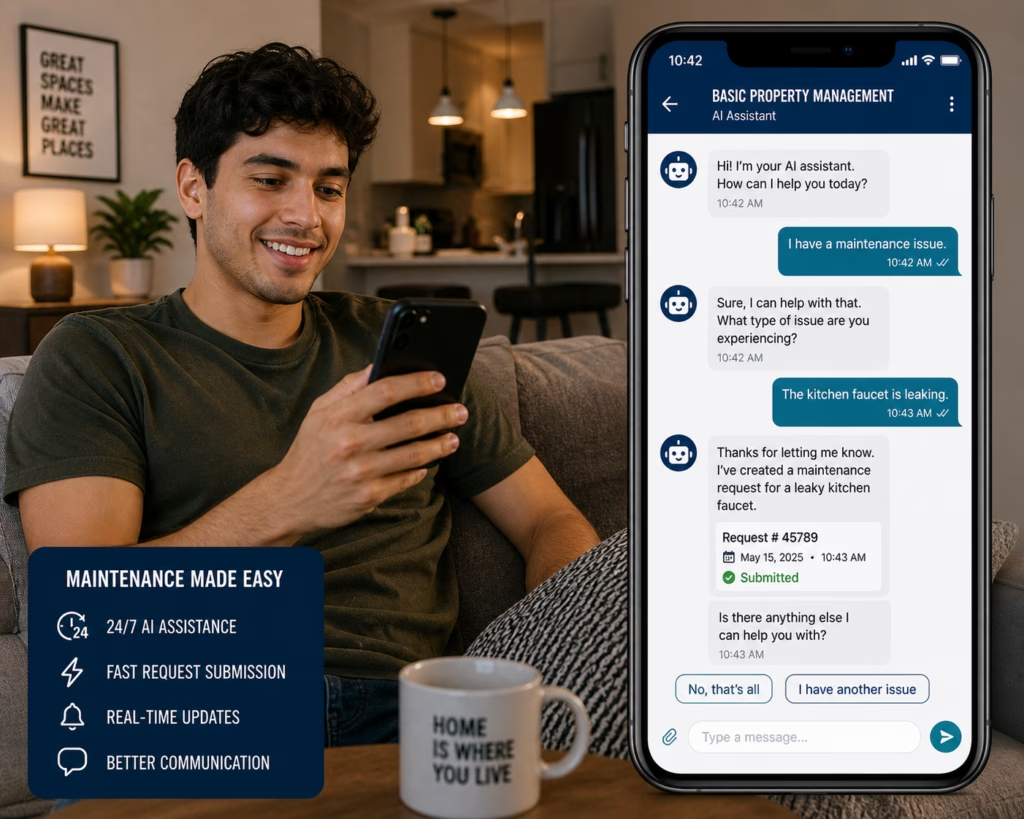
Maintenance is another strong use case. Tenants often submit incomplete requests, which leads to follow-up questions and delays. A chatbot can ask structured questions before the request reaches staff.
For example, if a tenant reports a leak, the chatbot can ask where the leak is located, whether water is actively flowing, whether there is visible damage, and whether emergency service may be needed. This creates a clearer maintenance ticket and helps staff respond more effectively.
Still, the chatbot should not be the final decision-maker for emergency issues. Any request involving water intrusion, electrical problems, heating failure, security concerns, or health and safety issues should be routed quickly to a person or emergency process.
Learn How Better Landlords Manage Better Rentals
Join our 2X weekly newsletter for clear, actionable guidance on property management, leasing, tenant issues, rental property operations, and real estate investing strategies you can actually use.
Benefits of AI Chatbots for Property Managers
The strongest benefit of AI chatbots is operational efficiency. They can reduce repetitive communication and help managers maintain faster response times without adding staff.
Chatbots can also improve consistency. Instead of different team members giving slightly different answers, the chatbot can rely on approved language and documented policies. This can be useful for lease instructions, application requirements, and basic resident procedures.
Another benefit is availability. Tenants and prospects often have questions outside normal business hours. A chatbot can provide immediate assistance, even if the final resolution still requires staff follow-up.
For larger portfolios, chatbots also create better data. They can categorize questions, identify recurring issues, and show where tenants are getting confused. That information can help managers improve website content, resident onboarding, or maintenance processes.
The Risks and Limitations of Chatbots
Despite their advantages, chatbots can create problems if they are implemented without oversight. The most obvious risk is inaccurate information. If a chatbot gives the wrong answer about rent, deposits, fees, lease terms, or legal deadlines, the result can be confusion or liability.
Privacy is another concern. Property managers handle sensitive data, including applications, payment history, identification documents, and maintenance access information. The Federal Trade Commission provides business guidance on privacy and security, which is relevant when evaluating any technology that stores or processes tenant information.
Chatbots can also create reputational risk. Tenants may become frustrated if they cannot reach a person for serious issues. A chatbot should make communication easier, not create a barrier between the tenant and management.
Where Human Review Is Essential
AI chatbots should not be used for every communication. Certain matters require human judgment, legal awareness, or direct manager involvement.
Human review should remain mandatory for lease violations, evictions, reasonable accommodation requests, security deposit disputes, fair housing questions, applicant denials, payment disputes, and serious maintenance issues.
This does not mean a chatbot has no role. It can collect information, summarize the issue, and route it to the right person. But the decision and final communication should remain with qualified staff.
The National Institute of Standards and Technology emphasizes risk management, governance, and oversight in AI systems. Property managers can apply the same principle by keeping clear controls around how chatbots are used.
Best Practices for Implementing Chatbots
A chatbot should be implemented gradually. Start with one narrow use case, such as leasing FAQs or maintenance intake, then expand only after testing the workflow.
Before launching, property managers should create approved responses for common questions and define escalation rules. The chatbot should know when to stop responding and hand the conversation to a person.
It is also important to monitor chatbot conversations regularly. Reviewing transcripts helps identify inaccurate responses, tenant frustration, or questions the chatbot cannot handle.
A practical implementation plan should include:
- Clear limits on what the chatbot can answer
- Escalation rules for legal, financial, or safety issues
- Data privacy controls
- Staff review of chatbot performance
- Regular updates to approved responses
These controls help ensure that the chatbot supports management rather than creating new risks.
How to Decide If a Chatbot Is Worth It
A chatbot is worth considering if your team spends significant time answering repetitive questions or if response delays are affecting leasing and tenant satisfaction. It may also make sense for portfolios with multiple units, frequent maintenance requests, or high leasing inquiry volume.
However, a chatbot may not be worth the cost for a small portfolio with limited communication volume. In that case, better templates, clearer website content, or a tenant portal may provide similar benefits at lower cost.
The decision should be based on measurable value. Track response time, staff hours saved, lead conversion, tenant satisfaction, and maintenance ticket quality before and after implementation.
Are You Looking To Connect With Property Owners, Landlords, and Real Estate Investors?
Grow your business by connecting with property professionals with our cost-effective advertising options.

Dive deep into the world of real estate investment with this comprehensive case study that brings theory to life.
Investment Real Estate Analysis: A Case Study offers an unparalleled look at the decision-making process behind successful property investments.
Follow along as we dissect a real-world scenario, revealing the critical factors that seasoned investors consider before making a move.
From crunching numbers to assessing market conditions, this book walks you through every step of the analysis process. Learn how to evaluate potential investments like a pro, understanding key metrics such as cap rates, cash-on-cash returns, and internal rate of return.
Whether you’re a novice investor or looking to refine your skills, this case study will equip you with the tools to make informed investment decisions in the competitive real estate market.