Automation for Property Managers Cost Guide
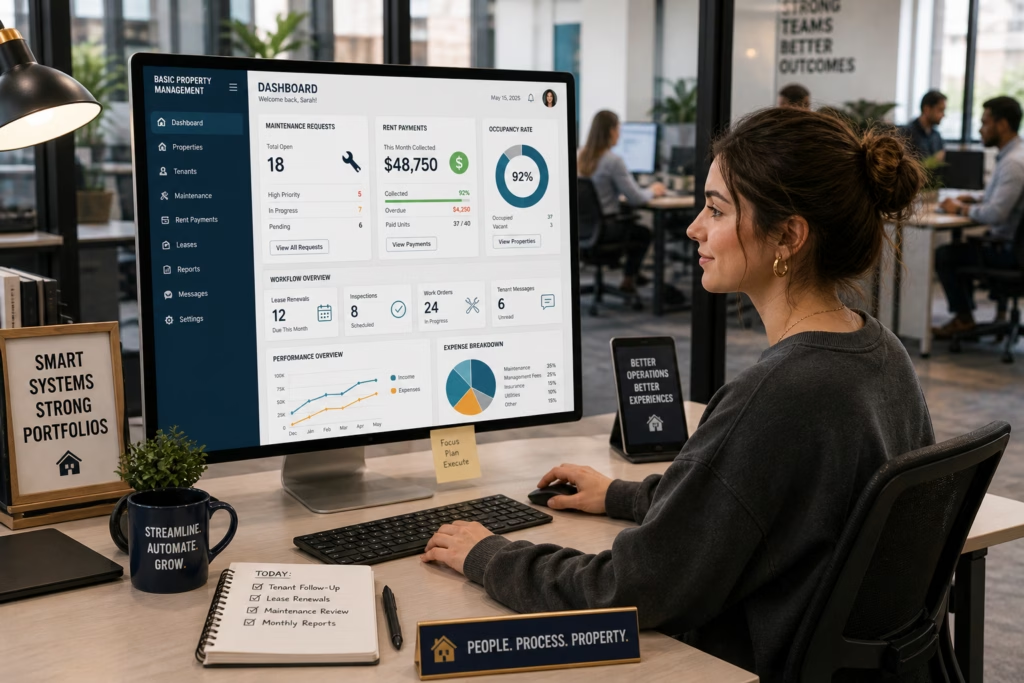
Automation for property managers can create meaningful operational savings, but only when it is implemented with a clear cost-benefit framework. The goal is not to automate every task. The goal is to identify repetitive, time-consuming processes where automation reduces labor, improves accuracy, and supports better service.
For landlords and property management companies, automation can help with tenant communication, rent collection, maintenance workflows, leasing follow-up, reporting, and compliance reminders. However, every tool has a cost. Software subscriptions, setup time, training, integrations, and oversight all need to be considered before deciding whether automation makes financial sense.
A smart automation strategy begins with one question: will this tool reduce workload, improve performance, or lower risk enough to justify its total cost?
What Automation for Property Managers Really Means
Automation for property managers refers to software systems that handle routine tasks with limited manual input. This may include automatic rent reminders, online payment processing, maintenance ticket routing, lease renewal alerts, owner reports, and tenant message templates.
Automation does not mean removing people from the process entirely. In property management, human judgment remains essential. Managers still need to evaluate tenant issues, approve major repairs, review legal notices, and make decisions that affect owners and residents.
The best automation supports better management. It reduces friction around repetitive tasks so staff can focus on higher-value work, such as tenant retention, vendor coordination, portfolio analysis, and owner communication.
Where Automation Creates the Most Value
Not every workflow is equally suited for automation. The best candidates are repetitive, rules-based, and easy to measure.
For most property managers, automation tends to create the most value in three areas: communication, payments, and maintenance coordination. These tasks happen frequently, consume staff time, and often follow predictable steps.
For example, rent reminders can be scheduled automatically before and after the due date. Maintenance requests can be routed based on category or urgency. Leasing inquiries can receive an immediate response with showing instructions or application links.
The value comes from reducing delays and preventing small administrative tasks from consuming large portions of the workday.
Understanding the Cost Side of Automation
Automation tools are often marketed as simple time-savers, but a proper cost-benefit analysis should include more than the monthly subscription fee.
The true cost may include:
- Software subscription or licensing fees
- Setup and data migration time
- Staff training and workflow documentation
- Integration with accounting, leasing, or maintenance systems
- Ongoing review to ensure accuracy and compliance
A low-cost tool can become expensive if it creates confusion, duplicates work, or requires frequent manual correction. Likewise, a higher-cost platform may be justified if it replaces several disconnected systems and materially improves productivity.
How to Measure Labor Savings
Labor savings are usually the easiest benefit to estimate. Start by identifying how much time your team currently spends on a task each week. Then estimate how much of that time automation can realistically reduce.
For example, if a staff member spends five hours per week sending rent reminders, confirming payments, and following up on late balances, automation may reduce that workload substantially. However, it will not eliminate the need for oversight, exception handling, or direct communication with tenants who need assistance.
The U.S. Bureau of Labor Statistics provides occupational information for property, real estate, and community association managers, which can help owners understand how labor-intensive the profession is. This context matters because automation often delivers value by reducing repetitive administrative workload, not by replacing the management function entirely.
Evaluating Revenue Benefits
Automation can also improve revenue, though these gains are sometimes harder to measure than labor savings.
Online rent payments and automated reminders may reduce late payments. Faster lead responses may increase showing conversions. Renewal reminders may improve tenant retention by preventing missed follow-up. Maintenance tracking may reduce tenant frustration and support longer tenancies.
These benefits do not always appear immediately, but they can be significant over time. A small reduction in vacancy or turnover can justify a software investment faster than administrative savings alone.
Example Cost-Benefit Scenario
Consider a small property management company managing 100 units. If automation reduces staff time by 10 hours per month and the internal labor cost is $30 per hour, that equals $300 in monthly labor savings. If the software costs $150 per month, the immediate savings appear positive.
However, the analysis should go further. If the same tool also reduces one turnover per year by improving communication and renewal follow-up, the return may be much greater. Tenant turnover often includes vacancy loss, cleaning, repairs, marketing, and leasing time.
The more directly automation supports revenue protection, the easier it is to justify.
Maintenance Automation and Cost Control
Maintenance is one of the strongest areas for automation because poor tracking can quickly lead to higher costs. Missed requests, delayed vendor communication, and incomplete records can create tenant dissatisfaction and expensive repairs.
Automation can help property managers assign requests, track completion, send tenant updates, and maintain a repair history for each property. Over time, this creates better visibility into recurring issues and vendor performance.
For larger portfolios, this data can help identify properties with unusually high maintenance costs or vendors that consistently exceed expected pricing. That turns automation from a convenience tool into a cost-control system.
Compliance and Risk Considerations
Automation can reduce certain risks, but it can also create new ones if poorly implemented. Automated messages, screening workflows, late fee notices, and lease-related communications must comply with applicable laws.
Property managers should be especially careful when automation affects applicants, tenants, payments, fees, or legal notices. Any system that makes recommendations or sends tenant-facing communication should be reviewed for accuracy and fairness.
The National Institute of Standards and Technology provides a risk management framework for artificial intelligence that emphasizes governance, transparency, and oversight. While not specific to property management, the framework is useful when evaluating automated or AI-assisted tools that influence business decisions.
When Automation Is Not Worth the Cost
Automation is not always the right answer. Some portfolios are too small to justify complex systems. Some workflows are too customized to automate efficiently. In other cases, the software may create more work than it saves.
Automation may not be worth the cost if:
- The task happens infrequently
- The tool does not integrate with existing systems
- Staff must constantly correct errors
- Tenants find the process confusing or impersonal
A practical rule is to automate stable workflows first. If a process is unclear, inconsistent, or poorly documented, fix the process before adding automation.
Choosing the Right Automation Tools
The best automation tool depends on the size of the portfolio, the complexity of operations, and the specific problem being solved. A self-managing landlord may only need rent collection and maintenance request tools, while a larger property management company may need an integrated platform with accounting, leasing, reporting, and communication features.
Before committing to a tool, property managers should ask how it handles data security, user permissions, reporting, integrations, and support. They should also test the software with one workflow before rolling it out across the entire operation.
Guidance from the Federal Trade Commission on privacy and security is relevant when evaluating software that stores tenant, owner, or financial information. Property managers should understand how sensitive data is protected before adopting any automation platform.
Building a Cost-Benefit Framework
A simple framework can help determine whether automation is financially justified.
Start by identifying the task, current time spent, current cost, software cost, and expected performance improvement. Then consider indirect benefits such as faster response times, fewer missed tasks, better reporting, and improved tenant satisfaction.
The strongest case for automation usually exists when the tool improves more than one part of the business. For example, a maintenance automation system may save staff time, improve tenant communication, reduce repair delays, and produce better owner reporting.
Closing Thoughts
Automation for property managers can reduce costs and improve efficiency, but only when it is implemented strategically. The strongest returns come from automating repetitive workflows that consume staff time, create delays, or increase the risk of missed follow-up.
A good cost-benefit analysis should include software costs, labor savings, revenue protection, tenant experience, and compliance risk. The goal is not to replace professional management, but to make it more efficient and consistent.
For landlords and property management companies, automation should be treated as an operating investment. When the right tools are matched to the right workflows, automation can support better service, stronger reporting, lower costs, and improved long-term property performance.
Are You Looking To Connect With Property Owners, Landlords, and Real Estate Investors?
Grow your business by connecting with property professionals with our cost-effective advertising options.

Master the art of real estate investing with The Real Estate Property Management Guide: Premium Edition – your comprehensive roadmap to successful property management.
Whether you’re a novice investor or seasoned professional, this guide covers everything from selecting the right investment properties to tenant management and property marketing.
The author, Jeff Rohde writing as Jeffrey Roark, is a professional with over 25 years of real estate experience.
This Premium Edition includes the valuable bonus book Investment Real Estate Analysis: A Case Study to help you identify hidden opportunities and evaluate properties like a professional.
Access practical, actionable strategies for both residential and commercial properties, from single-family homes to office buildings and shopping centers.