Is Your Rental Property Maintenance Budget Too Low?
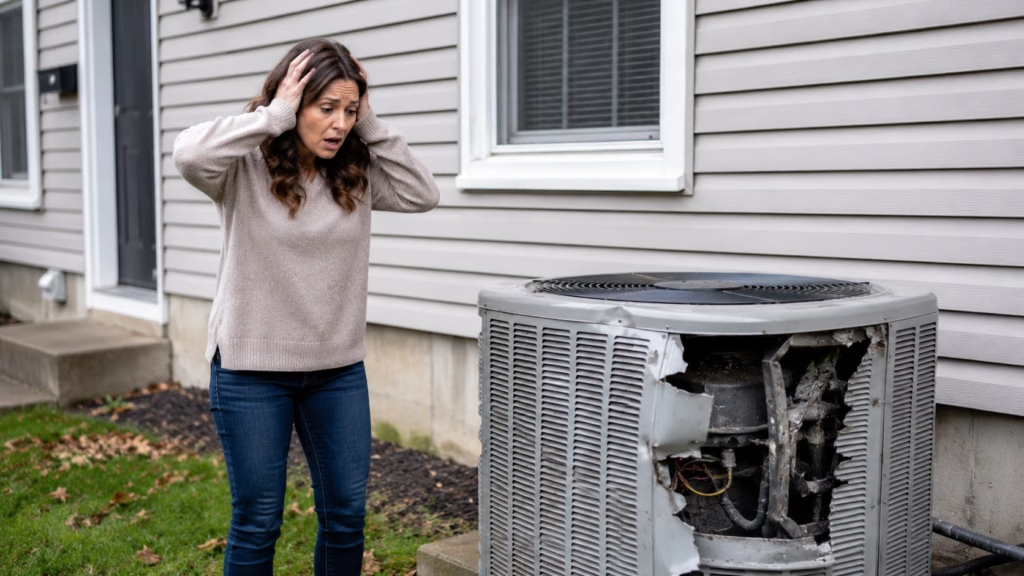
A rental property maintenance budget should do more than cover the occasional repair call. It should help you plan for routine wear, seasonal service, tenant turnover, and larger capital expenses before they create cash flow problems.
If you own rental property, you already know repairs are part of the business. The harder question is whether you are setting aside enough money each year. A better maintenance budget looks at the property’s age, asset type, seasonal demands, and CapEx risk. When you account for all four, you can avoid underbudgeting and make better ownership decisions.
Learn How Better Landlords Manage Better Rentals
Join our 2X weekly newsletter for clear, actionable guidance on property management, leasing, tenant issues, rental property operations, and real estate investing strategies you can actually use.
Start With a Budget That Matches the Property
Many landlords use a simple rule of thumb, such as setting aside a percentage of rent or property value each year. That can be a useful starting point, but it should not be your entire maintenance plan.
A newer townhouse, a 1970s single-family rental, and a 12-unit apartment building do not carry the same repair risk. Even if they all produce similar monthly rent, the maintenance exposure can be very different.
Instead of asking, “How much should I budget for repairs?” ask a more useful question: “What is most likely to break, wear out, or need replacement at this specific property over the next 12 to 36 months?”
That shift turns maintenance budgeting from a guess into a practical asset management process.
Budget by Property Age
Newer Properties
Newer properties usually have lower near-term repair risk, especially if major systems are still early in their useful life. However, newer does not mean maintenance-free.
You still need money for HVAC servicing, plumbing issues, appliance repairs, landscaping, pest control, lock changes, touch-up paint, filter changes, and move-out repairs. Tenant use also changes the equation. A property that looks new when purchased can still experience wear quickly if it has high turnover or poor tenant care.
For newer rentals, your annual maintenance budget may be more modest, but you should still build a reserve. The goal is to avoid treating the first major repair as a surprise.
Middle-Aged Properties
Properties between roughly 10 and 25 years old often need a more serious budget. Appliances may be near replacement age. Water heaters, flooring, fixtures, exterior paint, garage doors, fencing, and HVAC components may begin to fail.
This is the stage where you should start tracking component age more carefully. The International Association of Certified Home Inspectors provides a helpful home component life expectancy chart that can help you think through the useful life of common systems and materials. You don’t need to treat those numbers as exact, but they can help you identify which parts of the property may be moving into a higher-risk period.
Older Properties
Older rental properties can be profitable, but they require more disciplined planning. Plumbing, electrical systems, roofs, windows, drainage, insulation, siding, and structural components can all create larger repair exposure.
With older properties, your budget should include both annual maintenance and a separate capital reserve. If your roof, HVAC, electrical panel, and water heater are all aging at the same time, your risk is not ordinary maintenance. It is clustered replacement risk.
Budget by Asset Type
Single-Family Rentals
Single-family rentals are simple to understand but can be volatile from a repair standpoint. One tenant controls the whole property. One vacancy means zero rental income. One HVAC failure affects the entire unit.
Your maintenance budget should account for exterior responsibility, landscaping, roof exposure, appliances, fences, driveways, and full-unit turnover. A single-family rental should usually carry a larger cash cushion than the monthly repair history might suggest.
Small Multifamily Properties
Duplexes, triplexes, and fourplexes spread income across more than one unit, but they also introduce shared systems. Common plumbing lines, roofs, parking areas, exterior lighting, stairways, laundry areas, and drainage can create expenses that are not tied to just one tenant.
For small multifamily properties, separate unit-level repairs from building-level repairs. If one unit is driving most of the maintenance cost, that may be a tenant, turnover, or renovation issue. If the whole building is generating repairs, you may have a broader asset condition problem.
Larger Multifamily Properties
Larger multifamily assets need a more formal reserve strategy. Lenders and institutional owners often analyze future repairs through property condition and replacement reserve planning, and Freddie Mac’s multifamily guidance on physical risk reports shows how major systems, deferred maintenance, and capital needs are evaluated in a more structured setting.
You may not need an institutional report for a small rental portfolio, but the principle still applies. Major repairs should be forecasted, not discovered only when they fail.
Budget by Season
Spring and Summer
Spring and summer often bring landscaping, pest control, exterior repairs, drainage issues, roof inspections, and air conditioning service. In hot markets, HVAC failures can become urgent and expensive because vendors are busy and tenants need fast service.
Plan seasonal maintenance before peak demand. Servicing the HVAC system before summer is usually better than waiting for a failure during the first heat wave.
Fall and Winter
Fall and winter maintenance should focus on heating systems, gutters, roof condition, weatherstripping, insulation, drainage, and freeze protection. In colder climates, missed winter preparation can lead to burst pipes, water damage, and emergency vendor pricing.
This is also a good time to review your actual maintenance spending for the year. If your costs were higher than expected, adjust next year’s budget instead of assuming it was a one-time problem.
Separate Repairs From CapEx Risk
Routine repairs and capital expenses should not be treated the same way. A leaking faucet, broken garbage disposal, or minor appliance repair belongs in your maintenance budget. A roof replacement, HVAC replacement, sewer line repair, or major exterior project belongs in your CapEx planning.
A simple CapEx tracker should include:
- Major system or component
- Current age
- Estimated remaining life
- Estimated replacement cost
- Target reserve amount
- Expected replacement window
Even renovation financing guidelines recognize that unexpected repair costs need a cushion. Fannie Mae’s HomeStyle Renovation program, for example, discusses a contingency reserve requirement for certain renovation scenarios. As a rental owner, you can apply the same basic logic: repair budgets should include room for unknowns.
Would You Like To Publish a Free Blog Post on This Site?
Are you a real estate professional, property manager, or industry expert with valuable insights to share? We welcome guest contributors who can provide unique perspectives and actionable advice for our community of property investors and managers.
Guest posting is an excellent way to share your expertise while building backlinks and connecting with our engaged audience of real estate investors and professionals. Best of all, there’s no charge to publish your post on our site!