Why Vacancy Costs More Than One Month’s Rent
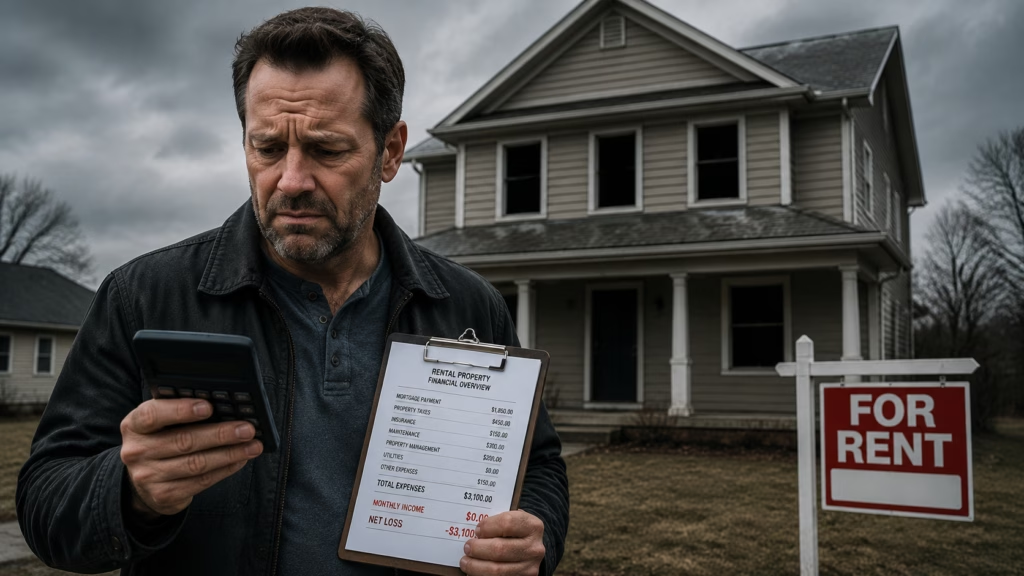
Rental property vacancy cost is often underestimated because landlords focus only on the obvious number: one month of lost rent. That is a start, but it is rarely the full cost.
A vacant rental can also create turnover repairs, cleaning costs, utilities, lawn care, advertising, leasing fees, concessions, insurance exposure, security concerns, and additional owner time. If you calculate vacancy too narrowly, you may make poor decisions about rent increases, tenant retention, property management, and renewal strategy.
The better approach is to calculate the true vacancy cost before you decide whether to raise rent, reject a renewal request, delay repairs, or wait for a stronger applicant.
Learn How Better Landlords Manage Better Rentals
Join our 2X weekly newsletter for clear, actionable guidance on property management, leasing, tenant issues, rental property operations, and real estate investing strategies you can actually use.
Start With the Full Vacancy Window
The first mistake is assuming vacancy starts when the prior tenant moves out and ends when the next tenant signs a lease. For cash flow purposes, the vacancy window should include every day the property is not producing rent.
That may include the notice period if the tenant stops paying early, the move-out date, inspection time, cleaning, repairs, marketing, showings, applicant screening, lease execution, and the new tenant’s move-in date.
A simple vacancy rate formula can help you measure the problem clearly. Rocket Mortgage explains that vacancy rate can be calculated by dividing vacant days by available days, then multiplying by 100. If your single-family rental is vacant for 30 days in a year, that is not “just one month.” It is roughly 8.2% of the rental year.
Calculate Direct Lost Rent First
Use Daily Rent, Not Monthly Rent
Monthly rent is useful, but daily rent gives you a more precise number.
Use this formula:
Monthly rent ÷ 30 × vacant days = direct lost rent
If your property rents for $2,100 per month, the daily rent is about $70. A 21-day vacancy costs about $1,470 in direct lost rent. A 45-day vacancy costs about $3,150.
This is the cleanest part of the calculation. It shows the income you did not collect while the property was empty.
Include Partial-Month Gaps
Do not round every vacancy to one month. A 10-day delay matters. A 17-day delay matters. A tenant who moves in on the 12th instead of the 1st creates a measurable income gap.
Small delays become especially important if you own multiple units. A few weeks here and there can quietly reduce annual yield.
Add Turnover and Make-Ready Costs
Cleaning and Repairs
A vacant unit usually needs work before it can be rented again. At a minimum, you may need cleaning, paint touchups, lock changes, smoke alarm checks, minor plumbing repairs, appliance service, landscaping cleanup, pest treatment, or carpet cleaning.
If the tenant left damage, the cost may be higher. Even if you can charge some items against the security deposit, you may still have timing delays, disputes, documentation work, or unrecovered amounts.
This is why vacancy should be connected to your move-out inspection process. The faster you identify the scope of work, the faster you can approve vendors and return the property to the market.
Owner Time Has Value
Small landlords often ignore their own time. But if you are coordinating vendors, answering inquiries, reviewing applications, driving to the property, meeting contractors, or handling tenant questions, that time has a cost.
You may not write yourself a check, but your vacancy calculation should still recognize the workload. A “cheap” vacancy can become expensive if it consumes hours of your time.
Include Carrying Costs During Vacancy
Expenses Continue Without Rent
Your mortgage, taxes, insurance, HOA dues, utilities, lawn care, pest control, security monitoring, and common-area expenses may continue even when no tenant is paying rent.
Some of those expenses exist whether the property is occupied or vacant. But vacancy makes them more painful because there is no rental income offsetting them.
If you pay utilities while the unit is vacant, include them in the calculation. If the property must remain cooled, heated, watered, or maintained for showings, those costs belong in your vacancy cost.
Vacancy Can Increase Risk
A vacant property may create risks that are harder to measure. Undetected leaks, break-ins, vandalism, pest activity, insurance complications, frozen pipes, and landscaping violations can all become more likely when a property sits empty.
You do not need to overstate the risk, but you should not ignore it either. A vacant property still needs oversight.
Add Marketing, Leasing, and Concessions
Advertising and Leasing Costs
If you use a property manager or leasing agent, vacancy may trigger leasing fees. If you self-manage, you may pay for advertising, listing upgrades, tenant screening, photography, lockboxes, yard signs, or software.
These costs should be added to lost rent and make-ready expenses. They are part of what it costs to convert an empty property back into an occupied one.
Many landlords understand vacancy loss as monthly rent multiplied by time vacant, but a more complete calculation should also include utilities, make-ready work, and leasing or advertising costs. Findigs makes a similar point in its discussion of how to calculate vacancy loss, which is why your calculation should go beyond rent alone.
Concessions Reduce Effective Rent
A concession is another vacancy-related cost. If you offer half a month free, waive a fee, reduce the deposit, or accept a lower rent to lease faster, the property may become occupied, but the economics still changed.
Concessions are not always bad. A small concession may be smarter than another month of vacancy. But it should be included in your calculation so you can compare options accurately.
Use a True Vacancy Cost Formula
A practical formula looks like this:
Direct lost rent + turnover costs + utilities + leasing costs + concessions + owner time + added vacancy risk = true vacancy cost
Here is a simple example:
Monthly rent: $2,100
Vacant days: 30
Direct lost rent: $2,100
Cleaning and repairs: $650
Utilities and lawn care: $175
Leasing fee or advertising: $900
Concession: $500
Estimated owner time: $250
Estimated true vacancy cost: $4,575
In this example, the vacancy did not cost one month of rent. It cost more than two months of rent.
Use Vacancy Cost to Make Better Decisions
Rent Increases
Before you raise rent, compare the increase to the potential vacancy cost. If a $100 monthly increase adds $1,200 per year, but losing the tenant could cost $4,500, you need to be confident the market supports the increase.
This does not mean you should avoid rent increases. It means you should price renewals with vacancy math in mind.
Tenant Retention
A good tenant has economic value. If the tenant pays on time, reports repairs early, takes care of the property, and communicates well, keeping that tenant may be worth more than pushing rent to the top of the market.
Tenant retention is not about being soft. It is about understanding net income.
Pricing the Vacancy
If the property is vacant now, use the cost formula to decide how aggressive your asking rent should be. Waiting 45 more days for an extra $75 per month may not make sense if the vacancy burn rate is high.
Local market data matters here. Broader rental reports can help you understand whether rents are rising, flat, or softening, but your pricing should still reflect nearby competition, days on market, and property condition.
Apartment List’s national rent data is one example of how rent trends can shift over time, which is why pricing should be reviewed during every vacancy, not copied from the prior lease.
Looking for Proven Real Estate Investing Strategies That Actually Work?
Master rental property cash flow and tenant management with expert guides from a 30-year industry veteran. Start learning today!