How CAM Common Area Maintenance Can Change Lease Costs
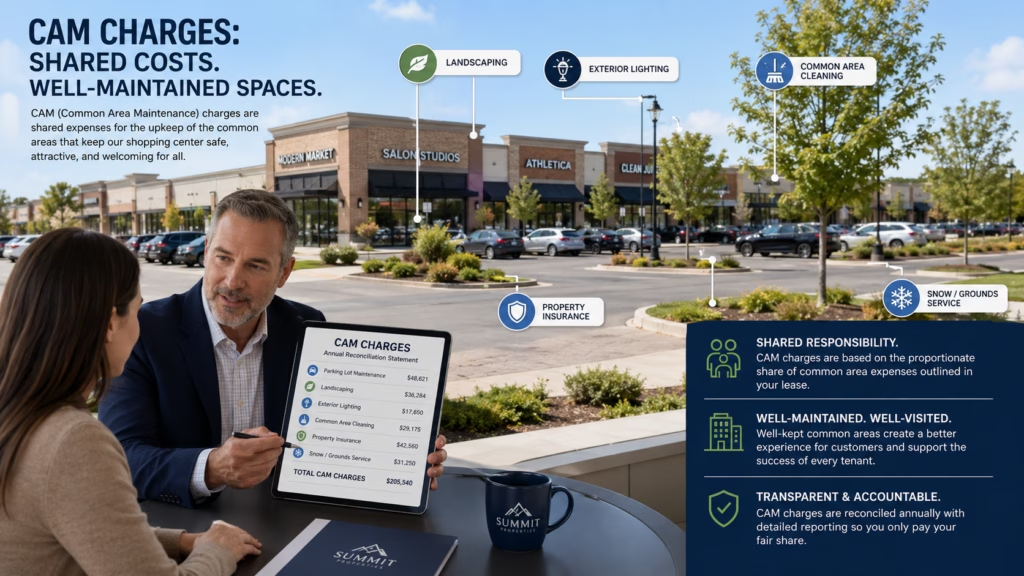
CAM, or common area maintenance, is one of the most important expense items in many commercial leases. It affects landlords, tenants, property managers, and investors because it determines how shared property costs are paid, estimated, reconciled, and disputed.
If you are reviewing a retail, office, industrial, or mixed-use lease, CAM language deserves careful attention. The base rent may look affordable, but the total occupancy cost can change once common area charges are added.
You can also compare CAM with related lease terms in our comprehensive real estate glossary.
Get Practical Property Management Tips Twice a Week
Want smarter systems for managing rentals, screening tenants, handling maintenance, and improving property performance? Sign up for our 2X weekly newsletter and get practical property management and real estate investing insights delivered straight to your inbox.
CAM as a Shared Property Expense
CAM charges are used to recover the cost of maintaining areas that benefit more than one tenant. These areas may include parking lots, sidewalks, landscaping, lobbies, shared restrooms, hallways, exterior lighting, loading areas, elevators, and other common property features.
J.P. Morgan’s overview of common area maintenance charges notes that CAM costs vary by asset class, lease type, and location, and can include items such as lighting, utilities, landscaping, janitorial service, snow removal, and parking lot maintenance.
In practical terms, CAM is not rent for the tenant’s private space. It is the tenant’s share of the property’s shared operating burden.
How CAM Charges Are Usually Calculated
CAM charges are commonly allocated based on each tenant’s pro rata share of the property. If a tenant occupies 10% of the leasable area, that tenant may be responsible for 10% of eligible CAM expenses.
For example, assume a shopping center has $300,000 in annual CAM expenses. If your tenant occupies 8% of the leasable area, that tenant’s share would be $24,000 for the year, or $2,000 per month before reconciliation.
That sounds simple, but the actual calculation depends on the lease. Some leases use rentable square footage. Others use leasable area, occupied area, building-specific pools, separate expense pools, or special allocations for tenants that benefit from certain services.
A restaurant, for example, may create different waste, grease, utility, or maintenance demands than a small office tenant. A large anchor tenant may have a separately negotiated CAM structure. A pad-site tenant may maintain its own building but still pay a share of certain center-wide costs.
Estimated Payments and Year-End Reconciliation
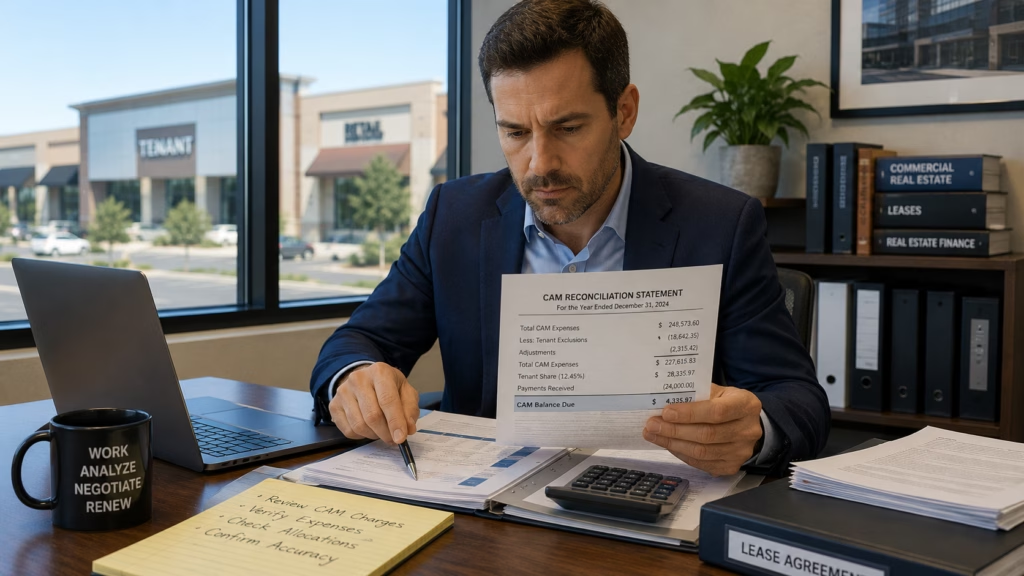
Many landlords bill CAM monthly based on an annual estimate. At the end of the year, the landlord compares estimated CAM collections with actual expenses. This is called CAM reconciliation.
If tenants paid less than their actual share, they may owe an additional payment. If they paid too much, they may receive a credit or refund, depending on the lease.
This is where disputes often begin. Tenants may question whether expenses were properly included. Landlords may discover that estimates were too low. Property managers may need to explain large increases caused by insurance, taxes, utilities, repairs, or vendor pricing.
Strong recordkeeping matters. CAM should be supported by invoices, contracts, budgets, allocation schedules, and clear lease language.
Expenses Commonly Included in CAM
CAM often includes ordinary costs needed to operate and maintain shared areas. These may include landscaping, snow removal, parking lot sweeping, exterior lighting, trash removal, janitorial service for common areas, security, repairs, management fees, common utilities, and maintenance contracts.
Some leases also include broader operating expenses under the CAM definition. That may bring in property management, insurance, taxes, administrative charges, roof maintenance, HVAC service, and certain capital expenses.
Lowndes’ discussion of CAM and operating expenses in commercial leases explains that CAM and operating expenses often cover the daily operation, maintenance, and repair of a commercial property, but disputes can arise over which expenses should or should not be included.
For landlords, broad expense recovery can help protect net operating income. For tenants, broad language can create cost uncertainty.
Expenses That May Need Extra Scrutiny
Not every property expense should automatically be treated as CAM. The lease should clarify whether the following items are included, excluded, capped, amortized, or separately billed:
Capital Repairs and Replacements
A parking lot reseal may be ordinary maintenance. A full parking lot replacement may be a capital project. The lease should say whether capital expenses can be passed through and, if so, whether they must be amortized over their useful life.
Landlord-Specific Costs
Leasing commissions, legal fees for negotiating new leases, marketing vacant space, financing costs, ownership-level accounting, and costs caused by landlord default are often contested items. These may benefit the landlord more than the tenants.
Costs Benefiting Only Certain Tenants
Some expenses do not benefit all tenants equally. A food court, medical building, drive-thru lane, loading area, or dedicated parking field may require separate treatment. Otherwise, tenants may pay for services they do not use.
CAM Caps and Controllable Expenses
Tenants often negotiate caps on controllable CAM expenses. A cap limits how much certain CAM costs can increase from year to year.
However, the definition of “controllable” matters. Taxes, insurance, utilities, snow removal, government-mandated costs, and emergency repairs are often excluded from caps because the landlord may not control those costs.
If you are a landlord, a cap that is too restrictive can reduce your ability to recover legitimate increases. If you are a tenant, no cap at all can make future occupancy costs harder to predict.
The best approach is usually precise drafting. The lease should say which expenses are capped, which are not, how the cap compounds, and whether unused increases carry forward.
How CAM Affects Investors
If you are buying a commercial property, CAM recovery directly affects net operating income. A property with strong CAM reimbursement language may be better protected from rising operating costs. A property with weak or inconsistent CAM language may expose the owner to expense inflation.
Do not rely only on the rent roll. Review the leases, CAM reconciliations, expense history, tenant payment records, and any pending disputes. You should know whether tenants are actually paying what the leases allow the landlord to recover.
A property may look profitable because expenses are understated or because CAM has not been properly reconciled. That can create problems after closing.
Practical Review Steps
Before signing or buying, focus on the mechanics.
Confirm how CAM is defined. Review the tenant’s pro rata share. Identify included and excluded expenses. Check whether capital items are recoverable. Look for caps, audit rights, administrative fees, gross-up provisions, reconciliation deadlines, and dispute procedures.
If you are a landlord, make the lease language clear before the tenant moves in. If you are a tenant, ask for prior-year CAM statements before signing. If you are an investor, compare lease rights with actual collections.