Absolute Triple Net Lease: What Investors Must Know
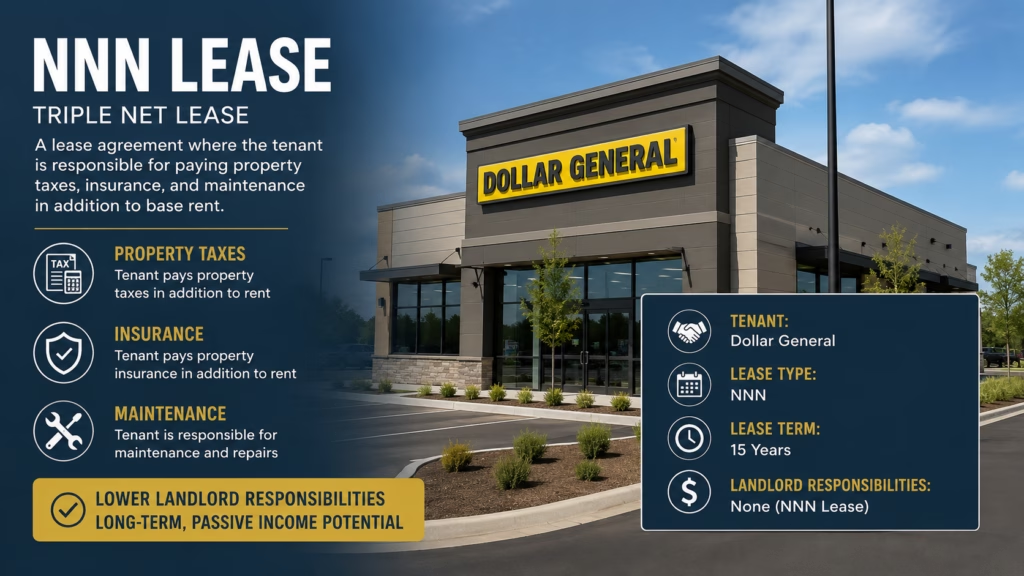
An absolute triple net lease, often called an absolute NNN lease, is one of the most landlord-friendly lease structures in commercial real estate. It can create predictable income, shift major property expenses to the tenant, and reduce day-to-day management responsibilities.
That does not make it risk-free.
If you are evaluating a property with an absolute NNN lease, you need to understand exactly what the tenant must pay, what obligations still remain with the owner, and how the lease language affects your long-term return.
Build a Stronger Rental Property Business
Subscribe to our 2X weekly newsletter to learn more about managing tenants, protecting cash flow, improving rental operations, and making better real estate investment decisions.
What Is an Absolute Triple Net Lease?
An absolute triple net lease is a commercial lease where the tenant pays base rent plus the major property expenses normally associated with ownership. These usually include property taxes, insurance, maintenance, repairs, and in many cases structural repairs or replacement obligations.
A standard triple net lease generally requires the tenant to pay taxes, insurance, and maintenance in addition to rent. Cornell’s legal definition of a triple net lease describes the structure as one where the lessee pays rent and utilities plus insurance, maintenance, and taxes.
The “absolute” version goes further. In an absolute NNN lease, the tenant may be responsible for nearly every property-related cost, including roof replacement, structural components, parking areas, casualty-related obligations, and compliance costs, depending on the contract language.
For related terms, you can also use our real estate glossary as a reference point when comparing lease structures.
How Absolute NNN Differs From a Regular NNN Lease
The main difference is the scope of responsibility.
In a typical NNN lease, the tenant usually pays the three major expense categories: real estate taxes, insurance, and maintenance. However, some responsibilities may remain with the landlord. Those can include roof repairs, structural repairs, foundation issues, major capital items, or replacement of building systems.
In an absolute NNN lease, the tenant’s obligation is broader. The tenant may be responsible for the property as if it owns the building during the lease term. That is why some investors view absolute NNN properties as closer to bond-like income than active real estate operations.
NAIOP explains that the triple net rent model shifts operating expenses such as property taxes, insurance, repairs, and maintenance to the tenant, either directly or through pass-through reimbursement. The absolute NNN version attempts to push that concept to its furthest practical point.
Why Investors Like Absolute NNN Leases
The appeal is straightforward: less expense volatility and fewer operational headaches.
If the lease is well written and the tenant is financially strong, you may receive rent while the tenant handles most property costs. That can make the asset attractive if you want relatively passive commercial real estate exposure.
More Predictable Net Income
With many rental properties, your net operating income can change quickly when taxes rise, insurance premiums increase, or major repairs appear. An absolute NNN lease can reduce that exposure because the tenant is contractually responsible for those costs.
That can make underwriting cleaner. Instead of projecting several uncertain expense categories, you focus heavily on rent, lease term, rent escalations, tenant credit, renewal options, and exit cap rate.
Lower Management Burden
An absolute NNN lease can also reduce the amount of time you spend coordinating vendors, managing maintenance, and approving repairs. The tenant may control much of the property operation, especially in a single-tenant building.
That said, you should not confuse lower involvement with no oversight. You still need to monitor compliance, insurance coverage, property condition, tax payments, and lease obligations.
The Main Risks You Should Watch
Absolute NNN properties are often marketed as simple investments. Some are. Others are only simple on the surface.
Tenant Credit Risk
Your investment may depend heavily on one tenant. If that tenant fails, your passive income can turn into an active problem. You may suddenly face vacancy, re-leasing costs, deferred maintenance, legal expenses, and a property designed for a very specific business use.
Before buying, review the tenant’s financial strength, operating history, industry risk, store-level performance if available, and parent-company guarantees.
Lease Language Risk
The label “absolute NNN” is not enough. The actual lease controls.
You need to verify whether the tenant is responsible for roof, structure, HVAC, parking lot, casualty restoration, code compliance, environmental matters, and capital replacements. A lease can be called absolute NNN in marketing material while still leaving important obligations with the landlord.
Real Estate Risk
A strong lease does not automatically make the real estate strong. If the tenant leaves, you still own the building.
Look at location quality, visibility, access, demographics, traffic counts, alternative uses, zoning, building layout, and local demand. A weak location with a strong lease may perform well during the lease term but become difficult to re-lease later.
What to Review Before Buying an Absolute NNN Property
Your due diligence should go beyond the rent amount and cap rate.
Review the Lease Carefully
Focus on the clauses that allocate responsibility. You want to know who pays for taxes, insurance, utilities, maintenance, structural repairs, capital replacements, casualty restoration, condemnation issues, and legal compliance.
Also review default provisions, notice requirements, renewal options, rent increases, assignment rights, subletting rights, and any landlord consent rights.
Verify Tenant Obligations Are Being Met
Do not assume the tenant is current just because rent is being paid.
Ask for proof of tax payments, insurance certificates, maintenance records, inspection reports, and evidence of required repairs. If the lease requires reserves, reporting, or specific insurance coverage, confirm those items are in place before closing.
Evaluate the Exit Strategy
Your exit value depends on more than the current rent. Buyers will consider remaining lease term, tenant credit, rent level compared with market rent, renewal probability, and the condition of the property.
A long lease with below-market rent may limit upside. A short remaining lease term may create re-leasing risk. A highly specialized building may reduce your buyer pool.
When an Absolute NNN Lease May Make Sense
An absolute NNN lease may fit your strategy if you want commercial real estate income with reduced operational responsibility. It may also work well if the tenant is strong, the lease term is long, rent bumps are clear, and the property has solid residual value.
It may be less suitable if you need high appreciation potential, flexible repositioning options, or hands-on value-add opportunities. Absolute NNN investments often trade some upside for stability.