Build a Landlord Pet Policy Renters Will Choose
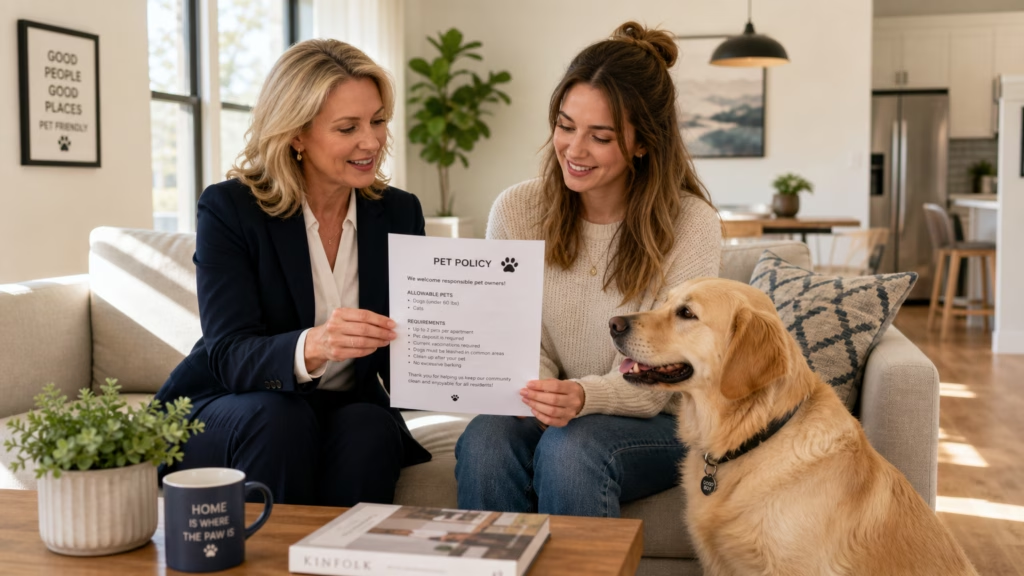
A landlord pet policy can either expand your pool of qualified tenants or quietly remove a large share of renters from consideration.
For younger renters, especially Gen Z and younger Millennials, pets are often treated as part of the household rather than an optional lifestyle accessory. A blanket no-pet rule may therefore exclude applicants who otherwise have strong income, credit, references, and rental histories.
Allowing pets does create risks. Flooring can be damaged, yards can be worn, odors can develop, and barking may generate complaints. But refusing all pets is not the only way to control those risks. A clear screening process, written pet addendum, appropriate charges, and consistent enforcement can make a pet-friendly rental both manageable and competitive.
Build a Stronger Rental Property Business
Subscribe to our 2X weekly newsletter to learn more about managing tenants, protecting cash flow, improving rental operations, and making better real estate investment decisions.
Pet-Friendly Housing Can Expand Your Tenant Pool
Pet ownership is not a niche preference. The American Pet Products Association’s latest pet ownership data shows continued growth in dog and cat ownership, with younger generations helping drive new pet acquisition.
That matters when you market a rental. A tenant with a pet may immediately remove every no-pet property from the search, even if those homes otherwise fit the tenant’s budget and location requirements. In a 2025 renter preference survey, 38% of respondents said a no-pets policy was an immediate deal-breaker.
A pet-friendly policy can therefore give you several business advantages:
- A larger applicant pool
- More inquiries for vacant units
- Greater differentiation from nearby no-pet rentals
- Additional pet-related income where permitted
- Stronger retention among tenants who find moving with a pet difficult
These benefits do not mean you should accept every animal. They mean you may gain more by managing pet risk than by avoiding it entirely.
Build the Policy Around Conduct and Property Risk
A useful pet policy tells applicants what is allowed, what documentation is required, and what behavior will cause a violation. It should not depend on vague statements such as “pets considered” or “small pets only.”
Define What the Property Can Accommodate
The property itself should influence your policy. A large single-family home with durable flooring and a fenced yard may support a different policy than a small upper-floor apartment with shared hallways.
Decide how your policy addresses:
- Permitted animal types
- Maximum number of pets
- Size or weight restrictions, if used
- Local licensing requirements
- Required vaccinations
- Spaying or neutering requirements, if lawful
- Waste removal
- Noise and nuisance standards
- Leash or restraint rules
- Use of yards and common areas
- Unauthorized animals and pet sitting
Do not copy restrictions from another property without considering your building, insurance policy, HOA rules, and local law. A restriction that makes sense in one rental may be unnecessary or unenforceable in another.
Screen the Pet and the Applicant Separately
A strong tenant does not automatically mean a well-managed animal, and the presence of a pet should not replace your normal tenant screening standards.
You can request information such as the animal’s age, type, approximate size, vaccination status, licensing information, and prior rental history. You may also ask the applicant to provide a photo and contact information for a prior landlord who observed the animal at the previous residence.
Useful questions include:
- Has the pet lived in a rental before?
- Did the prior landlord report damage or complaints?
- Is the animal house-trained?
- Has it shown aggressive or destructive behavior?
- How long is the pet typically left alone?
- Who cares for the pet when the tenant travels?
- Is the animal current on legally required licenses and vaccinations?
Apply the same process to every applicant with an ordinary household pet. Consistency makes the policy easier to administer and reduces the risk of decisions based on personal preference.
Price the Risk Without Making the Rental Uncompetitive
Depending on state and local law, you may be able to charge a refundable pet deposit, a one-time pet fee, monthly pet rent, or some combination of these.
Each charge serves a different purpose.
A pet deposit provides funds that may be applied to documented pet-related damage, subject to local deposit rules.
A pet fee is generally a one-time charge for allowing the pet, but non-refundable fees are restricted in some jurisdictions.
Pet rent adds a recurring monthly amount while the approved pet occupies the property.
Before setting these charges, compare nearby pet-friendly rentals. An aggressive package that combines a large deposit, high initial fee, and substantial monthly pet rent may cancel out the marketing benefit of allowing pets.
You should also distinguish ordinary wear from actual damage. A pet charge should not become a substitute for documenting stained flooring, scratched doors, damaged landscaping, persistent odors, or other specific losses.
Use the Property to Reduce Pet-Related Damage
Policy language works better when the rental is prepared for the type of occupancy you are allowing.
Durable hard-surface flooring may be easier to clean than carpet. Washable paint can simplify turnover. Secure fencing may reduce escape risks in a single-family rental. Exterior waste stations can help at small multifamily properties. Door sweeps, screen protection, and clearly designated pet areas may also reduce wear.
Your inspection process should include pet-related conditions without turning every visit into a search for violations. Look for:
- Flooring stains or scratching
- Odors
- Door and trim damage
- Yard deterioration
- Improper waste disposal
- Fleas or pest activity
- Unauthorized additional animals
- Noise or common-area complaints
Document conditions at move-in with photographs. If you later identify damage, you will have a stronger record of whether it existed before the tenancy.
Keep Assistance Animals Outside the Ordinary Pet Process
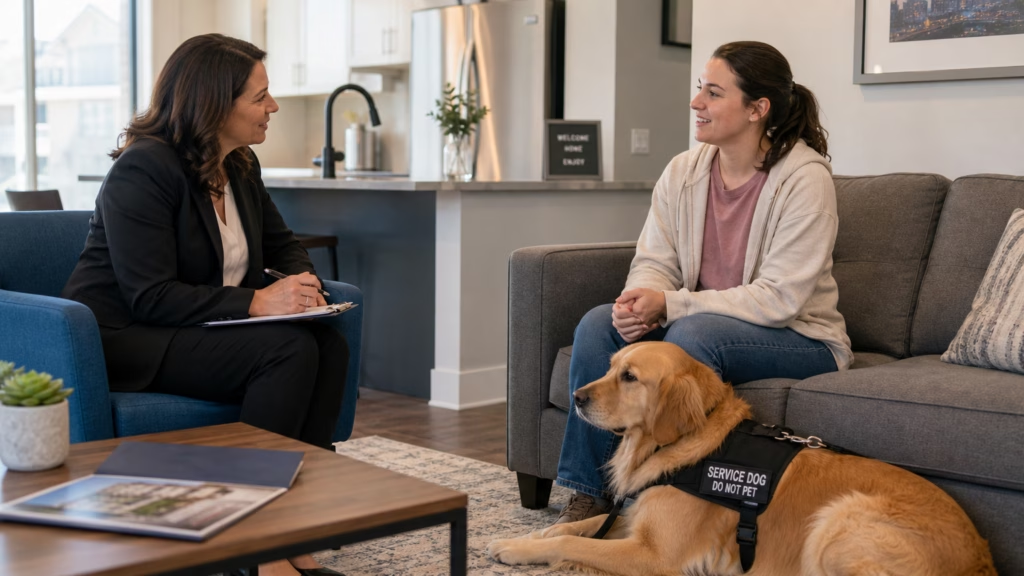
A household pet and an assistance animal are not handled the same way.
Under fair housing requirements, a tenant or applicant with a disability may request a reasonable accommodation involving an assistance animal. HUD’s fair-housing guidance on assistance animals explains that these requests may require exceptions to ordinary pet ownership rules.
Do not automatically apply your standard pet screening form, pet deposit, pet rent, breed rule, or no-pet policy to an accommodation request. Use a separate written process that follows current federal, state, and local requirements.
You may still address actual damage, dangerous conduct, or serious nuisance issues through lawful and properly documented procedures. The important point is that you should evaluate the specific accommodation request rather than treating the animal as an ordinary pet.
Because this area can create significant fair-housing exposure, review your forms and procedures with a qualified local attorney or housing professional.
Make the Pet Addendum Operational
Your pet policy should become a signed lease addendum rather than remain a conversation during the showing.
The addendum should identify each approved animal and explain the rules that apply throughout the tenancy. Include the animal’s description, permitted charges, care requirements, waste rules, noise standards, liability obligations, inspection rights, and consequences for unauthorized animals.
It should also state that approval applies only to the identified pet. Without that provision, a tenant may assume approval of one dog permits a replacement animal, an additional cat, or regular pet sitting for someone else.
Clarify what happens if the approved animal dies or leaves the household. The tenant should not automatically replace it without written approval under your current screening process.
Sample Pet Addendum Language
The following sample can be adapted to your property, lease, insurance requirements, and local law.
Approved animal
Landlord authorizes Tenant to keep the following animal at the Premises:
Animal name: ____________________
Animal type or breed: ____________________
Approximate weight: ____________________
Color and identifying features: ____________________
License or registration number, if required: ____________________
Approval applies only to the animal identified above. No additional or replacement animal may be kept at the Premises without the Landlord’s prior written approval.
Tenant responsibilities
Tenant agrees to keep the approved animal under reasonable control and to comply with all applicable licensing, vaccination, leash, sanitation, and animal-control requirements.
Tenant is responsible for promptly removing animal waste from the Premises, yard, and common areas. Tenant must prevent the animal from creating excessive noise, offensive odors, unsafe conditions, property damage, or unreasonable interference with neighbors.
The animal may not be left unattended in any manner that creates a risk of injury, escape, property damage, or disturbance.
Property condition and damage
Tenant is responsible for damage caused by the approved animal beyond ordinary wear and tear, including damage to flooring, doors, walls, screens, landscaping, fencing, appliances, fixtures, and common areas.
Tenant must promptly report any animal-related damage, pest activity, or injury occurring at the Premises. Landlord may require Tenant to correct animal-related sanitation or property-condition concerns within the time permitted by the lease and applicable law.
Pet charges
Tenant agrees to pay the following lawful pet-related charges:
Refundable pet deposit: $____________________
One-time pet fee: $____________________
Monthly pet rent: $____________________
Pet-related charges do not limit Tenant’s responsibility for actual damage, cleaning, pest treatment, odor removal, or other costs caused by the animal, subject to applicable law.
Insurance and liability
Tenant accepts responsibility for the conduct of the approved animal and for injuries or damage caused by it. Tenant must maintain any renters insurance or animal-liability coverage required by the lease and provide proof of coverage upon request.
Tenant must notify Landlord promptly of any bite, attack, injury, complaint, or animal-control incident involving the approved animal.
Inspections and violations
Landlord may inspect the Premises for lease compliance and property condition after providing any notice required by the lease and applicable law.
Unauthorized animals, repeated nuisance complaints, unsafe conduct, failure to remove waste, or uncorrected animal-related damage may constitute a lease violation and may result in withdrawal of pet approval or other lawful enforcement action.
Assistance animals
This addendum applies to ordinary household pets. Requests involving service animals or other assistance animals will be evaluated separately under applicable fair housing and disability laws. Pet fees, pet rent, and pet deposits will not be charged for an approved assistance animal where prohibited by law.
Acknowledgment
Tenant acknowledges that permission to keep the approved animal is conditional on continued compliance with this addendum and the lease.
Tenant signature: ____________________ Date: __________
Landlord or agent signature: ____________________ Date: __________
This language is a starting point rather than a substitute for a locally compliant lease. Pet deposits, non-refundable fees, pet rent, breed restrictions, liability requirements, and enforcement procedures may be limited by state or local law. Have the addendum reviewed before using it, especially if your property is subject to an HOA, condominium association, local animal ordinance, or insurance restriction.
Measure Whether the Policy Improves Performance
After adopting a pet-friendly policy, track what actually happens.
Compare inquiry volume, vacancy time, pet-related income, renewal rates, repair costs, complaints, and security-deposit deductions. Do not judge the policy based on one unusually good or bad tenancy.
You may discover that pet-friendly units lease faster with little additional damage. You may find that certain property features need improvement. You may also learn that your charges are too high, too low, or too difficult for applicants to understand.
Use those results to refine the policy while keeping the screening standards consistent.
A Clear Policy Is Better Than an Informal Exception
A landlord pet policy works best when it is deliberate. You decide what the property can support, screen applicants consistently, document approved animals, charge lawful and reasonable amounts, and enforce behavior standards through a written addendum.
For younger renters who consider pets part of the household, a pet-friendly rental may be significantly more attractive than a comparable no-pet property. That can support demand, reduce vacancy, and improve retention.
You do not have to choose between protecting the property and allowing pets. With the right policy, you can do both.