Tenant Welfare Check When a Renter Stops Responding
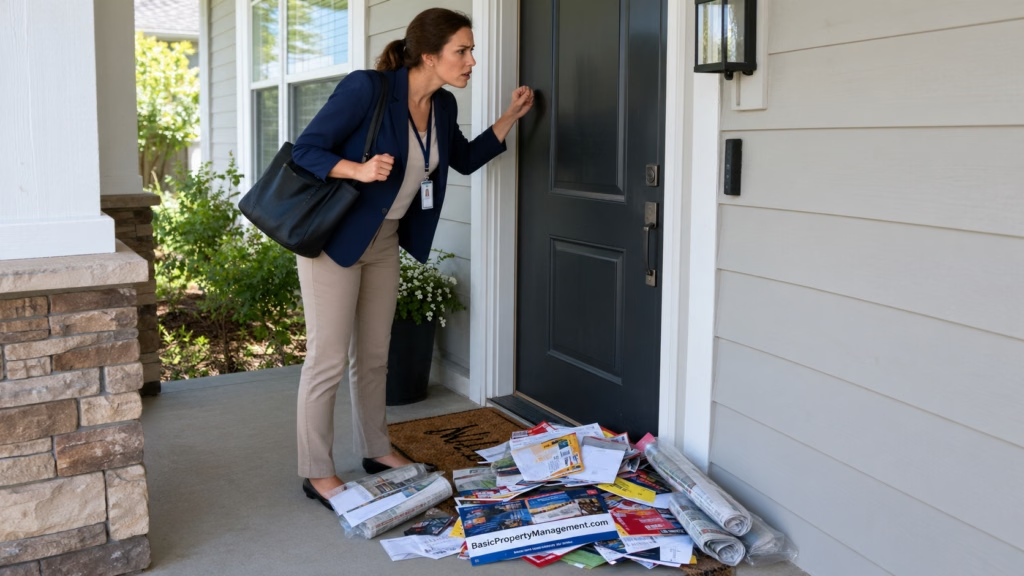
A neighbor reports that packages have been sitting outside a tenant’s door for several days, the tenant’s car has not moved, and nobody answers repeated knocks. Those facts justify follow-up, but they do not tell the landlord whether the tenant is sick, traveling, hospitalized, working unusual hours, or simply avoiding contact.
A tenant welfare check should address the safety concern without turning silence into an abandonment decision. Gather specific observations, try reasonable contact methods, use emergency or non-emergency responders when the facts support it, and keep landlord access separate from public-safety entry. Until you establish something different through the appropriate process, continue managing the unit as an occupied rental.
Get Actionable Property Management Tips Twice a Week
Want smarter systems for managing rentals, screening tenants, handling maintenance, and improving property performance? Sign up for our 2X weekly newsletter and get practical property management and real estate investing insights delivered straight to your inbox.
Get Specific Facts From the Neighbor
Neighbor reports become more useful when management can distinguish what someone actually observed from what they assume happened. Ask when the neighbor last saw or spoke with the tenant, what changed, and what caused them to contact you now.
Useful details include packages or newspapers accumulating, repeated unanswered knocks, a pet making unusual noise, water running continuously, an alarm sounding, a strong odor, or a call for help from inside. Record dates and times when the neighbor can provide them.
Do not ask the neighbor to investigate further. Peering through windows, trying doors, collecting mail, or entering a patio or yard can create privacy and access problems without giving management reliable information.
Keep your response narrow as well. Thank the neighbor for reporting the concern and tell them you will follow up. Do not discuss the tenant’s rent balance, medical history, emergency contacts, lease disputes, or other information from the tenancy file.
Call 911 When the Facts Indicate Immediate Danger
Some reports call for emergency responders rather than another round of texts and voicemails. A person calling for help, visible smoke, an active fire, a serious injury someone can see, a violent incident, or another condition requiring immediate police, fire, or medical assistance belongs with 911.
Federal guidance on calling 911 describes an emergency as a situation that requires immediate police, fire, or ambulance assistance, so give the call-taker the property address, unit number, nature of the concern, and the observations you can verify.
Do not inflate uncertain facts to get a faster response. If the concern comes from five days of no contact and accumulating packages, say that. A neighbor who heard someone calling for help can provide that specific fact.
Management should also remain reachable after the call. Responders may need a gate code, building location, key contact, or other property information even when they decide how to handle entry themselves.
Use the Local Non-Emergency Line for Credible but Nonurgent Concerns
Not every credible concern requires an emergency response. A tenant who has stopped answering calls for several days while neighbors report unusual conditions may justify a welfare request even when nobody has identified an immediate threat.
Contact the local police or public-safety agency through its non-emergency channel and ask how it handles welfare or wellness checks. Provide the rental address, your relationship to the tenant, the last known contact, the observations neighbors reported, and the contact attempts management has already made.
Let the agency decide what response its procedures support. Property managers should supply accurate information rather than predict whether responders will enter, locate the tenant elsewhere, contact relatives, or take another step.
Keep a note of when you called, which agency you contacted, and any case or incident number the agency provides. That record becomes important if concern continues after the first request.
Check Recent Rent, Maintenance, and Contact Records
Before drawing conclusions from an unanswered phone, review information that already exists in the normal tenancy file. Recent activity can explain an absence or show that the situation changed more recently than the neighbor realizes.
Look for a travel notice, maintenance message, rent payment, scheduled repair, email about work, utility issue, or earlier discussion of an extended absence. Check whether management has an emergency contact and whether the tenant recently changed a phone number or email address.
Use several ordinary contact methods when the situation does not require an immediate emergency response. A call, text, email, and message through the tenant portal may reach someone who missed one channel.
Do not turn this review into surveillance. Management does not need to search the tenant’s social-media accounts, contact an employer, track a vehicle, or recruit neighbors to monitor the resident’s movements.
Give Responders Building Access Without Turning It Into a Landlord Inspection
Police, fire, or medical responders may ask management for a building key, gate code, unit location, or access to a common area. Help with the property information they need, but keep their public-safety response separate from the landlord’s ordinary right of entry.
A landlord may also have an independent reason to enter. Water flowing from the unit into the apartment below, smoke, an unsecured exterior door, or another condition threatening the property can create its own maintenance issue.
State rules differ on entry during emergencies and tenant absences. Florida’s landlord access statute illustrates the distinction by addressing property protection, repairs, emergencies, and certain tenant absences while also restricting abuse of landlord access.
Document the actual reason for any management entry. “Entered because water was leaking into Unit 2B” creates a clearer record than “entered because tenant would not answer.”
Limit What You Share With Emergency Contacts
An emergency contact can help establish whether the tenant is safe, but the contact form does not automatically make that person a representative for the tenancy. Use the contact to address the immediate concern, then verify separate authority if the person later asks for keys, account information, belongings, or lease changes.
A concise call or message can explain that management has been unable to reach the tenant regarding the rental and wants to know whether the contact has heard from them. You usually do not need to disclose unpaid rent, neighbor complaints, maintenance history, or other private account details.
If the contact confirms that the tenant is traveling, hospitalized, or staying elsewhere, record only the information management needs. Ask how the tenant wants property-related communication handled if the absence will continue.
Should the contact say they have authority to act for the tenant, treat that as a separate verification step. Do not hand over a key solely because someone appears on an emergency-contact form.
Do Not Convert Silence Into an Abandonment Decision
An unreachable tenant and an abandoned rental are different issues. Current rent, furniture inside the unit, active utilities, a vehicle that comes and goes, recent communication, or a known temporary absence can all conflict with an assumption that the tenant surrendered possession.
Even unpaid rent does not make unanswered calls a reliable abandonment test. Apply the process that governs the property rather than creating an informal rule based on mail accumulation, an empty parking space, or a neighbor’s belief that the tenant moved.
Florida provides a useful example of why landlords should keep the two issues separate. Its residential possession statute sets specific conditions for an abandonment presumption and states that the presumption does not apply when rent remains current or the tenant gave written notice of an intended absence.
Other jurisdictions use different standards. Keep managing the property as occupied until the facts and the applicable process establish a different status.
Close the Safety Concern Before Addressing Rent, Access, or Possession
Once responders report back, stop treating the case as one unresolved safety question. Their findings determine whether management closes the welfare concern, repairs property damage, coordinates an extended absence, or moves into a separate tenancy process.
If responders or an emergency contact confirm that the tenant is safe, address any maintenance appointment, rent issue, or communication problem through the normal tenancy process. When the tenant expects a prolonged absence, confirm how management should coordinate necessary property access without asking for unrelated personal or medical details.
If responders cannot confirm the tenant’s status, preserve the contact chronology and continue normal tenancy administration. Do not increase entry, remove belongings, change locks, or market the unit solely because the welfare request did not locate the tenant.
Responders may damage a door or lock when they enter. Secure the property after they finish and document the repair. If authorities confirm that the tenant has died, move the file into the separate process for estate contacts, authorized access, belongings, rent, and deposit handling covered in our tenant death during lease guide rather than continuing to treat the situation as a welfare concern.
Keep One Incident Log for Calls, Entry, and Follow-Up
Neighbors, leasing staff, maintenance technicians, emergency contacts, police, and ownership may all contribute information within a short period. Put those contacts into one incident log so management does not end up with conflicting timelines across email, text messages, and work orders.
Record the last known tenant communication, specific neighbor observations, each contact attempt, agency calls, incident numbers, any property entry, damage responders caused during entry, repairs, and the eventual outcome. Separate confirmed facts from speculation.
For example, write “three packages remained outside the unit from October 2 through October 5” rather than “tenant disappeared.” Record “no response to calls on October 4 and 5” instead of “tenant abandoned the property.”
That level of detail gives management a usable chronology if the tenant later contacts the office, the welfare concern continues, or a separate possession issue develops.
Keep Safety, Property Access, and Possession Separate
A tenant welfare check addresses whether someone may need assistance. It does not, by itself, establish a landlord’s right to take possession of the rental or broaden routine access rights.
Start with specific facts, choose emergency or non-emergency responders according to the level of concern, and provide accurate property information when they need access. Continue normal rent accounting, maintenance, and tenancy administration while the resident’s status remains uncertain.
The landlord can protect both the tenant and the property by resisting one shortcut in particular: treating silence as surrender. Welfare concerns deserve a prompt response, but possession requires its own facts and process.