How to Handle A Sewer Backup Rental Property Cleanup
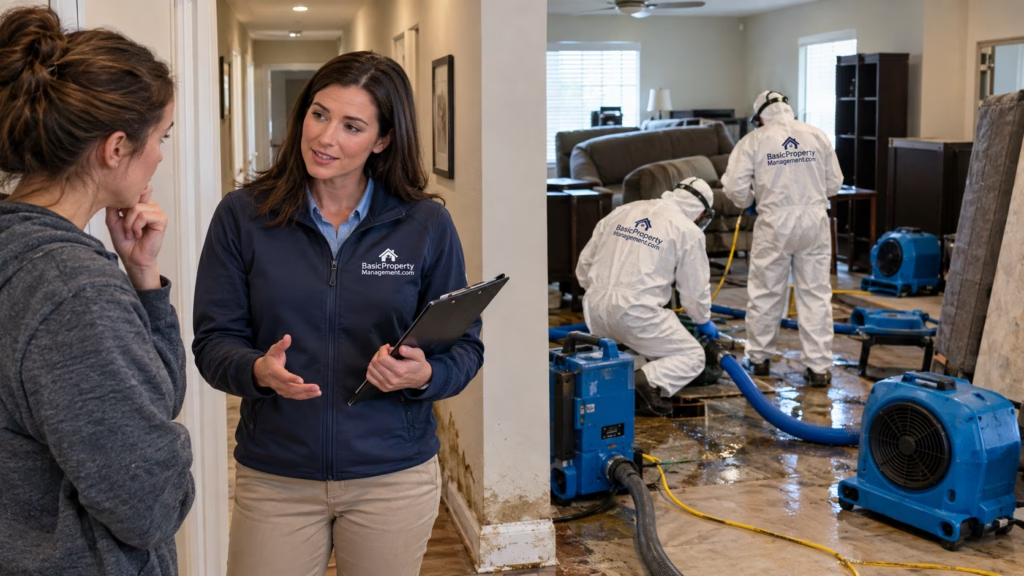
Sewage coming up through a toilet, shower, or floor drain changes the maintenance priorities immediately. The plumbing failure still needs a diagnosis, but the landlord also has to limit exposure, coordinate contaminated-water cleanup, keep the tenant informed, and decide whether the unit can remain occupied while work is underway.
A sewer backup rental property response is easier to manage when those decisions are treated as separate workstreams instead of one plumbing ticket. Source control, remediation, temporary accommodation, restoration, and return-to-occupancy each need a clear record. Keeping those tracks aligned helps prevent a fast-moving emergency from becoming a second problem in communication or documentation.
Learn How Successful Landlords Manage Better Rentals
Join our 2X weekly newsletter for clear, actionable guidance on property management, leasing, tenant issues, rental property operations, and real estate investing strategies you can actually use.
One Sewage Incident Creates Several Jobs at Once
The first service call may sound simple: a toilet overflowed or wastewater appeared in a tub. Within minutes, management may be coordinating a drain contractor, restoration company, tenant, owner, insurer, and nearby residents.
Assign one person to coordinate the incident, maintain the timeline, authorize vendors under the property’s emergency procedures, and send tenant updates.
Avoid letting each vendor define the whole response. Plumbing contractors may clear the line without handling contaminated flooring, while restoration contractors may remove damaged materials without determining why the backup occurred. Management needs to connect those scopes.
Solve the Problem Before Cosmetic Cleanup
Find out whether sewage is still entering the unit and what plumbing should stop being used. In a multi-unit building, ask whether fixtures in adjacent apartments are backing up or whether activity elsewhere appears to trigger the flow.
Keep residents away from contaminated areas while the source is being evaluated. The CDC’s guidance for cleaning when sewage is involved calls for protective equipment such as rubber boots, gloves, and goggles, which is a useful reminder that wastewater shouldn’t be treated like an ordinary clean-water spill.
Bring in the appropriate drain or plumbing contractor to identify and stop the source. Depending on the system, the problem could involve a localized obstruction, building drain, stack, lateral, septic system, or external sewer issue.
Once flow is controlled, record what the plumber found rather than simply closing the work order as “drain cleared.” That diagnosis will affect both restoration and later prevention.
Contaminated-Water Cleanup Requires a Specific Process
A working drain doesn’t mean the occupied space is ready for normal use.
Wastewater can move under flooring, behind baseboards, into drywall, beneath cabinets, or through penetrations into a lower unit. Porous materials may need removal even when the visible surface looks dry.
EPA’s mold and contaminated-water cleanup guidance recommends using professionals experienced with buildings damaged by sewage or other contaminated water. For a landlord, that supports separating plumbing repair from extraction, cleaning, drying, and restoration instead of assuming one vendor has completed every part of the job.
Ask the remediation contractor to define the affected area, materials removed, surfaces cleaned, drying equipment installed, and how drying progress will be checked. If HVAC components may have been exposed, have that condition evaluated before relying on the system during cleanup. Include adjoining units or common areas when water could have migrated beyond the room where the backup first appeared.
Decide on Occupancy After Cleanup is Verified
Some sewage incidents can be isolated from the tenant’s living area. Others make ordinary use of the rental impractical.
Look at what the resident can actually access during cleanup. A basement backup behind a closed utility door is different from contamination in the only bathroom of a one-bedroom apartment. Demolition, drying equipment, blocked walkways, odor, electrical concerns, or loss of essential plumbing can also change the answer.
If the tenant can remain, put the boundaries in writing. Identify which rooms should not be entered, what fixtures should not be used, when vendors will arrive, and when management expects to reassess conditions.
Temporary accommodation may make more sense when the affected area cannot be isolated or normal use of essential parts of the unit is interrupted. Document what management is arranging or approving, the expected period, how extensions will be handled, and the next review point.
Reassess the housing decision as flooring is removed, walls are opened, or additional contamination is found.
Give Tenant Updates on a Schedule Instead of Random Reassurance
Tenants generally need concrete information more than frequent vague messages.
Give the resident one management contact and a predictable update cadence. During the first day, updates may be needed whenever the source, cleanup plan, or occupancy status changes. After the scope stabilizes, a daily update may be enough until repairs are complete.
Useful updates answer four questions: what has been confirmed, what work happens next, what the tenant should avoid or do, and when management will update them again.
Don’t promise a return date before the remediation scope is known. Wet subflooring or contaminated drywall discovered during removal can extend reconstruction.
Keep vendor scheduling and tenant communication connected. If a restoration crew will enter at 8 a.m., the tenant should hear that from management before the crew arrives.
Building Repairs and Tenant Belongings Should Stay Separate
Furniture, rugs, boxes, clothing, and electronics can sit directly in the work area. They may also prevent a remediation contractor from reaching contaminated building materials.
Photograph visibly affected personal property before items are moved when it is practical to do so. Coordinate with the tenant about access and relocation rather than treating personal belongings as part of the contractor’s demolition scope.
Building invoices should remain separate from records concerning tenant-owned items. That distinction makes the incident file easier to reconcile and reduces confusion if the owner and tenant are working with different insurers.
If belongings block restoration work, give the tenant a clear deadline and process for moving them. When contamination makes handling difficult, ask the remediation contractor how the area should be managed rather than having maintenance staff improvise.
Return to Occupancy Only After Everything is Good
The end of temporary accommodation should be tied to the condition of the unit, not the moment wastewater stops flowing.
Before normal occupancy resumes, confirm that the source has been corrected, materials that could not be cleaned and dried have been addressed, remaining surfaces have been cleaned, the affected area is dry, essential plumbing and utilities function, and active repair work no longer blocks ordinary use.
EPA’s flooded-home reoccupancy guidance says cleanup should be complete before reoccupation and identifies removal of materials that cannot be cleaned and dried, restoration of essential equipment, drying, and cleaned remaining surfaces as indicators of readiness.
Ask the remediation or restoration contractor for completion records when available. Final photographs, moisture documentation, repair invoices, and the date management released the area back to normal use should stay with the incident file.
For a tenant who stayed elsewhere, provide a concise summary of completed repairs and any remaining scheduled work before return.
The Incident Record Should Mirror the Work
Reconstructing a sewage emergency from email, texts, invoices, and memory weeks later is difficult. Create one incident file as soon as the report arrives.
Track the initial report time, affected rooms, instructions given to the tenant, vendor arrival times, plumbing diagnosis, remediation scope, photographs, insurance contacts, temporary accommodation decisions, drying records, repair invoices, and return-to-occupancy confirmation.
Our rental property maintenance schedule already treats sewer backups as emergency maintenance and emphasizes recording vendors, costs, photos, and follow-up. The same discipline is especially useful when several contractors are involved in one loss.
Separate confirmed facts from early assumptions. If wastewater appeared through a tub drain, record that observation. Don’t label the tenant as the cause until the source has actually been established.
Root Cause Belongs in the Final Report
Restoration puts the unit back together. Cause analysis reduces the chance of repeating the same incident.
Review the plumber’s findings after the urgent work is complete. A localized obstruction may point to one maintenance response, while a damaged lateral, root intrusion, recurring stack problem, or septic issue may call for camera inspection, repair, scheduled cleaning, or another preventive measure.
Multi-unit properties deserve a wider review when several apartments share the affected piping. The apartment where sewage first surfaced may be the lowest opening in the system rather than the source of the blockage.
Add any preventive work to the property’s maintenance calendar and keep the original incident documentation available for future vendors. Recurring backups are easier to diagnose when the next contractor can see what was found, repaired, and recommended previously.
Create an Emergency Readiness Plan Before the Problem Occurs
A sewage event moves too quickly to search for every vendor and approval after the tenant calls.
Keep current contacts for a drain or plumbing contractor, contaminated-water remediation company, electrician, HVAC provider, insurer, and after-hours manager. Define who can authorize emergency spending and temporary accommodation when the owner cannot be reached immediately.
The procedure should identify where photographs are stored, who communicates with tenants, how accommodation expenses are approved, and what documentation is required before normal use resumes.
A sewer backup rental property emergency is not finished when the pipe is open. The property still has to move through contamination control, cleanup, drying, tenant coordination, restoration, and a documented return-to-occupancy check.
Handling those tracks separately gives landlords and property managers a cleaner way to manage the incident from the first report through the final repair.