
Tenant Credit Freeze During a Rental Application
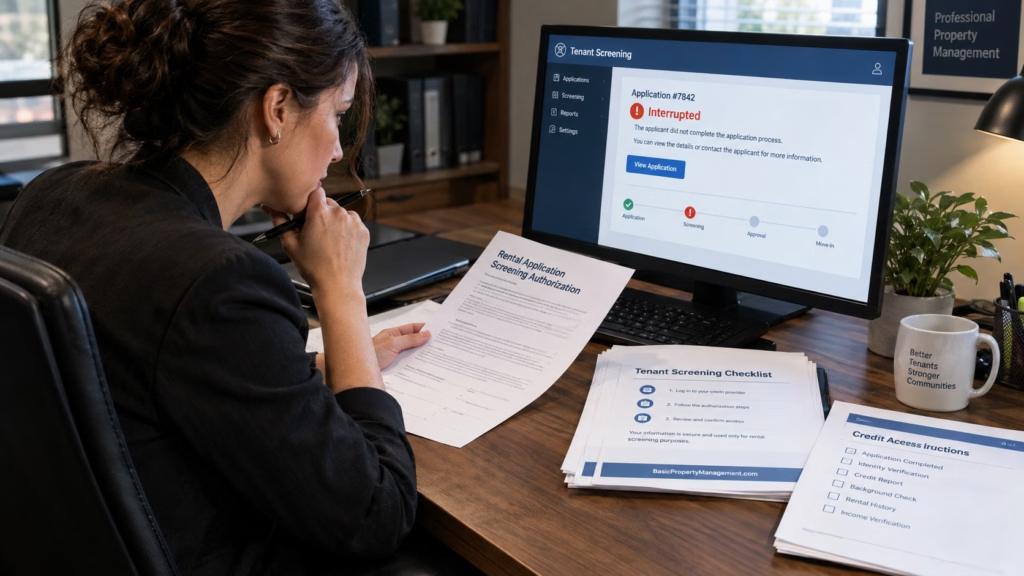
A rental application can stall even when the applicant submitted every document you requested. The screening provider may return an unavailable credit file, a security-freeze notice, or a request for additional verification, leaving the landlord with an incomplete report and an applicant waiting for an answer.
A tenant credit freeze rental application delay calls for a screening-process fix, not a judgment about the applicant. Confirm what stopped the report, identify which credit source the provider needs, keep the applicant’s authorization on file, and give the applicant a clear deadline to complete the required step. Once the report becomes available, return to the same written screening criteria you use for everyone else.
Learn How Successful Landlords Manage Better Rentals
Join our 2X weekly newsletter for clear, actionable guidance on property management, leasing, tenant issues, rental property operations, and real estate investing strategies you can actually use.
Confirm the Screening Provider Actually Reported a Credit Freeze
Start with the provider message rather than the applicant’s explanation. A security freeze, identity-verification failure, unavailable credit file, and technical error can all interrupt screening, but they do not require the same response.
Save the error message or status shown in the screening platform. Record the date, application identifier, report component affected, and any instructions the provider gives management or the applicant. If the message does not identify the cause clearly, contact the screening provider before telling the applicant to change anything.
Applicants may call any credit-access problem a “freeze,” so management should verify the provider’s exact message before choosing the next step. A provider may actually need additional identity verification, a corrected Social Security number, or another applicant-side step that has nothing to do with lifting a bureau freeze.
Do not record the interruption as bad credit. At this stage, management has not received the credit information needed to evaluate the applicant under its normal criteria.
Identify the Bureau or Data Source the Screening Provider Uses
Telling an applicant to “unfreeze your credit” can create unnecessary work if the screening platform uses only one bureau or relies on a different verification source.
Ask the provider which credit file or screening component failed. Some tenant-screening services use one nationwide credit bureau for the credit portion, while others combine credit data with identity, eviction, criminal-record, or rental-history products from different sources.
Give the applicant only the information needed to restore access for that screening request. If the provider says it needs access to an Experian file, for example, there may be no reason to tell the applicant to remove freezes at TransUnion and Equifax as well.
Provider-specific instructions also reduce security risk. Management should never ask an applicant to send a bureau PIN, password, recovery code, or account login simply to prove that they lifted the freeze.
Preserve the Applicant’s Screening Authorization Before Retrying
A credit freeze and screening consent address different parts of the process. The applicant can authorize a rental-screening report while a bureau or screening provider still blocks access to the underlying file.
Keep the original authorization with the application record. The FTC’s guidance for landlords using consumer reports explains how landlords may use consumer reports for rental decisions and how report information can trigger specific notice requirements, so preserving the authorization and report history gives management a cleaner file if questions arise later.
If the provider requires the applicant to complete a new authorization, identity check, or disclosure before another attempt, use that workflow. Do not create a manual workaround that asks staff to collect more sensitive credit information than the screening service normally requires.
Tell the Applicant Exactly What the Provider Needs
A useful notice describes the interruption without implying that the applicant failed screening. State that the provider could not complete the credit portion, identify the provider’s stated reason, and explain what action the applicant needs to take.
For a confirmed credit freeze, the applicant may need to lift the freeze temporarily or follow another bureau-specific process. The CFPB’s guidance on security freezes explains that consumers can temporarily lift a freeze without permanently removing it, which lets applicants preserve the protection after the screening window closes.
Keep the instruction narrow. Management needs the screening provider to regain appropriate access; it does not need the applicant to expose every credit file indefinitely.
Ask the applicant to notify management after completing the provider’s requested step. From there, verify through the screening platform whether the report can proceed.
Set a Deadline for Resolving the Interrupted Report
A stalled screening report can hold an application open while other applicants continue moving through the process. Establish a standard timeframe for applicant-side screening problems so staff do not improvise deadlines based on individual preference.
Match the deadline to the provider’s process. An online freeze lift may take little time, while manual identity verification or document review can require longer. The policy should give applicants a reasonable opportunity to correct the interruption without leaving the property’s leasing process open-ended.
Tell the applicant what must happen by the deadline. “Fix your credit issue” gives little direction. “Complete the screening provider’s requested credit-access step and confirm completion by Thursday at 3 p.m.” gives the applicant a specific task and management a clear follow-up point.
Our tenant screening checklist can help standardize authorization, income verification, rental history, and other screening steps, which makes it easier to handle a delayed credit component without changing the rest of the process.
Continue the Screening Steps That Do Not Depend on Credit
A frozen credit file does not necessarily prevent management from completing the rest of the application review. Depending on the provider and your written criteria, staff may still be able to verify income, review identity documents, contact prior landlords, confirm employment, or check other application information.
Keep those tasks moving when the process allows it. Doing so reduces the time between restored credit access and a final decision.
Do not assume the missing report will eventually support approval. At the same time, do not treat the missing report as negative information. Mark the application as awaiting a required screening component and continue only with the checks you can complete consistently for comparable applicants.
That distinction helps staff avoid turning a technical interruption into an unofficial screening result.
Follow the Provider’s Retry Process Before Ordering Another Report
Once the applicant says they completed the required step, check how the screening provider wants you to proceed. Some platforms refresh an existing request, while others require the applicant or landlord to start another report.
Confirm the procedure before clicking “run” again. Repeated attempts can create duplicate fees, multiple report records, or confusion about which result belongs to the active application.
If the provider requires a new request, keep the new report number or transaction identifier with the original file. Note why management retried the screening and which attempt produced the completed result.
Avoid asking the applicant for screenshots of bureau accounts or freeze settings unless the provider specifically requires a document through its secure workflow. The applicant’s statement that they completed the step, followed by a successful provider retry, usually gives management the information it actually needs.
Distinguish a Credit Freeze From a Fraud Alert or Credit Lock
Applicants may use “freeze,” “lock,” and “fraud alert” as though they mean the same thing. They do not, and giving the wrong instruction can delay screening further.
The FTC’s consumer guidance on credit freezes and fraud alerts distinguishes a security freeze from a fraud alert and explains how each affects access to a credit file, which gives landlords a useful reference when an applicant uses one term but the provider reports another.
Commercial credit-lock products can also follow provider-specific procedures that differ from statutory security freezes. Identity-verification failures add another possibility.
Use the screening platform’s exact error description as the starting point. If the provider says “identity verification failed,” do not tell the applicant to lift a credit freeze unless the provider confirms that the freeze caused the failure.
Record the Application as Incomplete Rather Than Credit-Denied
A missing credit report does not show late payments, collections, debt levels, or any other credit characteristic. It shows that management has not completed a required screening step.
Use accurate status language in the application file. “Credit component pending due to provider-reported freeze” explains the problem. “Failed credit” creates a conclusion that the landlord never actually reached.
If the applicant restores access and the report arrives, evaluate it under the same written criteria used for other applicants. Should the applicant miss the established deadline, follow the procedure you use for incomplete applications rather than inventing a credit result.
When information in a completed consumer report influences an unfavorable decision, follow the applicable adverse-action process. That distinction gives management another reason to keep an incomplete report separate from an actual screening decision.
Add Credit-Access Instructions to the Application Process
A short note before screening begins can prevent avoidable delays. Tell applicants which screening provider you use, that the process may include a credit component, and that the provider may ask them to complete identity or credit-access steps directly.
Do not promise that every freeze will block every screening product. Screening services use different data sources and workflows, and provider requirements can change.
Instead, tell applicants to watch for provider messages and respond promptly if the system reports a freeze or verification problem. If your provider publishes specific instructions for frozen files, incorporate those instructions into the application workflow rather than creating your own technical guidance.
A tenant credit freeze rental application issue should interrupt the mechanics of screening, not change the standards used to evaluate the renter. Confirm the provider’s error, give the applicant a defined path to restore access, preserve consent and retry records, and continue the remaining screening steps when possible.
Once the report arrives, return to the same criteria, documentation, and decision process used for every completed application.