Aquarium Rental Property Rules for Large Tanks (and Waterbeds)
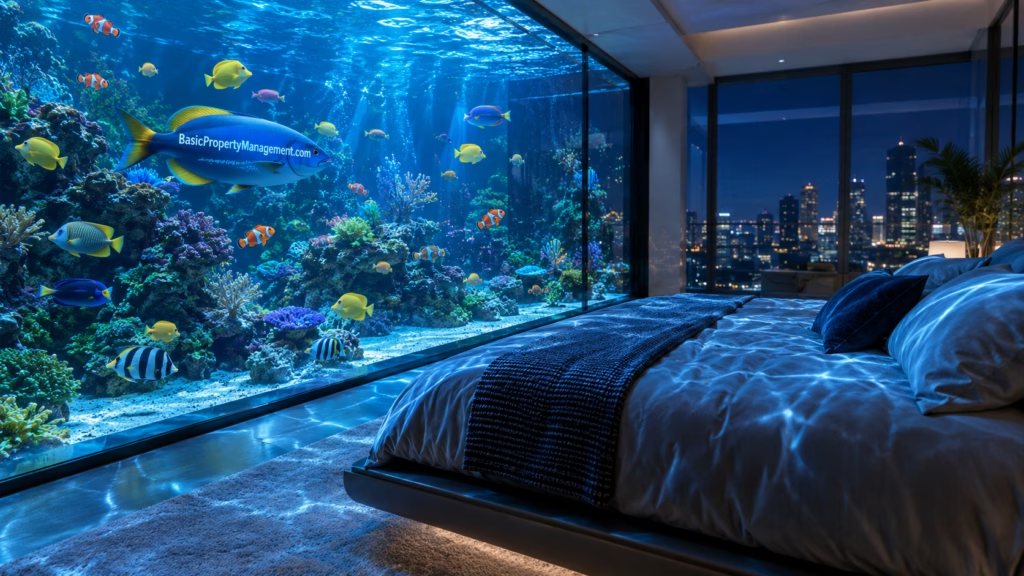
A 75-gallon aquarium contains about 625 pounds of water before you add the tank, stand, gravel, filters, and decorations. At 200 gallons, the water alone weighs roughly 1,668 pounds. For a landlord, the issue isn’t whether fish are acceptable; it’s whether the building, insurance, and management process can handle the weight and the possibility of a leak.
Practical aquarium rental property rules should require enough information to evaluate the request before installation. Tank size, filled weight, proposed location, support system, plumbing or electrical changes, insurance, and leak controls all belong in that review. Large waterbeds deserve the same treatment because they combine substantial weight with a large volume of water.
Build a Stronger Rental Property Business
Subscribe to our 2X weekly newsletter to learn more about managing tenants, protecting cash flow, improving rental operations, and making better real estate investment decisions.
Start With the Filled Weight
Aquarium capacity can sound modest until gallons are converted into pounds. Using the U.S. Geological Survey’s 8.34-pound-per-gallon water figure, the water alone weighs about 334 pounds in a 40-gallon tank, 626 pounds in a 75-gallon tank, 1,043 pounds at 125 gallons, and 1,668 pounds at 200 gallons.
The finished installation weighs more. Glass or acrylic, the stand, substrate, rocks, pumps, filters, sumps, canopies, and other equipment all add load.
For a waterbed, ask for the manufacturer’s filled weight and dimensions rather than relying on labels such as queen or king. The same principle applies to unusual aquarium systems with separate reservoirs or sumps.
Weight also needs a footprint. A 1,000-pound load spread across a broad platform creates a different structural condition from the same weight carried through a narrow stand or several small feet.
Floor Load Numbers Don’t Mean Approval
Published floor-load values can provide context, but they aren’t a do-it-yourself answer for a specific tank.
HUD’s Residential Structural Design Guide distinguishes between uniform and concentrated loads and gives example residential design values of 30 pounds per square foot for bedroom floors and 40 pounds per square foot for other floor areas. The guide also says applicable local code values should be verified.
That distinction is important because a large aquarium is a concentrated, sustained load rather than a room full of weight distributed evenly across the floor.
Actual capacity can depend on joist dimensions and spacing, span, support below, framing condition, previous alterations, and the tank’s exact position.
For a large setup or uncertain location, obtain an evaluation from a qualified structural professional. Avoid promising that a location is safe based on a pounds-per-square-foot calculation alone.
Placement Can Change the Risk
A request for a “100-gallon aquarium” is incomplete without a proposed location.
The same tank on a slab-on-grade floor presents a different structural question from one on an upper floor over wood framing. Moving a tank from one room to another can also change which joists, beams, or supports carry the load.
Make the approved location part of the request. A simple sketch or marked floor plan can show where the tenant proposes to place the tank or waterbed.
If the item is later moved, require another review rather than treating the original approval as portable. That keeps the decision tied to the condition that was actually evaluated.
Avoid informal rules such as “any exterior wall is fine.” A location that looks favorable from inside the unit may not correspond to the structural support assumed.
Leak Exposure May Be More Important Than the Weight
A tank can be structurally acceptable and still create a costly water-loss exposure.
Leaks don’t always begin with catastrophic glass failure. Hoses can disconnect, filters can overflow, seals can fail, and repeated splashing can damage nearby finishes. Waterbeds add seams, valves, hoses, and filling or draining activity to the same risk.
Before approving the request, trace where water would go. Flooring, baseboards, drywall, electrical outlets, and the ceiling of a lower unit may all be exposed. Multi-unit properties deserve extra scrutiny because one leak can affect another tenancy.
Also consider how quickly a slow leak behind a stand would be discovered.
Protective measures can include a waterproof tray or liner where practical, leak sensors, accessible shutoffs for connected equipment, and a requirement to report any leak immediately. The appropriate controls should match the size and design of the installation.
Insurance Needs Direct Confirmation
Don’t assume a landlord or renters policy responds to aquarium or waterbed damage in the way you expect.
NAIC’s renters insurance guidance distinguishes a tenant’s personal-property and liability coverage from the landlord’s coverage for the building. Policy terms, exclusions, deductibles, and liability limits still determine how a particular loss would be handled.
Before approval, ask your insurance agent or carrier whether a large aquarium or waterbed creates an underwriting issue and how an accidental water release would be treated under the owner’s policy. If your rental standards require renters insurance, verify the applicable coverage rather than treating proof of any policy as sufficient.
Our landlord insurance review guide explains why coverage limitations are worth reviewing before a loss instead of discovering them during a claim.
Keep the insurance question separate from the structural one. A carrier’s willingness to insure the exposure doesn’t establish that the floor can support the installation, and structural approval doesn’t guarantee insurance coverage.
Written Approval Should Define Exactly What Was Approved
A vague “yes, aquariums are allowed” creates room for misunderstanding.
Written approval should identify the specific installation being accepted. Depending on the property and request, the record can include:
- Maximum tank capacity or approved waterbed model
- Estimated filled weight and dimensions
- Approved room and exact location
- Required stand, frame, or manufacturer support system
- Any structural review required before installation
- Leak tray, liner, sensor, or other protective measures
- Applicable insurance documentation
- Restrictions on plumbing, electrical, wall, or floor alterations
- Requirement to report leaks or water damage promptly
- Installation and removal responsibilities
- Requirement for new approval before increasing size or changing location
This protects both sides from scope creep. Permission for a 40-gallon aquarium shouldn’t silently become permission for a 180-gallon reef system with a separate sump.
The approval record should be stored with the lease and property-management file so maintenance and inspection staff know what was authorized.
Filling, Draining, and Maintenance Create Recurring Exposure
The risk isn’t limited to installation. Large tanks need water changes, and waterbeds eventually need draining.
Ask how routine filling and draining will be handled. Buckets, long hoses, pumps, sink adapters, and external reservoirs can create different spill and connection risks.
Permanent plumbing or electrical changes should receive separate review. Approval of the tank itself shouldn’t be interpreted as permission to drill through cabinetry, connect permanently to supply lines, alter drains, add circuits, or modify outlets.
For complex aquarium systems, ask whether equipment such as sumps, automatic top-off reservoirs, or pumps will sit outside the main tank. Those components can add both weight and additional leak points.
Routine Inspections Can Catch Problems Early
Once an approved setup is installed, normal property inspections can help identify developing issues.
Where your regular inspection process allows, look for staining, swollen flooring, damp baseboards, condensation, deteriorated sealant, improperly routed hoses, visible electrical concerns, or a setup that no longer matches the written approval.
Document observations without dismantling or handling tenant equipment.
If water is escaping, address the property-protection issue first. Stop or contain the source when practical, document affected areas, arrange necessary drying or repairs, and preserve records of what occurred.
A small recurring leak can cost more over time than one obvious spill because hidden moisture may damage finishes or building components before the problem becomes visible.
A Standard Request Form Keeps Decisions Consistent
One-off decisions become harder to manage across multiple properties or managers. A short request form can capture capacity, dimensions, filled weight, equipment, proposed location, installation method, planned modifications, and insurance information.
The manager can then evaluate whether the proposed location needs structural review, what a leak could damage, whether the insurance position is acceptable, and which installation conditions need to be documented.
That process allows smaller, lower-risk requests to move efficiently while directing unusually large or complicated installations to additional review.
A modest aquarium in a suitable location may need little more than documentation. A 200-gallon system proposed for an upper floor of an older wood-framed building calls for a different level of scrutiny.
Approval Should Come Before Installation
Aquarium rental property rules are most useful when tenants know approval is required before they buy, fill, or move in a large system.
A request made in advance gives management time to evaluate weight, placement, leak exposure, insurance, and installation details without an occupied tank already sitting on the floor. It also avoids forcing maintenance staff to make structural or insurance judgments during an inspection.
The objective isn’t to reject every aquarium or waterbed. It’s to match the approval process to the actual exposure. A modest tank in a suitable location may require little more than documentation, while a very large system on an upper floor may justify structural review, insurance confirmation, and more detailed written conditions.
Consistent property management turns that distinction into a repeatable decision instead of a guess made after the water is already in the unit.