Does Your Tenant Have an Unauthorized Pool or Trampoline?
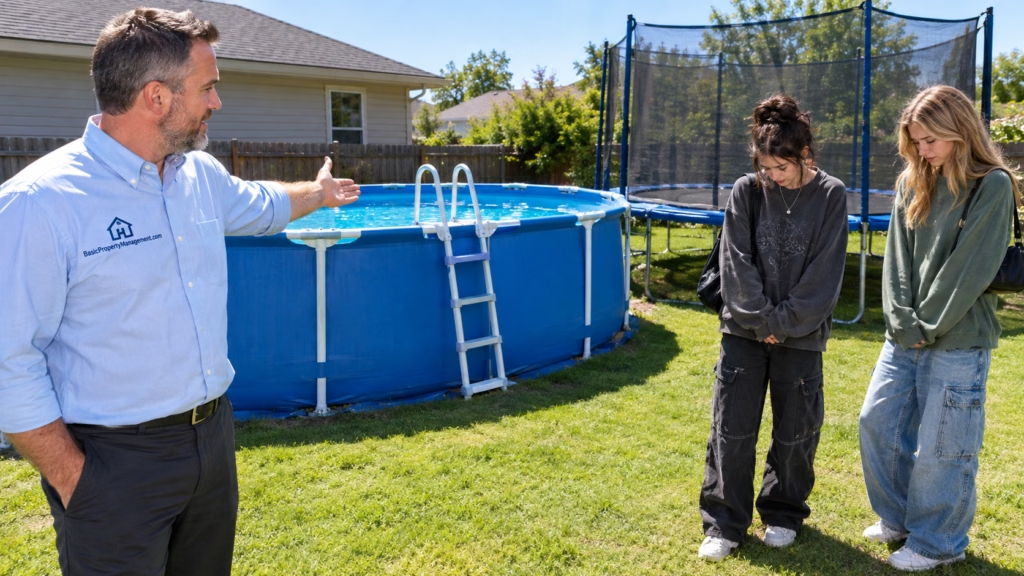
A landlord arrives for a scheduled inspection and finds a 15-foot above-ground pool beside the house or a trampoline assembled near the rear fence. The tenant may see either item as temporary backyard equipment, but the installation can affect electrical safety, drainage, landscaping, insurance coverage, and access around the property.
When you discover a tenant unauthorized pool or trampoline, do not jump straight to approval or removal. First determine whether anyone should stop using it immediately, then confirm what the insurer and property conditions allow. From there, decide whether the equipment can remain under written conditions or needs to be removed and the affected area restored.
Build a Stronger Rental Property Business
Subscribe to our 2X weekly newsletter to learn more about managing tenants, protecting cash flow, improving rental operations, and making better real estate investment decisions.
Photograph the Installation and Any Property Changes
Document the equipment as management found it before the tenant moves, drains, repairs, or dismantles anything. Photograph its location, approximate size, access points, surrounding structures, visible safety equipment, and any changes made to the yard or building.
For a pool, note the structure type, water depth, pump location, power source, ladder or steps, nearby fencing, gates, septic components, HVAC equipment, and likely drainage path. With a trampoline, record the frame, enclosure, padding, anchoring, surface below it, and clearance from fences, trees, sheds, roofs, and utility equipment.
Look beyond the recreational item itself. Stakes driven through irrigation lines, fasteners attached to fencing, a homemade platform, altered grading, or tenant-installed wiring may create separate repair issues.
Keep the record factual. “Pool pump connected by extension cord across patio” gives management something specific to investigate, while “tenant created an unsafe pool” reaches a conclusion before the relevant conditions have been checked.
Stop Use When You Find an Immediate Safety Problem
Some conditions should be addressed before management finishes the broader approval review. Exposed or improvised electrical connections near water, a visibly unstable pool wall, broken trampoline framing, or equipment blocking a building exit may justify a temporary stop-use instruction.
Tell the tenant which condition creates the immediate concern and what needs to happen while management reviews it. Asking the tenant to stop using the pool until an electrician evaluates the power supply is more precise than issuing a general demand to “fix the pool.”
Do not attempt unfamiliar electrical, structural, or anchoring repairs yourself. Bring in the appropriate contractor when the condition falls outside routine property maintenance.
The temporary restriction and final approval decision are separate steps. Management can control an immediate hazard first, then decide whether modification, approval, or removal makes sense.
Ask the Insurer Whether the Equipment Can Remain
Insurance can determine whether conditional approval is realistic, so check the policy before promising the tenant that the installation may stay. Give the agent or carrier enough detail to understand the equipment, location, and current safety features.
Ask whether the policy allows an above-ground pool or trampoline, whether the carrier requires notification, and whether coverage depends on barriers, gates, enclosures, anchoring, or other conditions. Also ask whether the installation changes the premium, requires an endorsement, affects renewal, or creates an exclusion management needs to understand.
The National Association of Insurance Commissioners guidance on pools and backyard equipment recommends discussing these installations with the insurer because they can affect coverage and underwriting requirements.
Keep the insurer’s response with the property file when possible. A tenant’s promise to accept responsibility does not answer whether the owner’s policy will cover the property while the equipment remains.
Inspect an Unauthorized Pool for Barriers, Power, and Drainage
Even a portable or above-ground pool can affect several parts of the property when the tenant assembled it without permanent construction. Review access control, electrical setup, drainage, and existing property damage separately.
Begin with access control. The CPSC residential pool barrier guidance describes barriers, gates, door protections, and other measures intended to reduce unsupervised child access, which gives landlords a useful reference when evaluating the setup.
Do not assume the yard fence automatically solves the issue. Gate hardware, openings, climbable objects, removable ladders, nearby furniture, and direct access from the house can affect how well the area is controlled.
Next inspect the pump and power arrangement. Temporary extension cords, damaged receptacles, improvised wiring, or connections exposed to wet conditions should go to a qualified electrician rather than a maintenance guess.
Determine where the water will go when the pool is drained. Releasing a large volume beside the foundation, onto a septic drainfield, down an erosion-prone slope, or toward neighboring property can create another problem.
Document existing damage such as dead turf, soil settlement, damaged irrigation, altered fencing, or a platform attached to the building.
Inspect an Unauthorized Trampoline for Clearance and Stability
A trampoline needs a different review because the main concerns involve equipment condition, surrounding obstacles, movement, and anchoring. Evaluate the complete setup rather than treating the presence of a safety net as proof that the location is acceptable.
Check clearance from fences, trees, sheds, walls, roof edges, pavement, HVAC condensers, and other fixed objects. The CPSC trampoline safety guidance recommends keeping trampolines away from structures and using protective padding and an enclosure, so compare those basics with the equipment on site.
Inspect the frame, legs, springs or elastic components, padding, enclosure net, and supports for visible damage or missing parts. Manufacturer instructions can help determine whether the tenant assembled the unit as intended.
Wind exposure deserves attention because a large trampoline can move during severe weather. Improvised anchors, however, can damage underground irrigation, electrical service, drainage components, or septic infrastructure.
Before approving anchors, identify what may be buried in that part of the yard.
Compare the Installation With Your Approval Conditions
After management knows the physical condition and insurance position, decide what would have to change for the equipment to remain. The conditions should address identifiable property and safety concerns rather than a general list of preferences.
A pool may need a different power arrangement, improved access control, relocation, a defined drainage method, or removal of a tenant-built platform. Trampoline approval may depend on relocation, replacement padding or enclosure components, suitable anchoring, or greater clearance from structures.
Cost and feasibility belong in the decision. Moving a trampoline may be simple, while rebuilding fencing or adding electrical work for a temporary pool may make approval impractical.
Management should also decide which corrections the tenant may perform and which require an owner-selected or qualified contractor. Do not let a tenant make permanent electrical changes, alter structural components, or attach equipment to the building merely because those changes would make approval easier.
Set a completion date for agreed corrections and verify them before treating the installation as fully approved.
Put Any Approval Conditions in Writing
If management allows the equipment to remain, the written approval should identify exactly what was accepted and where. It should also make clear which conditions must stay in place for the approval to continue.
Identify the item, approved location, required safety components, maintenance expectations, access requirements, and any conditions tied to the insurer’s response. State who will pay for agreed modifications and who will restore the property when the equipment is removed.
The tenant may also need to report damage promptly, keep required safety components installed, avoid relocating the equipment without approval, and maintain access to service areas.
Use follow-up inspections when the installation warrants them. Our rental property inspection scheduling guide explains how to schedule targeted inspections around property-specific risks instead of applying the same frequency to every rental.
Define the Removal and Restoration Work
When approval is not workable, tell the tenant what removal must accomplish beyond making the equipment disappear. Pools and trampolines can leave property damage, altered utilities, anchors, drainage issues, and debris.
For a pool, address how the tenant will drain it, where the water can go, and what happens to the pump, hoses, ladders, platforms, temporary wiring, anchors, and damaged yard area. Management should inspect any electrical or structural alteration separately after removal.
Trampoline removal may include the frame, enclosure, anchors, weights, tie-downs, and other components. The tenant may also need to fill anchor holes, repair irrigation damage, restore fencing, or remove debris.
Set a completion date and identify any contractor access management needs to coordinate. If removal reveals a separate repair, open that work as its own maintenance item instead of folding everything into a vague cleanup charge.
Reinspect the Yard After Correction or Removal
Management should close the issue only after someone verifies the agreed result. Compare the follow-up condition with the original photographs and the approval or removal instructions.
For an approved pool, confirm the required barriers, gates, power corrections, drainage controls, and other conditions. Check an approved trampoline for location, anchoring, enclosure, padding, and clearance.
After removal, inspect the area the equipment occupied. Pools can leave dead turf, settlement, erosion, damaged irrigation, or abandoned electrical components, while trampolines can leave holes, stakes, damaged landscaping, or altered fencing.
Record remaining repairs separately and route them through the property’s normal maintenance process.
Require Advance Approval for Future Outdoor Equipment
An unauthorized installation often shows that the property’s request procedure needs to be clearer. Give tenants a simple way to determine which outdoor items require approval before they buy, assemble, fill, anchor, or connect them.
A request can ask for the product type, dimensions, proposed location, manufacturer information, anchoring method, electrical needs, water capacity where relevant, and safety equipment. Management can then check insurance, property conditions, buried systems, and any applicable permit or safety requirements before the tenant alters the yard.
This process can cover pools, trampolines, hot tubs, playsets, sheds, and similar installations without treating every item as the same risk.
A tenant unauthorized pool or trampoline does not require the same outcome at every rental. Some installations can remain after specific corrections and written approval; others conflict with insurance requirements, create unresolved hazards, or require unacceptable property changes.
The landlord’s job is to make that decision from documented conditions rather than surprise or frustration. Control immediate hazards, verify the insurer’s position, inspect the actual setup, define workable approval requirements, and confirm removal and restoration when approval is not practical.