How Good Property Management Changes What a Cost Segregation Study Is Worth
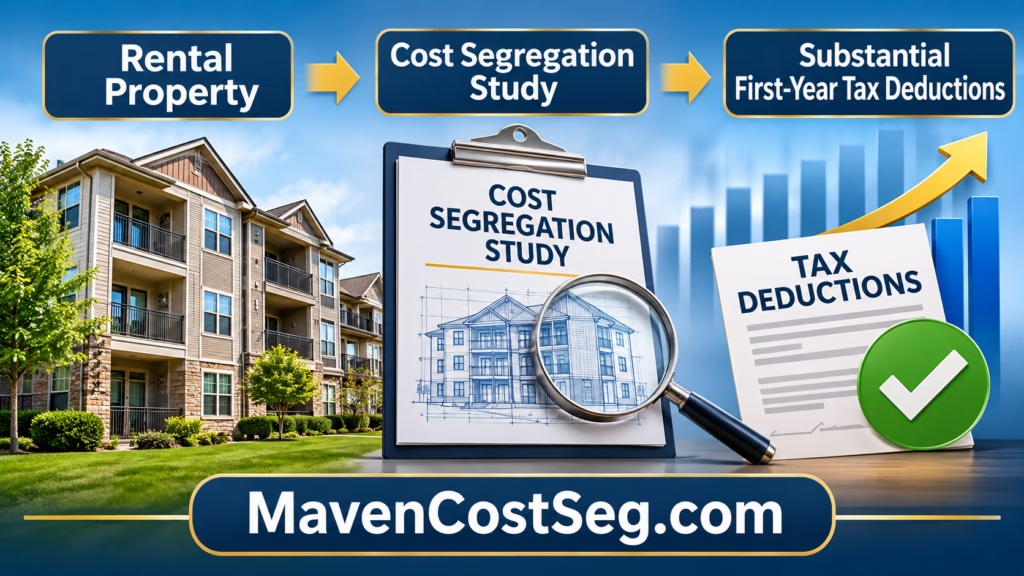
A cost segregation study can turn a rental into large deductions in its first year. How large depends on the records behind it, and most of those records come from whoever manages the property.
If you hire a manager, this is a list of what to ask for. If you manage your own rentals, it’s what to keep. And if you’re a property manager, it’s what your owners’ CPAs need from you.
Take Your Real Estate Business to the Next Level
Sign up for our 2X weekly newsletter and receive useful tips on property management, rental property investing, landlord best practices, and tools that help you manage smarter.
1. Keep proof of when the property was ready to rent
Depreciation starts when a rental is ready and available for rent. That’s usually after closing and can be well before the first lease. Say you close on a duplex in October, finish the make-ready December 12, list it December 15 and start the first lease February 1. It was likely placed in service in December.
That date decides which tax year gets the depreciation, including bonus depreciation from a cost segregation study, so getting it wrong pushes the deduction into the wrong year. The leasing records are the proof: the make-ready completion, the listing date and the first showing. Keep them dated and in one place. The next record is what was actually bought.
2. Itemize every invoice
A cost segregation study sorts a property’s costs into groups that are depreciated over 5, 15 or 27.5 years. Appliances and carpet are 5-year property, fencing and paving are 15-year property, and the building itself is 27.5-year property. To sort them, the study needs to know what each dollar bought.
A turnover invoice that says “Unit 4 turnover, $14,800” gives your CPA one number to work with. The same invoice broken into carpet, appliances, blinds, paint and fencing gives them options. Some of it is likely deductible as a repair, some can be written off quickly, and some gets depreciated over a longer period.
Ask vendors to bill by line item, and tie every work order to a property, a unit and a date. Note what was removed as well as what was installed, because that record is what lets you write off a replaced component.
3. Log every replacement
When a roof or HVAC system is replaced, the new one gets depreciated. The old one stays on the depreciation schedule unless someone takes it off, and most owners never do.
A partial disposition lets you deduct what’s left of the old component’s value in the year it comes out. Say a cost segregation study valued the original roof at $18,000. It depreciates at about $650 a year, so when it’s replaced six years later, roughly $14,000 is left. You deduct that $14,000 in the replacement year instead of spreading it over the next two decades.
The election has to be made on the original tax return for the year the old roof comes out. A dated capital log showing what was removed, from which building and when is what lets your CPA make it on time. With the deductions identified, the last question is whether you can use them.
How the property is managed affects whether you can use the losses
Large deductions only help if you can use them against your other income, and the management setup plays a part.
For long-term rentals, hiring a manager is fine as long as you still make the real decisions, like approving tenants, setting rents and signing off on major repairs. That keeps your active participation, which lets you deduct up to $25,000 of rental losses against other income. The allowance phases out as modified AGI goes from $100,000 to $150,000. Ask your manager to keep the approval emails as a record.
Short-term rentals, with average stays of seven days or less, set a higher bar. You generally need more than 100 hours on the property and at least as many hours as any other single person. If a cleaner or on-site manager logs more hours than you do, the losses from the study can turn passive. Before you order a study, ask your manager whether they can report hours by person.
The January handoff
Send your CPA one package each January, before the return is prepared:
- Proof of when anything new was ready to rent
- A capital log of what was installed and removed, where and when
- Itemized invoices for capital projects and unit turns
- Repair and maintenance spending by property
- For short-term rentals, hours on each property by person, owner included
- Owner approvals for leases, rent changes and capital projects
How Property Management Makes a Cost Segregation Study Worth More
The deductions from a cost segregation study depend on the records behind it. Proof of the placed-in-service date, itemized invoices and a log of replacements let your CPA claim those deductions in the right year, and the right management setup lets you use them. If you hire a manager, ask what they send your CPA each year. If you are the manager, sending that file is an easy way to stand out with your owners. This is general education, so take your specific facts to your CPA.
About the author
Sean Graham, CPA, is the founder of Maven Cost Segregation, an engineering-based cost segregation firm that helps real estate investors accelerate depreciation.
He invests in real estate himself: he started with small multifamily properties, then launched a commercial syndication company and expanded into self-storage development.
His background spans public accounting, tax and private equity, and his writing has appeared in CPA Practice Advisor. Readers can estimate their own savings with Maven’s free cost segregation calculator.