Commercial Lease Terms You Cannot Afford to Ignore
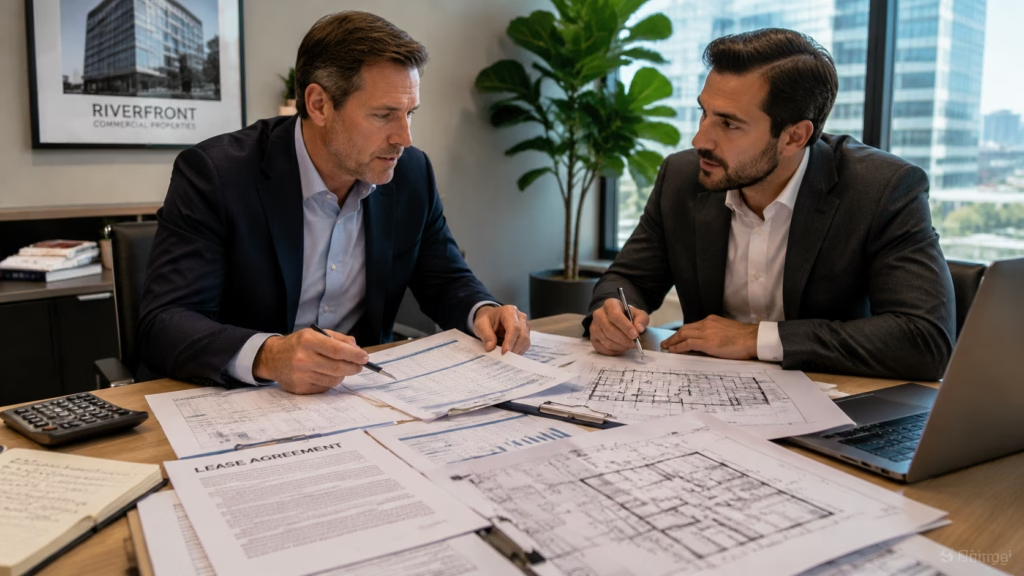
Commercial lease terms determine much more than how much rent a business pays. They allocate operating costs, construction responsibilities, legal compliance, maintenance obligations, insurance risk, renewal rights, and the financial consequences if the tenant’s business closes or the building becomes unusable.
That is why a commercial lease is usually much longer and more detailed than a residential lease. A residential lease regulates the use of a home under extensive consumer, habitability, and tenant-protection laws. A commercial lease governs a business transaction between parties who are generally expected to negotiate their own protections.
You should therefore treat a commercial lease template as a framework for negotiation, not as a standard form that can be signed after filling in the rent and expiration date.
Build a Stronger Rental Property Business
Subscribe to our 2X weekly newsletter to learn more about managing tenants, protecting cash flow, improving rental operations, and making better real estate investment decisions.
A Commercial Lease Is Not a Longer Residential Lease
The two documents may share basic concepts—rent, possession, maintenance, default, and termination—but they operate differently.
| Issue | Residential lease | Commercial lease |
|---|---|---|
| Primary purpose | Housing | Business operations |
| Legal protections | Often heavily regulated by statute | More dependent on negotiated language |
| Lease length | Commonly one year | Frequently several years |
| Rent structure | Usually one monthly amount | Base rent plus possible operating costs and other charges |
| Repairs | Many landlord duties set by law | Extensively allocated by the lease |
| Build-out | Usually minimal | May involve major construction and allowances |
| Use restrictions | Residential occupancy | Specific business activities and operational limits |
| Guarantees | Sometimes used | Common for small or new businesses |
| Assignment | Usually limited concern | Important for sales, mergers, and business restructuring |
| Default remedies | Subject to residential procedures | Often broader and heavily negotiated |
| Renewal | Frequently handled near expiration | Options may need to be negotiated years in advance |
The NYC commercial leasing guide emphasizes that commercial tenants may have far fewer statutory protections and that rights involving repairs, utilities, renewal, and rent are often controlled primarily by the lease itself.
This contract-centered structure is one reason commercial leases become so extensive. If a right, remedy, or landlord obligation is not written into the agreement, you should not assume it exists.
The Business Deal Starts Before the Lease
Commercial leasing commonly begins with a proposal, letter of intent, or term sheet. This preliminary document identifies the major business terms before attorneys prepare and negotiate the full lease.
A term sheet may address:
- Description and size of the premises
- Base rent and annual increases
- Lease term
- Security deposit
- Operating expense structure
- Tenant improvement allowance
- Delivery condition
- Rent-free construction period
- Renewal options
- Parking and signage
- Personal guaranty
- Broker commissions
- Target opening or possession date
A letter of intent is often described as nonbinding, but it still shapes the negotiation. Once the parties agree to a business point, changing it during lease drafting may be difficult.
Review the term sheet carefully. A favorable base rent can be offset by high operating expenses, limited repair obligations, an unrestricted personal guaranty, or an expensive restoration requirement at the end of the lease.
Describe the Premises and Business Use Precisely
The lease should identify exactly what the tenant is receiving.
That description may include the suite, rentable and usable square footage, storage areas, loading facilities, parking spaces, roof rights, outdoor areas, common areas, and any equipment supplied with the space.
Square footage deserves attention because commercial rent and operating expense shares are often calculated from it. The lease should state how the premises were measured and whether the tenant may verify the measurement.
The permitted-use clause should describe the business activities allowed in the space. Language that is too narrow may prevent the tenant from adapting its business. Language that is too broad may expose the landlord to incompatible uses, insurance problems, excessive utility demands, or conflicts with other tenants.
A permitted-use provision may address:
- Products and services offered
- Hours of operation
- Customer traffic
- Deliveries and loading
- Noise, odor, vibration, or hazardous materials
- Food preparation
- Medical or regulated activities
- Outdoor storage
- Manufacturing or assembly
- Compliance with zoning and certificates of occupancy
Do not rely on the landlord’s assumption that the proposed business is legally permitted. The lease should allocate responsibility for confirming zoning, permits, licenses, occupancy approvals, and other operational requirements.
Delivery Condition and Tenant Improvements
The lease should state the condition in which the landlord must deliver the premises. “As is” can mean the tenant accepts significant physical and legal risk unless exceptions are clearly written.
Delivery terms may require:
- Vacant possession
- Working HVAC, plumbing, electrical, and life-safety systems
- Removal of prior tenant property
- Completion of landlord construction
- Required permits or occupancy approvals
- Compliance with specified laws
- A watertight building envelope
- Defined utility capacity
If the tenant will build out the space, the lease should address plans, approvals, contractors, permits, construction access, insurance, liens, delays, and ownership of improvements.
A tenant improvement allowance should identify the amount, eligible costs, documentation requirements, payment process, completion deadlines, and treatment of unused funds. The American Bar Association’s discussion of commercial lease drafting pitfalls illustrates why delivery deadlines, space condition, allowance funding, and delay remedies must be negotiated rather than assumed.
Rent Is Usually a Formula, Not One Number
Commercial rent often has several components.
Base rent is the stated charge for occupying the space. It may remain level for a period or increase according to fixed steps, percentages, an index, or a market-reset formula.
Additional rent is a broad category that may include operating expenses, real estate taxes, insurance, utilities, maintenance charges, and other amounts owed under the lease.
The phrase matters because many leases treat unpaid additional rent as seriously as unpaid base rent.
Common Commercial Lease Structures
| Lease structure | General allocation |
| Gross lease | Tenant pays a stated rent; landlord absorbs many property expenses |
| Modified gross lease | Landlord and tenant divide specified expenses |
| Single net lease | Tenant pays rent plus designated property taxes |
| Double net lease | Tenant pays rent plus taxes and insurance |
| Triple net lease | Tenant pays rent plus taxes, insurance, and maintenance or operating costs |
| Percentage lease | Tenant pays base rent plus a percentage of sales, common in retail |
Cornell’s explanation of a gross lease notes that the landlord generally incorporates taxes, maintenance, and other expenses into rent, although individual agreements can still shift specific costs. The label alone is not enough; the actual expense provisions control.
Operating Expenses and CAM
Common area maintenance, often called CAM, may include landscaping, cleaning, security, lighting, parking lot work, management fees, repairs, snow removal, and shared utilities.
The lease should answer:
- Which costs are included?
- Which costs are excluded?
- How is the tenant’s share calculated?
- Is the share based on total or occupied square footage?
- Are management fees capped?
- Can capital projects be passed through?
- Are costs amortized over the improvement’s useful life?
- Does the tenant receive an annual reconciliation?
- Does the tenant have audit rights?
- Is there a cap on controllable expense increases?
Potential exclusions may include landlord financing costs, leasing commissions, legal fees unrelated to property operations, costs attributable to another tenant, depreciation, penalties caused by the landlord, and major capital improvements except where specifically negotiated.
Lease Term and Renewal Affect Both Value and Flexibility
Commercial lease terms are frequently longer because landlords need predictable income and tenants need enough time to recover build-out and relocation costs.
A longer term may support financing and reduce vacancy risk for the owner. It may also lock the tenant into rent payments even if the business contracts, relocates, or fails.
Renewal options should establish:
- Number and length of option periods
- Advance notice deadline
- Conditions for exercising the option
- Method for setting renewal rent
- Treatment of concessions and allowances
- Whether an existing default cancels the option
- Whether the option transfers with an assignment
Notice deadlines can occur six, nine, or twelve months before expiration. Missing the deadline may eliminate the option entirely.
A tenant may also negotiate expansion, contraction, termination, purchase, or first-offer rights. These clauses can materially affect the building’s leasing flexibility and investment value.
Repairs and Maintenance Must Be Divided by Component
Commercial leases frequently allocate repairs in much greater detail than residential agreements.
The lease should identify responsibility for:
- Roof and structure
- Foundation and exterior walls
- HVAC equipment
- Electrical and plumbing systems
- Fire and life-safety systems
- Elevators
- Storefront and glass
- Interior finishes
- Doors and locks
- Parking and loading areas
- Landscaping
- Utilities
- Pest control
- Compliance upgrades
In a multitenant property, the landlord may maintain shared systems and recover costs through operating expenses. In a single-tenant net lease, the tenant may assume much broader responsibility.
The distinction between repair and replacement is important. A tenant may agree to maintain an HVAC unit without intending to fund a complete replacement. The lease should state who pays when ordinary service becomes a capital project.
Preventive maintenance requirements should also be specific. If the tenant must maintain equipment under service contracts, identify the required contractors, service frequency, recordkeeping, and transfer of warranties.
Risk Allocation Extends Beyond Property Repairs
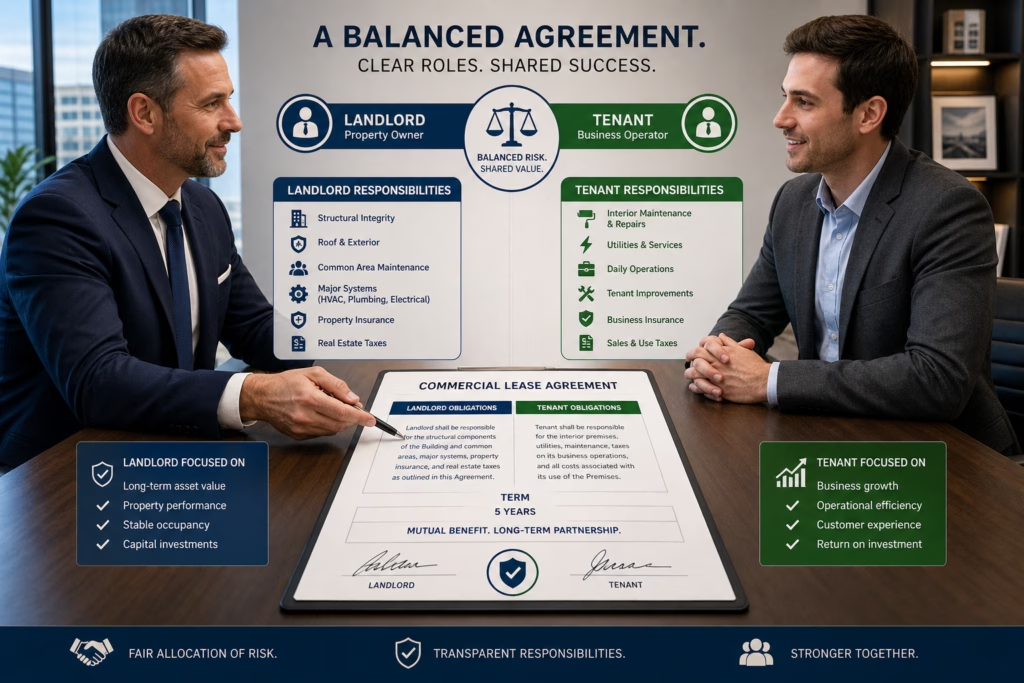
Commercial operations introduce risks that do not appear in most residential leases.
Insurance and Indemnification
The lease may require commercial general liability, property, business interruption, workers’ compensation, automobile, umbrella, or specialized coverage.
It should define:
- Minimum policy limits
- Required insurers
- Additional insured status
- Waiver of subrogation
- Certificates and policy endorsements
- Notice of cancellation
- Coverage for tenant improvements
- Treatment of deductibles
Indemnification clauses determine when one party must protect or reimburse the other for claims, losses, or legal costs. These provisions should be reviewed with the insurance requirements so the contractual risk is actually insurable.
Compliance With Laws
Commercial leases often shift legal compliance based on the cause of the requirement.
The tenant may be responsible for laws related to its business, employees, equipment, alterations, or specific use. The landlord may retain responsibility for the building structure, common areas, or violations existing before the lease.
Accessibility obligations, environmental requirements, fire codes, occupancy limits, and hazardous materials can produce substantial costs. The lease should not use a broad compliance clause without considering which party controls the condition that must be corrected.
Assignment and Subletting Can Determine Whether the Business Can Exit
A business may need to sell, merge, relocate, downsize, or bring in an affiliate. The assignment and subletting clause determines how much flexibility it has.
The lease may require landlord consent and establish the standard for withholding it. It may also address:
- Transfers to affiliates
- Corporate mergers or ownership changes
- Sale of the tenant’s business
- Subleasing part of the premises
- Recapture rights
- Profit sharing
- Continuing tenant liability
- Financial standards for the replacement tenant
- Transfer fees and legal costs
From the landlord’s perspective, the provision protects the tenant mix and the financial quality of occupants. From the tenant’s perspective, an absolute prohibition can make the lease a major barrier to selling or restructuring the business.
Guarantees and Security Can Reach Beyond the Tenant Entity
The tenant named in a commercial lease is often a corporation or limited liability company. If that entity has limited assets or operating history, the landlord may require additional security.
Possible protections include:
- Cash security deposit
- Letter of credit
- Personal guaranty
- Corporate guaranty
- Limited or “good guy” guaranty
- Increased deposit after a financial decline
- Prepaid rent
A full personal guaranty can make an individual responsible for substantial rent and other obligations through the end of a long lease. A limited guaranty may end after the tenant surrenders the space under specified conditions.
The scope, duration, dollar cap, release conditions, and continuing liability should be negotiated explicitly.
Casualty, Condemnation, and Service Failure Need Remedies
The lease should explain what happens if the space cannot be used because of fire, storm damage, government acquisition, utility failure, or another major event.
Casualty provisions may address:
- Repair responsibility
- Rent abatement
- Estimated restoration period
- Termination rights
- Insurance proceeds
- Damage occurring near lease expiration
- Restoration of tenant improvements
- Access during repairs
Condemnation provisions address government acquisition of all or part of the property and allocation of any award.
The lease should also consider prolonged failures of access, utilities, HVAC, elevators, or other essential services. Without a negotiated remedy, the tenant may remain obligated to pay rent while business operations are severely impaired.
Default Provisions Define the Financial Consequences
A commercial default section may be far more extensive than its residential counterpart.
Tenant defaults can include:
- Nonpayment
- Insurance lapse
- Unauthorized transfer
- Failure to open or operate
- Prohibited use
- Bankruptcy-related events
- Failure to maintain the premises
- Violation of continuous-operation requirements
The lease should state notice and cure periods. A payment default may receive a shorter period than a nonmonetary problem that reasonably requires time to correct.
Landlord remedies may include termination, possession, damages, accelerated rent, reletting costs, interest, legal fees, and recovery of concessions or unamortized improvements.
The agreement should also address landlord default. A one-sided document that provides extensive tenant remedies to the landlord but no process for landlord nonperformance deserves careful review.
The Back of the Lease Can Carry Major Risk
Clauses described as boilerplate can materially affect the deal.
Review provisions involving:
- Notices and permitted delivery methods
- Estoppel certificates
- Subordination, nondisturbance, and attornment
- Lender protections
- Force majeure
- Waiver and amendment
- Governing law and venue
- Arbitration or jury-trial waivers
- Attorney fees
- Confidentiality
- Recording of a lease memorandum
- Brokerage representations
- Successors and assigns
An estoppel certificate may require the tenant to confirm lease terms, defaults, deposits, and other facts for a buyer or lender.
A subordination, nondisturbance, and attornment agreement can determine whether the tenant’s lease survives a foreclosure. These provisions become especially important when the tenant has invested heavily in the space.
Surrender and Holdover Can Create End-of-Term Costs
The lease should explain how the premises must be returned.
The tenant may be required to remove furniture, cabling, signage, trade fixtures, equipment, and alterations. It may also need to repair damage caused by removal and restore the space to a defined condition.
The landlord should identify restoration requirements early rather than waiting until the final month. Removal obligations can become expensive when walls, ceilings, mechanical systems, or specialized improvements are involved.
Holdover provisions commonly impose a higher rent if the tenant remains after expiration. They may also make the tenant responsible for losses caused by delaying the next occupant.
What You Should Expect in a Commercial Lease Template
A complete template will commonly address:
- Parties and guarantors
- Premises and square footage
- Lease term and commencement
- Delivery condition
- Base and additional rent
- Operating expenses and taxes
- Security deposit or letter of credit
- Permitted use and prohibited activities
- Exclusive-use or co-tenancy rights, where relevant
- Utilities and building services
- Tenant improvements and allowances
- Repairs and maintenance
- Alterations and liens
- Signs, parking, loading, and access
- Insurance and indemnification
- Compliance with laws
- Environmental obligations
- Assignment and subletting
- Renewal and other options
- Casualty and condemnation
- Defaults and remedies
- Landlord default
- Lender and estoppel provisions
- Surrender and holdover
- Notices and general contract terms
Not every property needs the same document. A small office suite, restaurant, warehouse, medical clinic, and shopping center tenant create different operational and financial risks.
Final Thoughts on Commercial Leasing
Commercial lease terms are extensive because the lease must function as a financial agreement, construction plan, operating manual, and risk-allocation document for the entire tenancy.
You should expect provisions covering far more than base rent and expiration. The agreement may determine who funds improvements, pays increases in operating costs, replaces major equipment, obtains permits, carries insurance, responds to casualty, guarantees the tenant’s obligations, and bears the cost of an early business failure.
A template can help identify the subjects that need to be addressed, but it cannot determine the right allocation for a specific property or business. The term sheet, lease, exhibits, work letter, guaranty, and related documents should be reviewed as one transaction.
Commercial lease negotiations can create obligations lasting many years and involving substantial capital. Both landlord and tenant should use experienced commercial real estate counsel before signing.