How to Build the First Deal for a Future Acquisition
Your first business acquisition can be structured to close one transaction or to support a long-term acquisition program.
Those are not always the same structure.
A buyer focused only on the first closing may create entities based on lender forms, immediate tax benefits, and the seller’s existing organization. That may be sufficient for one business.
A buy-and-hold investor planning several acquisitions needs to think about capital movement, liability separation, financial reporting, lender restrictions, shared services, future investors, and eventual sales.
The goal is not to create a complicated collection of LLCs on the first day.
It is to avoid making the first acquisition so isolated that the second one requires a complete reorganization.
Get Practical Property Management Tips Twice a Week
Want smarter systems for managing rentals, screening tenants, handling maintenance, and improving property performance? Sign up for our 2X weekly newsletter and get practical property management and real estate investing insights delivered straight to your inbox.
Start With the Portfolio You Intend to Build
Before selecting entities, define the long-term acquisition thesis.
Ask:
- Will you buy businesses in one industry or several?
- Will acquisitions share a brand?
- Will each retain its local name?
- Will the companies share employees or systems?
- Will each deal include real estate?
- Do you plan to retain every property?
- Will you pursue add-on acquisitions?
- Could outside investors join later?
- Will each acquisition have separate debt?
- Do you expect to sell individual businesses or the entire portfolio?
A home-services platform built through add-on acquisitions may need a different structure from a household purchasing unrelated semi-absentee businesses.
The structure should follow the strategy.
Separate Ownership From Operations
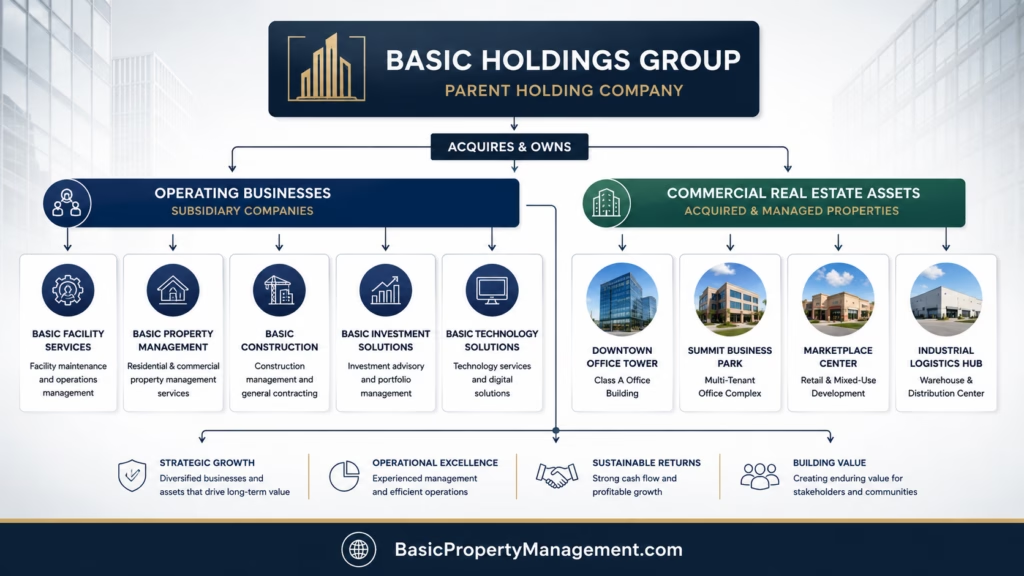
A basic multi-acquisition structure may include a parent holding company and separate operating subsidiaries.
For example:
- Parent HoldCo
- Operating Company A
- Operating Company B
- Operating Company C
This can centralize ownership and governance while allowing each operating company to maintain its own contracts, employees, licenses, and financial records.
When real estate is involved, each property may sit in a separate real estate entity:
- Property LLC A leases to Operating Company A.
- Property LLC B leases to Operating Company B.
Whether the real estate entities sit under the same parent, a separate property holding company, or direct individual ownership depends on financing, tax, estate, liability, and investment considerations.
The article EPC, OC, HoldCo, and PropCo: Know the Difference explains the roles of these entities.
Do Not Assume SBA Debt Fits Under Any Parent
SBA eligibility and ownership rules must be addressed before inserting a holding company into the structure.
The SBA lender will evaluate the applicant, operating business, affiliates, owners, guarantors, and use of proceeds under current program requirements. The SBA lending SOP governs 7(a) and 504 origination policies.
A proposed parent entity can affect:
- Applicant eligibility
- Affiliate analysis
- Size standards
- Required guarantees
- Ownership disclosures
- Change-of-ownership treatment
- EPC/OC requirements
- Loan collateral
- Future transfers
Do not finalize the acquisition entity before the SBA lender reviews the ownership chain.
Similarly, do not assume you can insert a new HoldCo above the borrower after closing without lender consent. Loan documents often restrict ownership changes and transfers.
Keep Each Business Financially Visible
A multi-company structure becomes difficult to manage when the owner cannot determine which business is producing cash and which is consuming it.
Each operating company should maintain accurate standalone reporting.
At minimum, track:
- Revenue
- Gross margin
- Payroll
- Occupancy cost
- Marketing
- Management fees
- Debt service
- Capital expenditures
- Working capital
- Cash distributions
- Intercompany balances
Real estate entities should separately track rent, debt service, property taxes, insurance, repairs, and capital improvements.
You can also prepare consolidated management reports, but consolidation should not hide weak performance.
One profitable company should not quietly fund another through undocumented transfers.
Define How Cash Moves
A holding-company structure does not make every dollar interchangeable.
Cash can move through:
- Dividends or distributions
- Intercompany loans
- Management fees
- Shared-service charges
- Rent
- Capital contributions
- Reimbursements
Each method has legal, tax, accounting, and lender consequences.
Loan agreements may restrict distributions or require minimum debt-service coverage. A lender may prohibit additional debt or require approval before the borrower loans money to an affiliate.
Management fees must correspond to actual services and should be commercially supportable. Intercompany loans need terms, repayment expectations, and accounting records.
The operating agreement should also address who can authorize transfers.
For a household-owned group, informality can become a weakness. Treat related entities as real entities.
Use Shared Services Carefully
As the portfolio grows, you may want one company to provide:
- Bookkeeping
- Human resources
- Marketing
- Technology
- Procurement
- Compliance
- Payroll administration
- Executive management
Centralization can reduce duplication and create better controls.
It can also create questions:
- Who employs the shared staff?
- How are costs allocated?
- Are the charges supportable?
- Does each operating company remain properly licensed?
- Do loan covenants permit the fees?
- Does the shared-services entity create nexus in additional states?
- Does centralized control undermine desired liability separation?
- How are employee benefits administered?
Do not form a management company because a diagram on social media showed one.
Create it when the savings, controls, or operational needs justify the additional administration.
Keep Real Estate Decisions Separate From Business Decisions
Owning the building can strengthen an acquisition by providing location control and a second appreciating asset.
It can also reduce flexibility.
The best property for the current business may not be the best long-term real estate investment. The operating company may eventually need more space, a different location, or a less expensive facility.
Evaluate each property independently:
- Is the price supportable by market rent?
- Would an unrelated tenant lease the space?
- Is the building specialized?
- What capital expenditures are approaching?
- Can the property be sold separately?
- Does the location restrict business growth?
- Is environmental risk manageable?
- Can it support conventional refinancing later?
The intercompany lease should not conceal an overvalued property or weak operating company.
For related tax issues, see Self-Rental Rules Can Trap Your Depreciation.
Avoid Cross-Collateralization Without Understanding It
A lender may want guarantees or collateral from affiliated businesses and properties, especially as the portfolio expands.
Cross-collateralization can improve access to credit because stronger assets support the new deal.
It can also expose the existing portfolio to the failure of one acquisition.
Before agreeing, model:
- Which assets secure each debt.
- Which entities guarantee each loan.
- What events trigger default.
- Whether one default affects other loans.
- Whether a property can be sold independently.
- Whether refinancing one asset requires consent from several lenders.
- How much unencumbered collateral remains.
Your objective is not always to avoid cross-collateralization. It is to understand the price paid for the financing.
Plan Add-On Acquisitions Differently
An add-on acquisition is purchased to strengthen an existing operating platform.
It may provide:
- Customers
- Employees
- Territory
- Equipment
- Contracts
- Technology
- A competing location
- Specialized capabilities
The acquired business may be merged into the existing OpCo, retained as a subsidiary, or operated temporarily as a separate entity.
The right choice depends on:
- Licensing
- Contracts
- Employee integration
- Legacy liabilities
- Brand strategy
- Financing
- Tax treatment
- Seller obligations
- Property ownership
Do not assume every acquisition needs a permanent new operating LLC.
A transition entity may be useful during integration, but unnecessary entities can make reporting and compliance harder.
Tax Planning Should Continue After Year One
Acquisition-year planning often concentrates on depreciation.
Later years require different decisions:
- Owner compensation
- Estimated taxes
- Distributions
- Debt repayment
- Capital expenditures
- Retirement plans
- Pass-through entity taxes
- Intercompany fees
- NOL usage
- Suspended passive losses
- New acquisition funding
A large first-year deduction may create carryforwards that can shelter part of later business income. The actual result depends on the rules governing the loss and the taxpayer’s future income.
Do not describe this as making the operating cash flow tax-free.
The correct goal is to manage tax timing, preserve legitimate deductions, and retain sufficient after-tax cash for the next acquisition.
The article Bonus Depreciation May Not Cut Your W-2 Tax explains how current deductions and carryforwards differ.
Build a Capital-Allocation Policy
As the group grows, decide how cash will be used.
A practical order might be:
- Maintain operating cash reserves.
- Fund required property reserves.
- Meet debt covenants.
- Pay taxes and owner compensation.
- Complete high-return internal projects.
- Reduce expensive debt.
- Accumulate acquisition capital.
- Make permitted distributions.
The policy does not need to be rigid, but it should prevent every business from operating as a personal checking account.
It should also identify who can approve:
- New debt
- Large capital expenditures
- Intercompany transfers
- Owner distributions
- Acquisitions
- Property purchases
- Guarantees
Model a Business Failure Before It Happens
A portfolio structure should be tested under adverse conditions.
Assume one acquisition experiences:
- Customer losses
- Employee turnover
- Regulatory problems
- Property damage
- Litigation
- Loan default
- Fraud
- Cyberattack
- Insurance denial
- Environmental issues
Then ask:
- Which entities are exposed?
- Which guarantees can be enforced?
- Can the other businesses continue operating?
- Can cash be moved legally and contractually?
- Are shared employees affected?
- Could one lender sweep cash from another entity?
- Are records sufficient to preserve entity separation?
- What insurance responds?
This exercise is more useful than simply counting the number of LLCs.
Make Every Entity Earn Its Place
For each proposed entity, write down:
- What it owns
- What it does
- Why it exists
- Who owns it
- Who manages it
- Which contracts it signs
- Which debt it owes
- Which risks it contains
- How it receives cash
- How it distributes cash
- What happens when it is sold
If the answers are unclear, the entity may not be necessary—or the plan is not complete.
The Fifth Acquisition Begins With the First Closing
You do not need to create every future company before buying the first business.
You do need to avoid decisions that make future growth unnecessarily difficult.
The first acquisition should establish:
- Reliable financial reporting
- Disciplined cash controls
- Clear ownership
- Documented intercompany relationships
- Lender compliance
- A repeatable due-diligence process
- A standard operating review
- A defensible tax record
- A method for evaluating future deals
The entity chart is only one part of the system.
A scalable acquisition platform also needs people, accounting, reporting, management processes, and capital discipline.
Build the first deal so it works as an independent investment. Then make sure its structure can support the next opportunity without putting the original business at unnecessary risk.
For the complete overview, return to Buy the Business and Building With One Plan.