Double Net Lease Risks Hiding Below the Rent
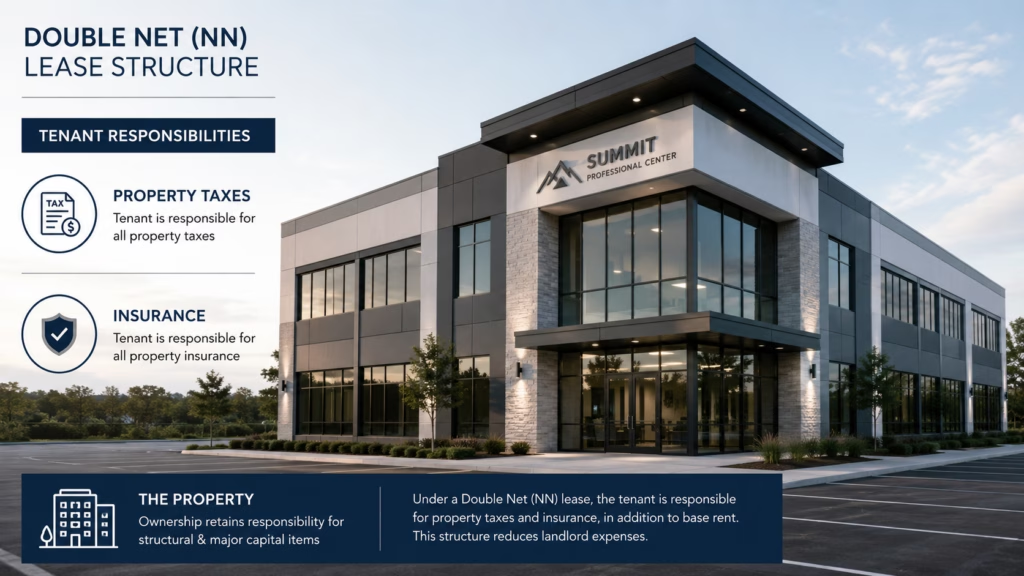
A double net lease, often written as an NN lease, sits between a single net lease and a triple net lease. It can give landlords more expense protection than a gross lease, while giving tenants less responsibility than a full triple net lease.
That middle position is useful, but it can also create confusion. If you are reviewing a commercial lease or underwriting a property with NN leases, you need to know exactly which expenses transfer to the tenant and which obligations remain with the landlord.
You can also compare this lease structure with related commercial real estate terms in our comprehensive real estate glossary.
Learn How Better Landlords Manage Better Rentals
Join our 2X weekly newsletter for clear, actionable guidance on property management, leasing, tenant issues, rental property operations, and real estate investing strategies you can actually use.
How Double Net Lease Expense Sharing Works
In a double net lease, the tenant generally pays base rent plus two major property expenses: real estate taxes and property insurance. The landlord typically remains responsible for maintenance, repairs, structural items, and common area obligations unless the lease says otherwise.
Cornell Legal Information Institute’s net lease overview describes a double net lease as one where the tenant pays base rent, property taxes, and insurance, while a triple net lease adds CAM charges and sometimes other costs.
That structure can work well when both parties want a clearer division of expenses. The tenant accepts responsibility for predictable ownership costs, while the landlord keeps more control over the physical condition of the property.
The Difference Between NN and NNN Leases
The extra “N” matters.
In a single net lease, the tenant usually pays property taxes in addition to rent. In a double net lease, the tenant usually pays property taxes and insurance. In a triple net lease, the tenant commonly pays taxes, insurance, and maintenance or operating expenses.
Holland & Knight’s commercial lease comparison explains that under a double net lease, the tenant pays property taxes and insurance in addition to base rent, while the landlord carries the maintenance obligation.
This distinction affects risk. A landlord with a true NNN lease may pass through much of the property’s operating burden. A landlord with an NN lease may still face repairs, maintenance, roof issues, parking lot work, HVAC problems, and other property condition costs.
Landlord Costs That May Still Remain
A double net lease should not be underwritten as though the tenant handles everything. The landlord may still have meaningful expense exposure.
Maintenance and Repairs
The largest difference is usually maintenance. If the lease leaves maintenance with the landlord, you need to budget for routine repairs and larger capital needs.
That may include roof work, exterior repairs, structural items, plumbing, electrical systems, parking areas, landscaping, and building systems. Some of these costs may be predictable. Others may appear suddenly and affect cash flow.
Common Area Costs
In multi-tenant buildings, common area costs can become more complicated. The landlord may still be responsible for shared hallways, parking lots, sidewalks, lighting, landscaping, drainage, signage, security, trash areas, or common restrooms.
Some NN leases allow the landlord to pass through certain shared costs separately. Others do not. You need to read the actual reimbursement language rather than relying on the “double net” label.
Capital Replacements
A lease may say the landlord handles maintenance, but it may not clearly explain who pays for major replacements. That can create disputes when an expensive item fails.
For example, replacing an HVAC unit, roof membrane, sewer line, or parking lot surface may not feel like ordinary maintenance. The lease should clarify whether those items are landlord costs, tenant costs, shared costs, or amortized pass-throughs.
How NN Leases Affect Tenant Budgeting
From the tenant’s side, an NN lease creates more cost exposure than a gross lease. The tenant needs to budget for property taxes and insurance, both of which can increase.
That can be especially important in markets with rising property assessments or volatile insurance premiums. A tenant may negotiate a reasonable base rent but later face higher total occupancy costs when taxes or insurance are reconciled.
If you are a tenant, ask how taxes and insurance are estimated, billed, and reconciled. If you are a landlord, make sure the lease gives you a practical method to recover those costs without confusion.
Lease Language That Needs Careful Review
A double net lease should clearly define the tenant’s payment obligations. Ambiguity creates disputes and weakens underwriting.
Tax Reimbursement
The lease should explain whether the tenant pays taxes directly, reimburses the landlord, pays monthly estimates, or pays after the tax bill is issued. It should also clarify whether special assessments, tax appeals, reassessments, late penalties, and administrative costs are included.
If the property is multi-tenant, the lease should explain how the tenant’s share is calculated.
Insurance Reimbursement
The insurance section should define which policies are included. Building insurance, liability coverage, flood insurance, earthquake coverage, umbrella policies, and lender-required coverage may not all be treated the same way.
The lease should also say whether the tenant pays premiums directly or reimburses the landlord.
Maintenance Boundaries
This is where many NN lease disputes begin. The lease should separate tenant maintenance obligations from landlord obligations.
For example, the tenant may maintain the interior of its premises while the landlord maintains the structure and common areas. Or the tenant may be responsible for certain systems serving only its space. The more specific the lease is, the fewer surprises you face later.
Underwriting a Property With Double Net Leases
If you are buying a property with NN leases, do not assume the income is as passive as a triple net investment. Your underwriting should include landlord-paid maintenance, repairs, capital reserves, management, and any common area costs that are not recoverable.
Review historical expenses alongside the leases. If the prior owner underinvested in maintenance, the property may show attractive cash flow that is not sustainable.
You should also compare lease recovery rights with actual collections. A lease may allow tax and insurance recovery, but that does not mean the landlord has billed properly or collected consistently.
Negotiation Points for Landlords and Tenants
For landlords, the goal is to protect net operating income while keeping the lease marketable. You may want clear pass-through rights for taxes and insurance, reimbursement deadlines, audit limits, and tenant default remedies if reimbursements are not paid.
For tenants, the goal is cost visibility. You may want prior-year tax and insurance history, caps where appropriate, notice requirements, audit rights, and protection against unreasonable or unrelated charges.
Both sides benefit from clarity. A double net lease can be fair and workable when the expense split is specific, documented, and easy to administer.