
Tenant Screening Red Flags Landlords Should Know
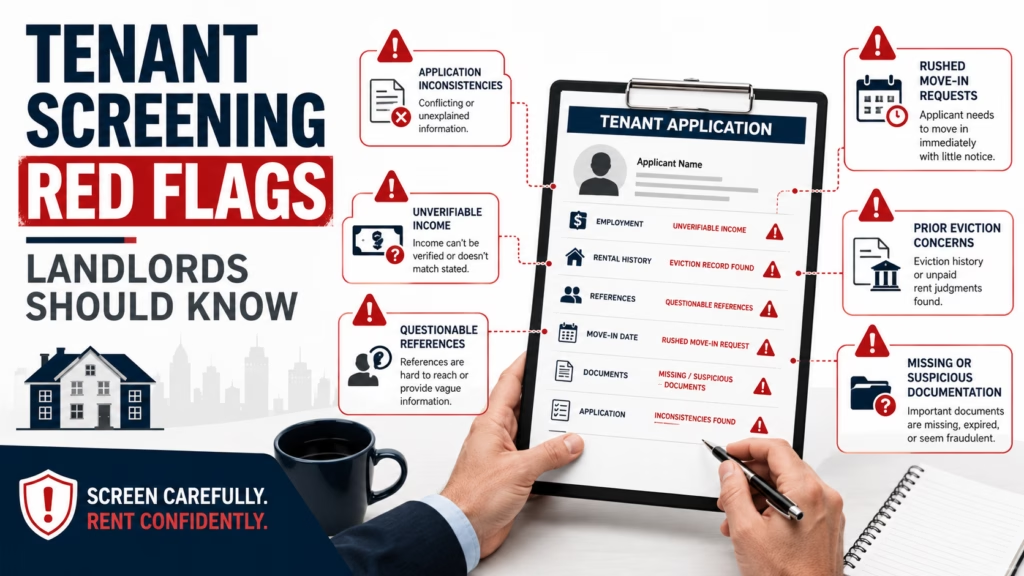
Tenant screening red flags are warning signs that an applicant may create financial, legal, or management problems after moving into a rental property. These red flags do not always mean the applicant should be denied. They do mean the landlord should slow down, verify the information, and apply the same written screening standards to every applicant.
That last point matters. Tenant screening should never be based on instinct alone. A landlord should use consistent criteria, document the process, and avoid treating applicants differently based on protected characteristics. The U.S. Department of Justice explains that the Fair Housing Act prohibits housing discrimination by landlords and other housing providers based on protected classes such as race, color, religion, sex, national origin, familial status, and disability.
A good screening process protects the landlord while also keeping the process fair, objective, and defensible.
Get More Confident as a Landlord or Investor
Sign up for our 2X weekly newsletter and receive useful tips on property management, rental property investing, landlord best practices, and tools that help you manage smarter.
Why Tenant Screening Red Flags Matter
A bad rental placement can be expensive. Missed rent, property damage, legal fees, turnover costs, vacancy loss, and stress can quickly outweigh the benefit of filling a unit fast.
The goal is not to find a “perfect” tenant. The goal is to verify that the applicant meets reasonable, lawful, written criteria. Those criteria may include income, rental history, credit profile, eviction history, occupancy limits, pet rules, and ability to comply with the lease.
Red flags should trigger verification, not guesswork.
Application Inconsistencies
One of the most common tenant screening red flags is inconsistent information on the rental application.
A small typo is not a major concern. But multiple inconsistencies can suggest that the applicant is withholding information, rushing through the application, or submitting false details.
Examples of Application Inconsistencies
Common inconsistencies include:
- Different names across application documents
- Mismatched employer information
- Conflicting move-in dates
- Missing prior addresses
- Incomplete landlord contact information
- Different income amounts on the application and pay stubs
- Employment dates that do not match the applicant’s stated rental history
- References with unclear relationships to the applicant
Landlords should not automatically reject an applicant because one item needs clarification. Instead, ask for documentation or an explanation. If the applicant cannot or will not clarify the issue, that becomes more serious.
How Landlords Should Handle It
Use the same application form for every applicant. Require all adult occupants to apply. Compare the application, ID, income documents, screening report, and landlord references.
If something does not match, ask a neutral question: “Can you help clarify this discrepancy between the employment date on your application and the date shown on your pay stub?”
That keeps the process professional and documented.
Unverifiable Income
Income verification is one of the most important parts of tenant screening. If the applicant cannot show stable, verifiable income, the landlord may face a higher risk of late or missed rent.
Experian’s overview of what landlords look for in a tenant notes that routine tenant screening may include credit checks, rental history, employment or income verification, and background checks.
The key word is verification. A landlord should not rely only on what the applicant writes on the application.
Income Red Flags to Watch
Income-related red flags may include:
Pay stubs with inconsistent formatting
Rounded income numbers that look unusually neat
Employer contact details that cannot be verified
Bank statements with unexplained deposits
Income that varies widely without explanation
Self-employment income with no supporting records
Refusal to provide income documentation
Documents that appear edited or altered
Online applications and digital documents have made screening easier, but they have also made document review more important. Landlords should be careful with screenshots, cropped images, or documents that do not show full names, dates, employer names, or account details where appropriate.
How to Verify Income
Acceptable documentation may vary depending on the applicant’s employment type. A W-2 employee may provide recent pay stubs or an employment verification letter. A self-employed applicant may provide tax returns, profit and loss statements, bank statements, or CPA letters. A retiree may provide pension, Social Security, or investment income documentation.
The standard should be clear before the applicant applies. Avoid changing documentation requirements from one applicant to another.
Rushed Move-In Requests
A rushed move-in request is not always a problem. Sometimes an applicant has a legitimate reason: job relocation, lease expiration, family change, or a property sale.
However, urgency can become a red flag when the applicant pressures the landlord to skip screening, bypass income verification, avoid references, or accept money immediately before the application is complete.
What Rushed Move-In Pressure Can Look Like
Warning signs include:
“I can pay today if you skip the background check.”
“I need the keys immediately.”
“My landlord is hard to reach, but I promise I’m a good tenant.”
“I’ll pay extra if you approve me now.”
“I do not have time to provide documents.”
“I already pulled my own report, so you do not need to screen me.”
Apartments.com identifies “rush to move in,” “lying about income,” and “false references and contact information” among common rental screening red flags landlords should watch for in its guide to background check red flags.
How Landlords Should Respond
Do not let urgency control the process. Tell the applicant that all applicants must complete the same steps before approval.
That means application, ID verification, income review, screening consent, reference checks, and lease signing before keys are released.
A qualified applicant with a legitimate urgent move-in need should still be able to complete the process.
Prior Eviction Context
An eviction record is serious, but landlords should handle it carefully. An eviction filing does not always mean the tenant was removed from the property. Some cases are dismissed, settled, filed in error, or tied to circumstances that may not predict future performance.
The Consumer Financial Protection Bureau has warned about problems with tenant background checks, including inaccurate or incomplete information that can affect rental applicants. Its page on tenant background checks explains that screening reports may contain errors that can affect housing access.
For landlords, the lesson is practical: do not rely blindly on one database result without understanding the context.
What to Review
When an eviction appears, consider:
- How long ago it occurred
- Whether it was a filing or final judgment
- Whether the case was dismissed
- Whether money is still owed
- Whether the applicant disclosed it
- Whether the applicant has strong rental history since then
- Whether the issue was tied to a temporary hardship
Landlords should also follow state and local laws. Some jurisdictions restrict how eviction records can be used, especially sealed, dismissed, or older records.
How to Ask About It
If an eviction appears, ask for clarification in a consistent, neutral way.
For example: “A prior eviction filing appeared in the screening report. Can you provide context or documentation showing the outcome of the case?”
The applicant’s response matters. A disclosed, older, resolved issue with strong subsequent rental history is different from a recent undisclosed eviction with unpaid balances.
Fake References
Fake references are a major tenant screening red flag. An applicant may provide a friend, relative, or false contact as a prior landlord or employer.
Landlords should verify references carefully, especially when the contact information seems too convenient or informal.
Reference Red Flags
Watch for:
Prior landlord uses a generic email only
Employer phone number is a personal cell number
Reference cannot answer basic property or employment questions
Reference gives only vague praise
All references are friends or relatives
Prior landlord does not know lease dates or rent amount
Employer cannot verify position or income
Reference answers too quickly with scripted language
The goal is not to interrogate references. The goal is to confirm that they are real and relevant.
How to Verify References
For landlord references, look up the property ownership or management company independently when possible. Do not rely only on the number provided by the applicant.
Ask factual questions:
- Did the applicant rent from you?
- What were the lease dates?
- What was the monthly rent?
- Was rent paid on time?
- Was proper notice given?
- Were there lease violations?
- Would you rent to this person again?
For employer references, use a company phone number, HR department, or official email domain where possible.
Other Tenant Screening Red Flags
The main warning signs above are some of the most common, but landlords should also watch for related issues.
Refusal to Complete Screening
An applicant who refuses a standard screening process may not be a good fit. The process should be disclosed upfront and applied equally.
Incomplete Applications
Blank fields, missing addresses, missing employer details, or skipped rental history sections should be clarified before approval.
Frequent Moves Without Explanation
Frequent moves are not automatically disqualifying. Military service, job changes, school, family issues, getting a pet, or prior rent increases may explain them. But repeated short tenancies without clear reasons may deserve further review.
Overly Complicated Payment Offers
Large upfront cash offers can sound attractive, but they may also be used to pressure landlords into skipping screening. Follow the same process regardless of payment offer.
Get Practical Property Management Tips Twice a Week
Want smarter systems for managing rentals, screening tenants, handling maintenance, and improving property performance? Sign up for our 2X weekly newsletter and get practical property management and real estate investing insights delivered straight to your inbox.
Best Practices for Handling Tenant Screening Red Flags
The best way to handle red flags is to build a consistent process before applications arrive.
Use Written Criteria
Set written screening criteria for income, credit, rental history, occupancy, pets, smoking, lease terms, and required documents.
Apply the Same Process to Every Applicant
Consistency protects the landlord and helps reduce fair housing risk.
Verify Before Deciding
A red flag should usually trigger additional verification. Do not make decisions based only on suspicion.
Keep Records
Save applications, screening consent, reports, notes, communications, and decision records according to your document retention process.
Follow Adverse Action Rules
If a consumer report is used to deny an applicant, require a higher deposit, add a co-signer requirement, or change terms, landlords may need to provide an adverse action notice under federal law.
Are You Looking To Connect With Property Owners, Landlords, and Real Estate Investors?
Grow your business by connecting with property professionals with our cost-effective advertising options.