How AI Can Help Keep Property Projects On Schedule
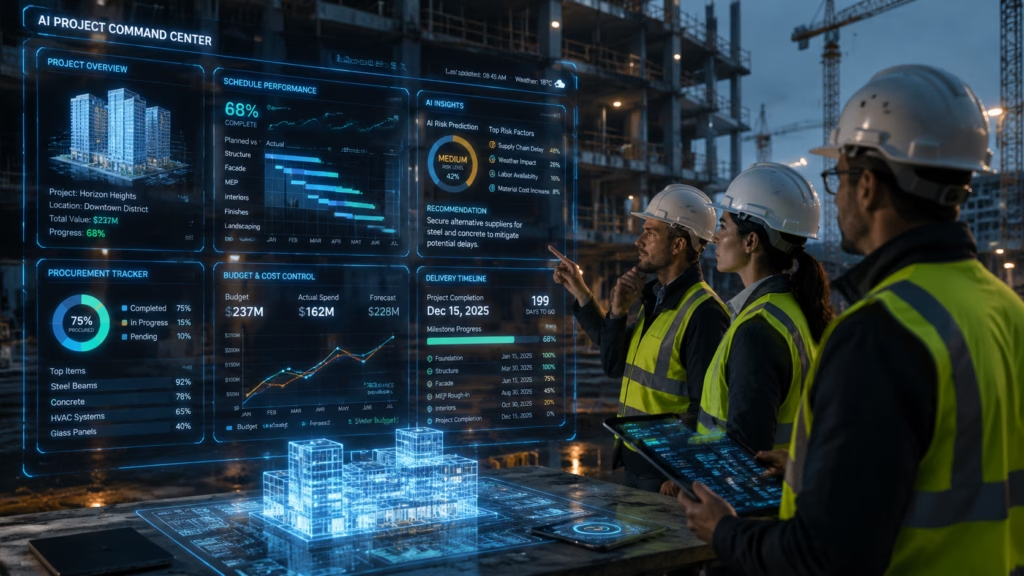
AI property delivery is becoming more practical because construction delays are rarely caused by one isolated mistake. More often, they come from small issues that compound: late approvals, missing materials, slow submittals, labor gaps, design conflicts, weather interruptions, and poor communication between contractors.
If you own, develop, manage, or invest in property, the key lesson is simple: delays usually appear in the data before they appear on the jobsite.
That is where artificial intelligence can create value. AI does not eliminate construction complexity. It does not replace experienced project managers, superintendents, architects, or contractors. But it can help teams see risk earlier, compare more delivery scenarios, and make better decisions before a project falls behind.
The broader construction industry needs that improvement. McKinsey has noted that global construction productivity has improved only modestly over the past two decades, while demand for construction output continues to rise.
Its research also points to labor constraints, cost escalation, and project delivery bottlenecks as major structural challenges for the sector. McKinsey’s construction productivity analysis provides useful context for why better planning and execution systems matter.
Get Practical Property Management Tips Twice a Week
Want smarter systems for managing rentals, screening tenants, handling maintenance, and improving property performance? Sign up for our 2X weekly newsletter and get practical property management and real estate investing insights delivered straight to your inbox.
Property Delivery Is a Data Problem Before It Is a Delay Problem
A delayed property project may look like a scheduling issue, but the schedule is usually the final symptom. The root cause often sits somewhere else.
A subcontractor may not have enough labor. A long-lead item may not have been ordered early enough. A design question may be stuck in the RFI process. A municipality may be taking longer than expected to issue approvals. A tenant improvement scope may have changed, but the budget and procurement plan may not have been updated.
Traditional project reporting often tells you what already happened. AI-supported reporting should help you understand what is likely to happen next.
That shift matters. If your team only learns about a delay after it affects the critical path, your options are limited. If the system flags a probable delay weeks earlier, you may be able to resequence work, accelerate procurement, add labor, approve a substitution, or adjust tenant expectations before the delivery date is threatened.
The Data AI Needs to Forecast Delays
AI is only as useful as the information it receives. Poor project data will produce weak forecasts, even if the software itself is sophisticated.
For property delivery, useful inputs may include:
Daily field reports
Baseline and updated schedules
RFI logs
Submittal logs
Change orders
Procurement records
Inspection results
Labor utilization
Safety incidents
Weather records
Budget updates
Permit and approval status
Vendor and subcontractor performance history
The important point is not simply collecting more information. The information must be consistent, timely, and structured enough to compare across trades, phases, and projects.
Construction Executive has made this distinction clearly: forecasting is different from standard reporting because it estimates future outcomes rather than merely describing current or past performance.
It also notes that useful forecasting data includes schedules, cost reports, RFIs, submittals, change orders, procurement records, daily logs, and labor data. Construction forecasting guidance is especially helpful for understanding how predictive analytics depends on data quality.
How AI Improves Delivery Timing
Better Schedule Forecasting
Most project schedules are built around assumptions. AI can test those assumptions against actual project data.
For example, if drywall installation usually slips when electrical rough-in finishes less than five days before inspection, the system can identify that pattern. If a certain subcontractor has a history of slow mobilization after approval, that can be reflected in the forecast. If similar projects have experienced delays after a specific permitting step, the model can flag that risk early.
This allows the project team to manage the schedule as a living system instead of a static document.
Scenario Planning Before the Delay Becomes Expensive
AI can also help project teams evaluate “what if” scenarios.
What happens if materials arrive two weeks late? What if one trade is resequenced? What if the team adds weekend shifts? What if a substitution reduces lead time but increases cost? What if one building phase is accelerated while another is slowed?
These questions are difficult to answer manually on large projects because every change affects other activities. AI can process more variables and help the team compare outcomes faster.
That does not mean the cheapest or fastest option is automatically best. It means the owner and project team can make decisions with better visibility into cost, timing, and operational tradeoffs.
Earlier Procurement Warnings
Procurement is one of the biggest causes of delivery risk, especially when the project depends on specialized equipment, imported materials, custom finishes, switchgear, HVAC components, elevators, or tenant-specific buildout items.
AI can help by connecting the project schedule to procurement status. If an item is required for installation in 60 days but has an estimated 90-day lead time, the system should flag the gap. If supplier performance is deteriorating, the forecast can reflect that risk. If a substitution is available, the team can evaluate the cost and schedule impact earlier.
For landlords and property managers, this is especially relevant in capital improvement projects. A delayed roof, elevator modernization, or mechanical upgrade can affect leasing, renewals, tenant satisfaction, and asset value.
Improved Quality Control
AI can also support quality control through computer vision, photo documentation, and field reporting.
For example, site photos or drone imagery may help compare actual progress against the schedule. Computer vision tools can help identify whether work is complete, partially complete, or inconsistent with the plan. This can reduce reliance on overly optimistic progress updates.
The Construction Management Association of America has noted that AI applications in construction include machine learning, computer vision, robotics, and natural language processing, with use cases such as forecasting delays, identifying risks, monitoring sites, and improving quality control. CMAA’s AI in construction overview provides a useful summary of these applications.
Where AI Helps Property Managers and Owners
AI property delivery is not only for large developers. Smaller owners and property managers can also use AI-supported workflows, even if they are not building major projects from the ground up.
For example, AI can help organize maintenance histories, estimate repair timing, review vendor performance, flag recurring delays, and compare project scopes. If you manage multiple properties, the value increases because the system can learn from repeated work patterns.
A multifamily owner renovating units can track which vendors finish on time, which materials cause delays, and which inspection items slow turnover. A retail landlord coordinating tenant improvements can monitor permit milestones, utility coordination, and contractor dependencies. A commercial property manager overseeing capital projects can use better data to reduce tenant disruption and protect operating income.
The practical benefit is not “automation” in the abstract. The benefit is earlier intervention.
The Main Limitation: AI Cannot Fix Bad Processes
AI will not rescue a poorly managed project by itself.
If daily reports are incomplete, schedules are not updated, scopes are vague, documents are scattered, and vendors are not held accountable, AI will mainly expose the weakness of the process. That can still be useful, but it will not automatically create on-time delivery.
Before adopting AI tools, owners and managers should tighten the basics:
- Define the project scope clearly.
- Use one reliable source of project data.
- Require consistent schedule updates.
- Track RFIs, submittals, approvals, and change orders.
- Document procurement deadlines.
- Assign responsibility for each risk item.
- Review forecasts regularly with the project team.
AI works best when it supports disciplined project management. It works poorly when it is treated as a substitute for discipline.
A Practical AI Property Delivery Framework
If you are evaluating AI tools for property delivery, start with the outcome you want to improve. Do not begin with the software.
A useful framework is:
1. Identify the recurring delay pattern
Are delays coming from permitting, procurement, labor, inspections, design changes, tenant approvals, or vendor performance?
2. Map the data source
Where does the relevant information live today? Is it in emails, spreadsheets, project management software, accounting records, field reports, or contractor updates?
3. Standardize reporting
Create consistent definitions for milestones, completion status, approval dates, delay reasons, and responsible parties.
4. Test forecasting on one project type
Start with a repeatable use case, such as unit turns, tenant improvements, roof replacements, common-area renovations, or ground-up construction milestones.
5. Use AI forecasts in project meetings
The forecast should influence decisions. If it only appears in a dashboard that no one uses, it will not improve delivery.
Final Thoughts on AI and Project Management
AI property delivery is not about replacing human judgment. It is about giving owners, managers, developers, and contractors better visibility into risk before a delay becomes expensive.
The most valuable AI tools do three things well: they collect better project data, forecast where timing problems are likely to occur, and help teams evaluate practical responses. Used correctly, AI can turn project management from a reactive process into a more predictive one.
For property owners and managers, that means fewer surprises, better vendor accountability, more reliable delivery dates, and stronger control over project costs. The technology matters, but the real advantage comes from combining AI with clean data, disciplined reporting, and experienced decision-making.
Are You Looking To Connect With Property Owners, Landlords, and Real Estate Investors?
Grow your business by connecting with property professionals with our cost-effective advertising options.