Repairs or CapEx? Don’t Misread the Bill
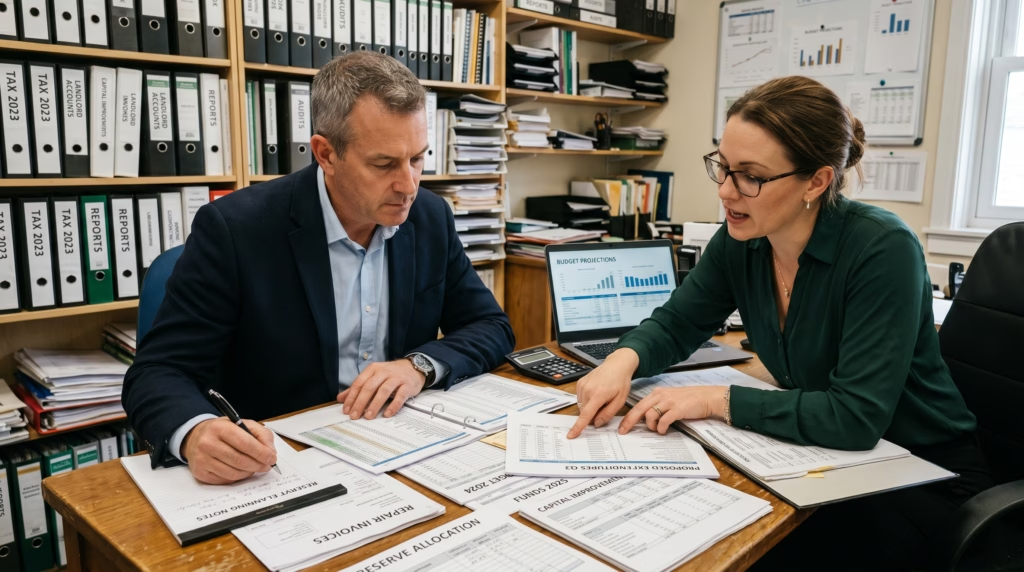
Rental property CapEx vs repairs is one of those topics that sounds technical until it affects your cash flow. Then it becomes very practical.
A $275 plumbing repair, a $1,200 appliance replacement, and a $14,000 roof project should not all be treated the same way in your operating plan. Some costs are routine repairs. Some are capital expenditures. Some should be expected through reserve planning long before the invoice arrives.
If you understand the difference, you can budget more accurately, review property performance more clearly, and have better conversations with your tax professional, property manager, and vendors.
Learn How Better Landlords Manage Better Rentals
Join our 2X weekly newsletter for clear, actionable guidance on property management, leasing, tenant issues, rental property operations, and real estate investing strategies you can actually use.
Start With What the Expense Actually Does
The easiest way to separate repairs from CapEx is to ask what the expense accomplishes.
A repair usually keeps the property in ordinary operating condition. It fixes something that is broken, worn, leaking, loose, clogged, or not working as intended. The property is not fundamentally improved. It is simply brought back to normal use.
A capital expenditure usually does something larger. It may extend the property’s useful life, improve the property beyond its prior condition, replace a major component, or adapt the property to a new use.
That distinction matters because the IRS treats rental repairs and improvements differently. In its guidance on residential rental property, the IRS explains that repairs generally keep property in good operating condition, while improvements must be capitalized when they improve, restore, or adapt the property.
You do not need to become a tax expert to manage rentals well. But you do need to understand that a repair invoice and a capital project invoice can affect your financial reporting differently.
Operating Repairs Keep the Property Running
Common Repair Examples
Operating repairs are the normal costs of keeping your rental usable, safe, and functional. These are the expenses you expect during routine ownership.
Examples may include fixing a leaking faucet, repairing a garbage disposal, replacing a broken door latch, clearing a drain, patching a small drywall area, servicing an HVAC unit, repairing a loose handrail, or fixing a minor electrical issue.
These items can still be frustrating. They can still add up. But they usually belong in your regular maintenance budget because they are part of day-to-day rental operations.
Watch for Repeat Repairs
One repair may be routine. Repeated repairs may be a warning sign.
If the same plumbing line clogs every few months, the issue may not be a simple drain call anymore. If the same HVAC system needs frequent service, you may be moving from maintenance into replacement planning. If multiple windows leak after heavy rain, the problem may be building-envelope related rather than isolated tenant complaints.
This is where good recordkeeping helps. You should track repair type, property address, unit, vendor, cost, completion date, and repeat issues. Over time, your repair history will show whether you are dealing with ordinary maintenance or a larger capital risk.
Capital Expenditures Are Bigger Asset Decisions
Common CapEx Examples
Capital expenditures are usually larger, less frequent, and more strategic. They often involve replacing or substantially improving major systems or building components.
Examples may include a new roof, HVAC replacement, water heater replacement, major plumbing line replacement, electrical panel upgrade, new windows, exterior siding, parking lot resurfacing, structural repairs, full-unit renovation, or major flooring replacement across a property.
CapEx does not always mean luxury improvement. Replacing a failed roof may not make the property feel upgraded to the tenant, but it still affects the building’s long-term useful life and value.
Don’t Let CapEx Hide Inside Maintenance
Small landlords often understate CapEx because they look only at monthly repairs. A property may appear to cash flow well for two years, then lose a large portion of those gains when the roof, HVAC, or plumbing system fails.
That does not mean the property suddenly became bad. It means the earlier numbers may not have included the full cost of ownership.
For planning purposes, create a separate CapEx list for each rental. Include the roof, HVAC, water heater, appliances, flooring, windows, exterior paint, plumbing, electrical, driveway, fencing, and any shared systems. Then estimate the age, condition, remaining life, and likely replacement cost for each item.
Reserve Planning Turns Surprises Into Scheduled Risks
Build a Replacement Reserve
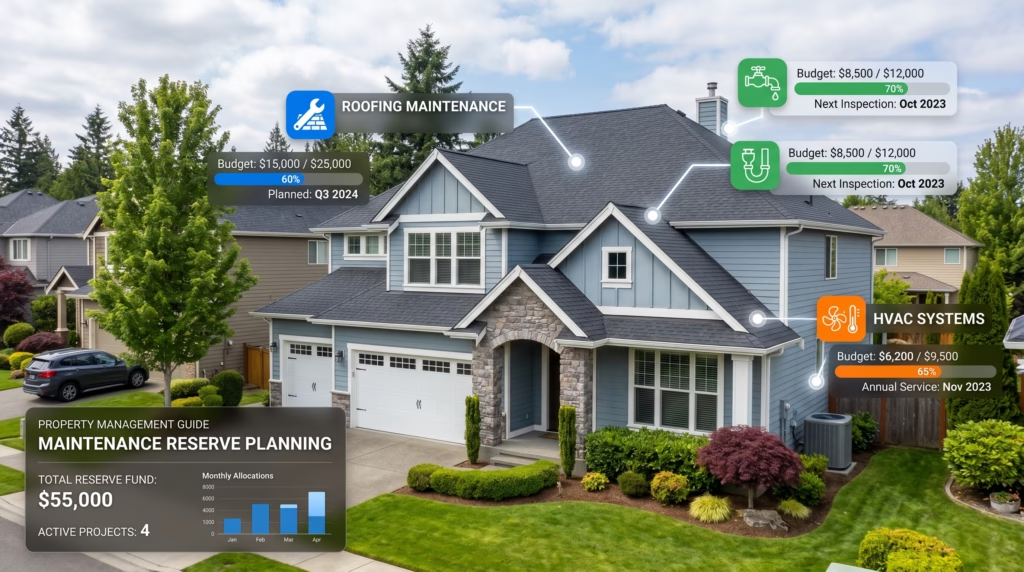
A replacement reserve is money you set aside for major repairs and replacements that are expected over time. This is different from your operating cash account.
For example, if a roof may need replacement in five years, you should not wait until year five to think about the cost. You can begin reserving money now so the project does not become a cash flow emergency.
HUD’s multifamily guidance on a Reserve Fund for Replacements is written for specific housing programs, but the underlying principle applies broadly: properties need dedicated funds for components that wear out over time.
Even if you own one single-family rental, the habit still works. You are simply creating a smaller, landlord-level version of the same discipline.
Use Useful Life as a Planning Tool
You do not need to predict the exact month a system will fail. You only need a reasonable planning range.
A building component life guide, such as this life expectancy of building materials, can help you think through how long roofs, plumbing, HVAC equipment, water heaters, windows, and other components may last under normal conditions. Actual life will still depend on climate, installation quality, tenant use, maintenance, and product quality.
Use those ranges to ask better questions. Is this component near the end of its normal life? Has it been maintained? Is replacement likely during the next lease term, next tax year, or next hold period?
Keep Your Reporting Separate
Your monthly owner report or rental spreadsheet should separate operating repairs from CapEx. If you combine everything into one maintenance line, your numbers become harder to interpret.
A property with $6,000 in ordinary repairs may have an operating problem. A property with $6,000 spent on a planned water heater and flooring replacement may have a reserve-planning issue. Those are not the same thing.
At a minimum, track:
Operating repairs
Preventive maintenance
Tenant-caused damage
Turnover costs
Capital expenditures
Reserve contributions
Reserve withdrawals
This makes your financial review more useful. It also helps you avoid making bad decisions based on incomplete numbers.
Final Thoughts on Repairs and CapEx
Rental property CapEx vs repairs is not just an accounting distinction. It is a better way to understand how your property really performs.
Operating repairs keep the rental functioning. Capital expenditures preserve or improve the asset. Reserve planning helps you prepare for the larger costs that every property eventually creates.
When you separate these categories, you get cleaner reporting, better budgets, and fewer financial surprises. You also start managing your rental less like a collection of monthly bills and more like a long-term investment.
Would You Like To Publish a Free Blog Post on This Site?
Are you a real estate professional, property manager, or industry expert with valuable insights to share? We welcome guest contributors who can provide unique perspectives and actionable advice for our community of property investors and managers.
Guest posting is an excellent way to share your expertise while building backlinks and connecting with our engaged audience of real estate investors and professionals. Best of all, there’s no charge to publish your post on our site!