Property Management Cost Control That Works
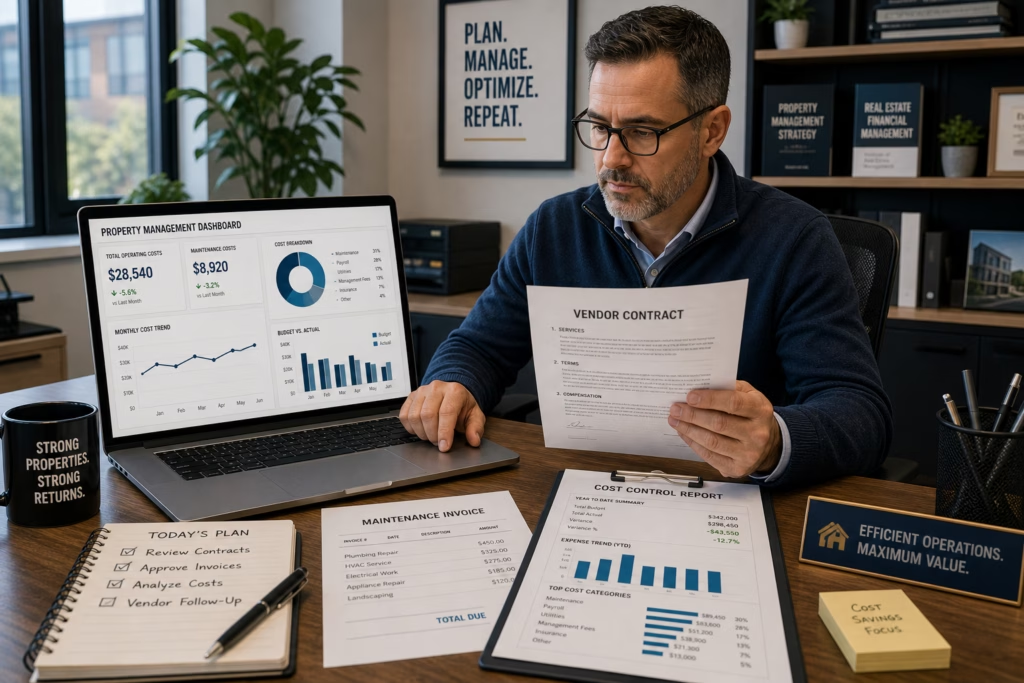
Property management cost control is one of the most important factors in protecting rental property profitability. Rent growth matters, but expenses can quietly erode returns if they are not monitored, negotiated, and managed consistently.
For landlords, investors, and property managers, vendor costs are often one of the largest controllable property management fee expense categories. Maintenance providers, landscapers, cleaners, contractors, pest control companies, HVAC technicians, plumbers, and turnover crews all affect both operating costs and tenant satisfaction.
The goal is not simply to find the cheapest vendor. Poor service, delayed work, and unreliable communication can cost more in the long run. Effective property management cost control means building a vendor strategy that balances price, quality, response time, accountability, and long-term value.
Get Practical Property Management Tips Twice a Week
Want smarter systems for managing rentals, screening tenants, handling maintenance, and improving property performance? Sign up for our 2X weekly newsletter and get practical property management and real estate investing insights delivered straight to your inbox.
Why Vendor Costs Matter So Much
Vendor expenses affect almost every part of rental property performance. A poorly negotiated maintenance agreement can increase operating costs. An unreliable contractor can extend vacancy. A low-cost vendor who does incomplete work can create repeat repairs and tenant frustration.
This is why vendor management should be treated as a core financial function, not an afterthought. Strong vendor relationships can help stabilize costs, improve service quality, and reduce emergency spending.
The U.S. Department of Energy notes that effective operations and maintenance practices are one of the most cost-effective ways to support reliability, safety, resiliency, and energy efficiency. For rental property owners, that principle applies directly to maintenance planning and vendor oversight.
Start With a Clear Expense Baseline
Before negotiating with vendors, property managers need to understand their current spending. Without a baseline, it is difficult to know whether a vendor is expensive, reasonable, or actually saving money compared with alternatives.
Start by reviewing the last 12 months of vendor invoices. Separate recurring expenses from one-time repairs, and identify which vendors are used most often.
Useful expense categories for rental property include maintenance labor, materials, landscaping, cleaning, pest control, HVAC service, plumbing, electrical work, appliance repair, and turnover services.
Once expenses are categorized, look for patterns. Are certain properties generating higher repair costs? Are emergency calls increasing? Are some vendors billing more frequently than expected? These questions help identify where negotiation or operational changes may have the greatest impact.
Compare Price Against Performance
Cost control should never be based on price alone. A vendor who charges slightly more but completes work correctly the first time may be less expensive than a cheaper provider who requires repeated follow-up.
When reviewing vendor performance, consider both cost and outcome. A good vendor should provide clear estimates, timely communication, consistent workmanship, and accurate invoices.
Vendor Metrics Worth Tracking
Property managers should track practical performance indicators, such as:
- Average response time
- Average invoice amount by job type
- Repeat service calls
- Tenant complaints related to vendor work
- Completion time for routine and urgent repairs
These metrics make vendor conversations more objective. Instead of negotiating based on general impressions, managers can use real performance data.
Negotiate Scope Before Price
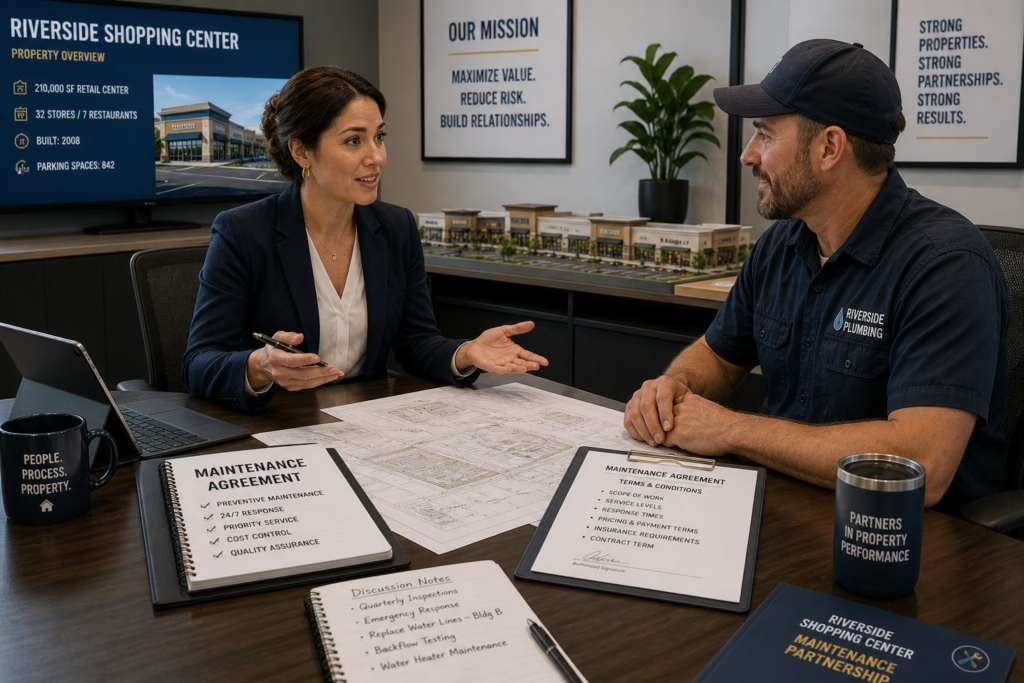
One common mistake in vendor negotiation is focusing on price before defining the scope of work. If the scope is vague, price comparisons become unreliable.
For example, two cleaning vendors may quote very different prices because one includes appliances, windows, and trash removal while the other only performs basic cleaning. Similarly, landscaping proposals may differ based on mowing frequency, seasonal cleanup, irrigation checks, and trimming.
Before negotiating price, clarify exactly what is included. Written scopes should define service frequency, response expectations, materials, exclusions, documentation requirements, and billing terms.
Once the scope is clear, managers can compare bids more accurately and negotiate from a stronger position.
Use Competitive Bidding Strategically
Competitive bidding can be useful, but it should not be overused. Requesting multiple bids for every small job can slow down maintenance and frustrate reliable vendors.
A better approach is to use competitive bidding for recurring services, large repairs, capital improvements, and vendor categories where costs have increased significantly.
For routine work, property managers may benefit more from negotiated rate sheets. This allows approved vendors to perform common tasks at agreed-upon prices, reducing delays and invoice surprises.
Competitive bids are most effective when the manager provides the same scope to each vendor and evaluates the responses consistently.
Negotiate Payment Terms and Volume Discounts
Pricing is only one part of vendor negotiation. Payment terms, volume discounts, service guarantees, and response commitments can also improve cost control.
A property manager with multiple units or recurring service needs may be able to negotiate better rates in exchange for consistent work. Even smaller landlords can sometimes secure savings by bundling services or committing to preventive maintenance plans.
The U.S. Small Business Administration explains that payment terms such as net 30, net 45, or net 60 can help businesses manage cash flow, and that some suppliers may offer discounts for early payment. Property managers can apply the same principle when negotiating vendor terms.
Better terms may not reduce the invoice amount directly, but they can improve cash flow and create more predictable financial management.
Build Preferred Vendor Relationships
Strong preferred vendor relationships can be more valuable than constant price shopping. Vendors who understand your properties, expectations, and approval process are often more efficient.
Preferred vendors may also prioritize your requests during busy periods. This can be especially important during storms, extreme temperatures, or seasonal maintenance spikes when demand for repair services increases.
However, preferred vendor status should be earned and reviewed regularly. Managers should continue tracking performance, comparing market pricing, and ensuring that loyalty does not turn into complacency.
Avoid False Economy in Maintenance
Property management cost control does not mean delaying necessary repairs. In many cases, deferred maintenance leads to higher costs later.
For example, postponing roof repairs can lead to water intrusion. Ignoring HVAC service can shorten equipment life. Delaying plumbing repairs can cause damage to flooring, walls, or neighboring units.
Preventive maintenance is often more cost-effective than emergency repairs. A well-planned maintenance program can reduce surprises, improve tenant satisfaction, and extend the useful life of major systems.
This is where vendor strategy becomes part of asset protection. Reliable service providers help identify issues early and prevent small problems from becoming expensive failures.
Strengthen Vendor Contracts
Vendor agreements should be clear, practical, and enforceable. Even for small property portfolios, written terms can prevent misunderstandings.
A strong vendor agreement should address pricing, scope, response time, insurance requirements, licensing expectations, invoicing procedures, work authorization, and communication standards.
If a vendor has access to tenant data, payment systems, smart locks, security systems, or management software, security expectations should also be addressed. The Federal Trade Commission recommends that businesses put security expectations in writing when working with service providers and verify compliance rather than relying only on assurances.
This is especially relevant as more property management operations use digital portals, smart devices, and outsourced administrative support.
Review Invoices Carefully
Invoice review is one of the simplest and most overlooked cost-control practices. Errors, duplicate charges, unclear labor hours, inflated materials, and unapproved work can all increase expenses.
Managers should compare invoices against estimates, approved scopes, and completed work. For recurring services, invoices should be reviewed against contract terms.
This does not mean treating vendors with suspicion. It means maintaining basic financial discipline. Clear invoice review protects both parties and encourages accurate billing.
Know When to Replace a Vendor
Not every vendor relationship should be preserved. If a vendor repeatedly misses deadlines, provides inconsistent work, overcharges, or communicates poorly, it may be time to move on.
Before replacing a vendor, document the issue and attempt to resolve it professionally. If performance does not improve, begin sourcing alternatives before an urgent need arises.
The worst time to find a new plumber, HVAC technician, or turnover crew is during an emergency. Building backup vendor options in advance is part of responsible property management cost control.
Ready to Turn Your Real Estate Investments Into Profit Machines?
Get ready to build a thriving rental portfolio. Get instant access to professional property management guides and start implementing proven strategies!

Master the art of real estate investing with The Real Estate Property Management Guide: Premium Edition – your comprehensive roadmap to successful property management.
Whether you’re a novice investor or seasoned professional, this guide covers everything from selecting the right investment properties to tenant management and property marketing.
The author, Jeff Rohde writing as Jeffrey Roark, is a professional with over 25 years of real estate experience.
This Premium Edition includes the valuable bonus book Investment Real Estate Analysis: A Case Study to help you identify hidden opportunities and evaluate properties like a professional.
Access practical, actionable strategies for both residential and commercial properties, from single-family homes to office buildings and shopping centers.