Landlord Insurance Mistakes That Can Wreck Cash Flow
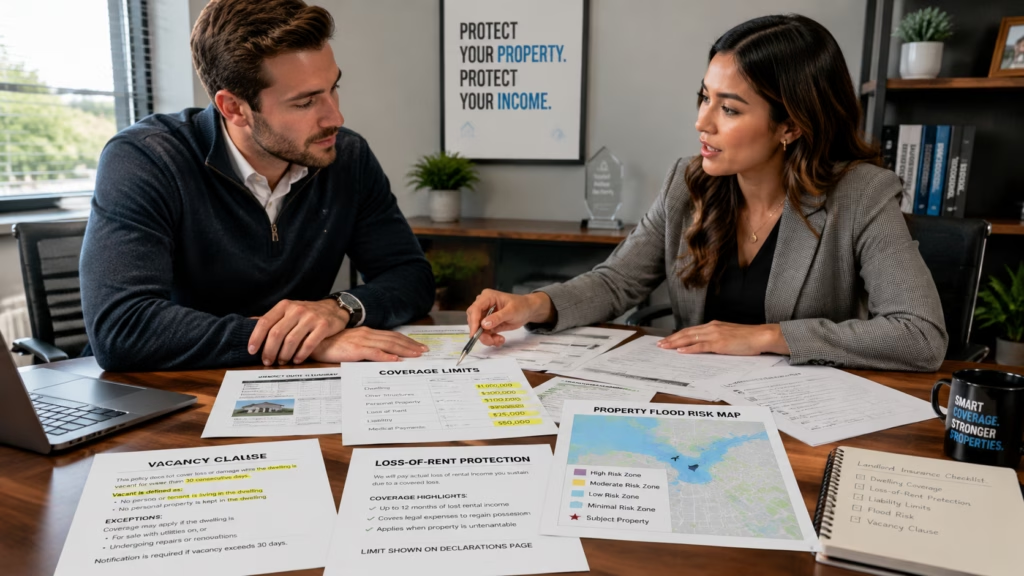
Landlord insurance mistakes are easy to overlook because insurance often feels like a back-office task. You buy a policy, pay the premium, file it away, and hope you never need it.
That approach can become expensive. The wrong policy, low coverage limits, vacancy exclusions, missing flood coverage, or weak liability protection can leave you exposed at the exact moment you expected insurance to protect you.
If you own rental property, your insurance review should be part of your operating process. You don’t need to become an insurance expert, but you do need to understand the common gaps before they turn into uncovered losses.
Get Practical Property Management Tips Twice a Week
Want smarter systems for managing rentals, screening tenants, handling maintenance, and improving property performance? Sign up for our 2X weekly newsletter and get practical property management and real estate investing insights delivered straight to your inbox.
Match the Policy to the Way the Property Is Used
The first mistake is using the wrong policy type. A standard homeowners policy is usually designed for an owner-occupied home, not a tenant-occupied rental.
If you moved out of your former residence and converted it into a rental, you should not assume the existing policy still fits. If you rent the property long term, operate it as a short-term rental, rent rooms individually, or leave it vacant between tenants, the risk profile changes.
The NAIC’s consumer guidance on renting out your home warns that home-sharing and rental activity may not be covered properly under a typical homeowners or dwelling policy. For landlords, the practical lesson is simple: tell the carrier or agent exactly how the property is being used.
Long-Term Rental vs. Short-Term Rental
A long-term rental and a short-term rental are not the same insurance risk. A tenant on a 12-month lease creates different exposure than rotating guests, frequent turnovers, platform bookings, and higher foot traffic.
If you operate short-term rentals, ask whether your policy covers that use specifically. Do not rely only on platform-provided protection. Platform coverage may have limits, exclusions, claim procedures, or gaps that do not replace a properly structured rental property policy.
Personal Property at the Rental
Landlord policies may include limited coverage for owner-owned property used to service the rental, such as appliances, lawn equipment, or maintenance supplies. But tenant belongings generally are not your responsibility under your landlord policy.
That is why many landlords require renters insurance. It can help tenants protect their own belongings and may provide tenant liability coverage, depending on the policy. Your lease should clearly state what insurance the tenant is expected to carry.
Don’t Underinsure the Building
Replacement Cost Can Move Faster Than Rent
Underinsurance happens when your dwelling coverage is too low to rebuild or repair the property after a major loss. This can occur because construction costs rise, the policy was not updated, improvements were not reported, or the owner insured the property based on market value instead of replacement cost.
Market value and replacement cost are different. A property may be worth $300,000 on the market, but the cost to rebuild the structure could be higher or lower depending on materials, labor, location, code requirements, demolition, and permitting.
You should review dwelling coverage regularly, especially after major improvements, inflation in construction costs, or changes in local building codes. If your coverage limit is outdated, your policy may not provide enough money to restore the property after a serious claim.
Watch Co-Insurance and Coverage Conditions
Some policies include co-insurance provisions, coverage conditions, or loss-settlement rules that can affect how much you receive after a claim. These details are easy to miss because they are buried in policy language.
Ask your agent how the policy would respond to a major fire, storm, or partial loss. Would the claim be paid at replacement cost or actual cash value? Are there depreciation rules? Are code upgrades covered? Is there ordinance or law coverage if the building must be repaired to current standards?
Those questions matter before the loss occurs.
Read the Vacancy Clause Before the Unit Sits Empty
Vacancy Is Not Just a Leasing Problem
A vacant rental is not only a cash flow issue. It can also be an insurance issue.
Policies often treat vacant or unoccupied properties differently because empty buildings have higher risk. Leaks may go unnoticed. Break-ins may be more likely. Heating or cooling problems may not be discovered quickly. Vandalism and theft may become more difficult to prevent.
If your property will be vacant for an extended period, ask your insurer how many days trigger a vacancy restriction and what coverage changes after that point. Do not assume a normal rental property policy applies indefinitely while the property is empty.
Renovation Vacancies Need Special Attention
A property that is vacant because you are renovating it may need additional review. Renovation work can introduce fire risk, contractor risk, open walls, exposed systems, materials on site, and gaps in occupancy.
Before starting a major rehab, ask whether your existing policy covers renovation activity. If not, you may need a builder’s risk policy, vacant property coverage, or another endorsement. The correct answer depends on the scope of work, occupancy status, and carrier requirements.
Confirm Loss-of-Rent Coverage
Lost Rent Is Usually Covered Only After a Covered Loss
Loss-of-rent coverage, sometimes called fair rental income protection, can help replace rental income if the property becomes uninhabitable because of a covered claim. For example, if a fire damages the property and the tenant has to move out during repairs, this coverage may help replace rent during the restoration period.
Allstate’s explanation of fair rental income protection makes the key point that this coverage is tied to a covered claim that temporarily makes the property uninhabitable. That distinction matters because normal vacancy, tenant turnover, poor leasing performance, and a tenant who simply stops paying rent are different risks.
Check the Limit and Waiting Period
Do not assume the coverage is unlimited. Review the monthly limit, total limit, covered period, waiting period, and whether the policy pays based on actual lease rent, fair rental value, or another calculation.
If your property would take six months to repair after a major loss, but your policy provides only three months of lost rent, your cash flow gap could still be significant.
Don’t Ignore Flood Gaps
Flood Is Often Separate
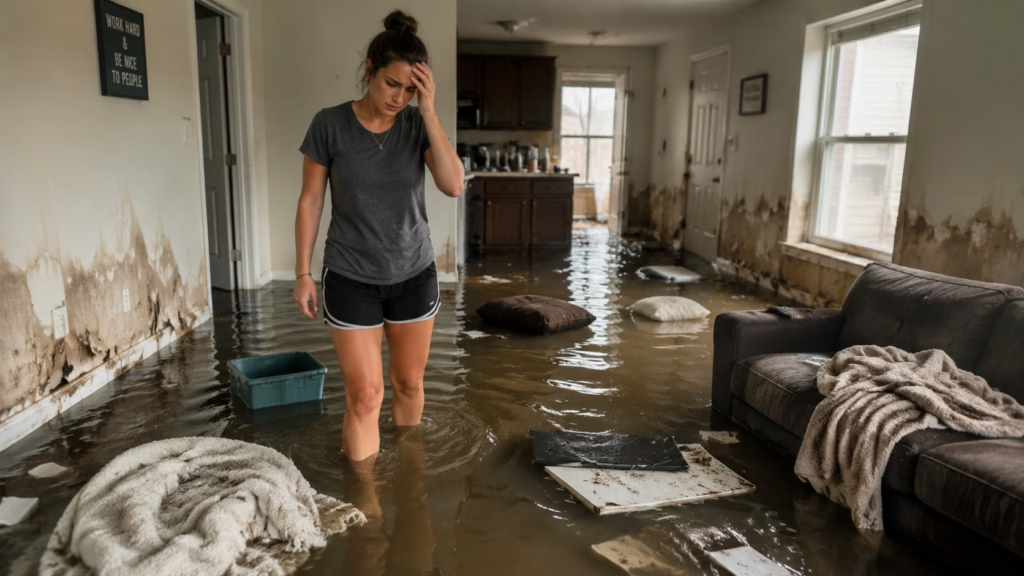
Flood coverage is one of the most common insurance misunderstandings. Many landlords assume that if the property has insurance, flood damage must be covered. That is often wrong.
FEMA states that most homeowners insurance does not cover flood damage, and flood insurance is generally purchased as a separate policy. For rental owners, this is especially important because water damage from a burst pipe and flood damage from rising water may be treated very differently.
If your property is near a coast, river, canal, lake, drainage basin, low-lying area, or neighborhood with poor stormwater systems, do not rely only on whether a lender requires flood insurance. Lender requirements are not the same as full risk analysis.
Low-Risk Zones Can Still Flood
A property outside a high-risk flood zone can still experience flooding. Heavy rain, blocked drainage, construction changes, storm surge, urban flooding, and grading problems can all create water intrusion.
Your insurance review should include the flood zone, elevation, claims history if available, local drainage conditions, and whether private flood insurance or NFIP coverage makes sense for the property.
Liability Limits Should Match Your Exposure
Rental Property Creates Premises Risk
Liability coverage matters because tenants, guests, vendors, delivery drivers, or neighbors could claim injury or property damage connected to your rental.
Examples may include a fall on stairs, inadequate lighting, a loose handrail, a dog-related claim, a pool incident, carbon monoxide exposure, or a vendor injury dispute. Some claims may be weak. Others may be serious. Either way, liability defense costs alone can become expensive.
Review the liability limit on each property and ask whether an umbrella policy would make sense based on your assets, number of rentals, property features, and risk tolerance.
Some Risks May Be Excluded
Pools, trampolines, certain dog breeds, short-term rental activity, business use, mold, lead-based paint, and intentional tenant conduct may be subject to exclusions or special underwriting.
This does not mean every risk is uninsurable. It means you need to disclose the condition and understand how the policy responds. A low premium is not helpful if a common property risk is excluded.
Review the Policy Every Year
Insurance should not be a one-time setup task. Review it at renewal and whenever the property changes.
Do a policy review when you renovate, change from long-term rental to short-term rental, leave the unit vacant for an extended period, add amenities, hire contractors for major work, increase rents, or acquire another property.
Your review should cover:
Dwelling limit
Deductibles
Named perils vs. broader coverage
Replacement cost vs. actual cash value
Loss-of-rent coverage
Vacancy restrictions
Flood coverage
Liability limits
Umbrella coverage
Ordinance or law coverage
Excluded risks
Tenant insurance requirements
You should also keep photos, lease records, rent rolls, inspection reports, maintenance records, and improvement invoices. Good documentation can make a claim easier to support.
Are You Looking To Connect With Property Owners, Landlords, and Real Estate Investors?
Grow your business by connecting with property professionals with our cost-effective advertising options.