When Landlord Enforcement Looks Like Retaliation
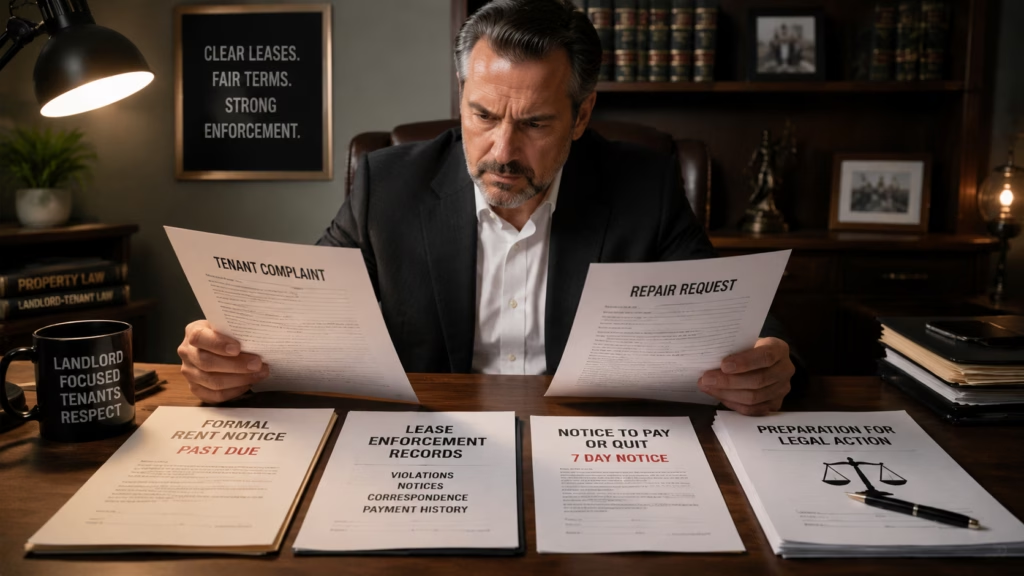
Landlord retaliation can become an issue when you take an adverse action soon after a tenant exercises a legal right. You may believe that you are enforcing the lease, adjusting rent, ending a tenancy, or addressing poor conduct. The tenant may see the same action as punishment for reporting repairs, contacting an agency, requesting an accommodation, or challenging a housing practice.
Timing alone does not automatically prove retaliation. However, poor timing combined with weak documentation, inconsistent enforcement, or unresolved maintenance issues can make an otherwise legitimate decision much harder to defend.
The safest approach is to separate the tenant’s complaint from your business decision and make sure the record clearly supports what you are doing.
Get Practical Property Management Tips Twice a Week
Want smarter systems for managing rentals, screening tenants, handling maintenance, and improving property performance? Sign up for our 2X weekly newsletter and get practical property management and real estate investing insights delivered straight to your inbox.
Retaliation Claims Usually Begin With a Sequence
The word “retaliation” can sound subjective, but disputes often follow a recognizable timeline.
First, the Tenant Takes a Protected Action
The tenant may report a health or safety concern, request repairs, contact code enforcement, participate in a tenant organization, request a disability-related accommodation, complain about discrimination, or exercise another right protected by law.
The specific protections vary by jurisdiction. At the federal level, HUD explains that the Fair Housing Act prohibits retaliation against someone for reporting discriminatory conduct or participating in a fair-housing complaint or investigation through its guidance on reporting housing discrimination.
State and local laws may protect a broader range of activity, including good-faith repair complaints and reports to government agencies.
Next, the Landlord Takes an Adverse Action
The action might involve a rent increase, lease non-renewal, eviction notice, reduced services, repeated entry notices, new restrictions, refusal to complete repairs, or aggressive enforcement of rules that were previously ignored.
Many of these actions can be lawful on their own. The concern arises when the action appears connected to the tenant’s protected conduct.
Finally, the Timing Creates a Possible Connection
A rent increase six months after a routine market review may look different from a rent increase delivered two days after a tenant reports a serious code issue.
A non-renewal supported by months of documented lease violations may look different from a non-renewal issued immediately after the tenant asks for a reasonable accommodation.
Your file should explain the business reason without relying on the tenant’s complaint as the trigger.
Actions That Deserve a Second Review
The following decisions are not automatically retaliatory. They simply deserve closer review when they follow a tenant complaint or protected activity.
| Proposed action | Questions to answer first |
|---|---|
| Rent increase | Was it planned before the complaint? Is it supported by market data, operating costs, or a portfolio-wide policy? |
| Lease non-renewal | Is there a documented business reason? Have similar tenants been treated the same way? |
| Eviction notice | Is there a clear lease violation, nonpayment record, or other legally permitted basis? |
| Inspection or entry | Is the visit reasonably necessary, properly noticed, and consistent with your normal practice? |
| Reduced service | Are you withholding something because of the complaint, or is there an independent operational reason? |
| New rule enforcement | Was the rule already in the lease? Have you enforced it consistently against other tenants? |
| Maintenance delay | Is the repair being processed normally, or did communication stop after the tenant complained? |
This review helps you distinguish legitimate property management from a reaction made in frustration.
Repair Complaints Need Their Own Track
One of the most common retaliation risks begins with maintenance.
A tenant reports a leak, unsafe wiring, mold concern, pest problem, lack of heat, broken lock, or another property condition. You disagree with the severity of the complaint or believe the tenant contributed to the problem. Soon afterward, the relationship deteriorates.
You should investigate the property condition separately from any dispute about tenant behavior.
If the tenant violated the lease, document and address that violation through your normal procedure. At the same time, inspect and respond to the reported repair. Do not delay a legitimate maintenance response because the tenant is difficult, behind on fees, or challenging your position.
California Courts, for example, warns landlords through its guidance on giving an eviction notice that retaliation may include action taken because a tenant reported repairs or code violations, called emergency services, or exercised other legal rights. Your state may define retaliation differently, but the operational lesson is broadly useful: keep repairs and lease enforcement on separate, well-documented tracks.
A Legitimate Decision Needs a Record That Predates the Conflict
The strongest protection against a retaliation claim is often documentation created before the disagreement began.
Suppose you decide not to renew a lease after a tenant files a complaint. Your file is more credible if it already contains late-payment records, prior lease notices, inspection reports, unresolved tenant-caused damage, or a written plan to renovate or sell the property.
A decision made only after the tenant complains may require more careful review.
Useful records include:
- Payment ledgers
- Prior lease-violation notices
- Dated inspection reports
- Repair requests and completion records
- Market rent comparisons
- Insurance or lender requirements
- Written renovation plans
- Communications about a possible sale
- Portfolio-wide rent policies
- Notes from renewal reviews conducted before the complaint
Do not create backdated explanations. Document decisions when they are actually made.
Consistency Can Matter as Much as the Lease
A lease clause does not help much if you enforce it only against the tenant who complained.
Imagine that several tenants have occasionally stored items in a prohibited common area. You ignore the conduct for months. One tenant then reports a safety issue, and you immediately issue that tenant a formal violation notice while taking no action against the others.
The lease rule may be valid, but the selective enforcement creates a poor appearance.
Use written operating standards for late fees, inspections, renewals, noise complaints, unauthorized occupants, pets, maintenance access, and other recurring issues. Apply the same process to similar situations unless you have a documented reason for treating them differently.
Consistency also reduces emotional decision-making. You are following a procedure rather than responding to the tenant personally.
Use a Pre-Action Pause
Before issuing a major notice after a tenant complaint, pause and review the file.
Ask:
- What protected or potentially protected action did the tenant recently take?
- What independent business reason supports the proposed action?
- When was that reason first documented?
- Would you take the same action if the tenant had not complained?
- Have you treated comparable tenants the same way?
- Are there unresolved repair, habitability, discrimination, or accommodation issues?
- Does local law create a presumption of retaliation during a specific period?
- Should a local attorney review the notice before it is served?
This pause does not mean you must tolerate nonpayment, property damage, harassment, or serious lease violations. It means you should verify that your action rests on a lawful, provable basis.
Some state laws create heightened scrutiny when an adverse action follows a tenant complaint within a specified period. The New York Attorney General’s explanation of tenant retaliation protections, for example, describes circumstances in which retaliation may be presumed after a good-faith complaint. Rules and timelines differ, so you need advice specific to the property’s location.
Communication Can Reduce the Appearance of Punishment
Your written communication should focus on facts, lease terms, dates, and required actions.
Avoid statements such as:
“You caused trouble by calling the city.”
“If you keep complaining, this lease won’t be renewed.”
“Since you reported us, we’re raising your rent.”
Even informal texts or emails can become evidence of motive.
A better notice explains the independent reason for the decision. If rent is increasing, identify the effective date and applicable lease or legal requirements. If you are addressing a violation, describe the conduct, date, relevant lease provision, and opportunity to cure when required.
Do not mix frustration about a tenant complaint into a separate business notice.
Property Managers and Vendors Need Boundaries Too
Retaliatory behavior does not always come directly from the owner. A property manager, leasing agent, maintenance worker, or vendor may make threats, delay service, restrict access, or confront the tenant after a complaint.
Your management agreement and vendor instructions should prohibit harassment and retaliation. Complaints should be escalated to a designated decision-maker rather than handled informally by an angry employee or contractor.
Train anyone who communicates with tenants to document facts and avoid personal arguments. A maintenance worker should report what was observed, not threaten the tenant with eviction or fees.
Are You Looking To Connect With Property Owners, Landlords, and Real Estate Investors?
Grow your business by connecting with property professionals with our cost-effective advertising options.