Out-of-State Landlord Tips to Help Stay in Control
Out-of-state landlord tips are most useful when they help you build a system. If you own rental property in another city or state, you cannot rely on casual oversight, quick drive-bys, or last-minute repair coordination.
Remote ownership can work well, but only when the property has local support, clear access rules, reliable vendors, and documented procedures. Without those systems, distance turns small issues into expensive surprises.
The goal is not to manage every detail yourself. The goal is to make sure the property can operate properly even when you are not physically nearby.
Build a Stronger Rental Property Business
Subscribe to our 2X weekly newsletter to learn more about managing tenants, protecting cash flow, improving rental operations, and making better real estate investment decisions.
Remote Ownership Starts With Local Control
The biggest mistake out-of-state landlords make is assuming they can manage the property the same way a local owner would. You can handle many tasks online, but the property itself is still physical. Someone has to inspect it, repair it, access it, secure it, and respond when something urgent happens.
Redfin’s discussion of managing a rental property out of state points out that remote ownership can create investment flexibility, but it also increases the importance of local management, legal awareness, tenant screening, and maintenance coordination.
That is the tradeoff. Distance may help you buy in a stronger market, keep a property after moving, or diversify your rentals. But it also means your operating process needs to be tighter.
The Remote Landlord Operating Plan
Before you focus on software, apps, or automation, create a simple operating plan. You should be able to answer these questions without searching through old emails or text messages.
Tenant communication: How does the tenant report repairs, ask questions, and contact someone in an emergency?
Local vendors: Who handles plumbing, HVAC, electrical, general repairs, pest control, cleaning, lawn care, locks, and emergency water damage?
Property access: Who has keys, lockbox codes, smart lock permissions, or garage access?
Inspections: Who inspects the property, when do inspections happen, and what documentation do you receive?
Legal notices: Who prepares and serves notices if rent is late, access is needed, or lease enforcement becomes necessary?
Emergencies: What happens after hours if there is an active leak, no heat, storm damage, or a security issue?
Property management backup: If you self-manage now, who could step in if the property becomes too difficult to manage remotely?
This does not need to be complicated. A spreadsheet, shared folder, and written procedures can be enough. The important point is that your rental should not depend on you improvising from another state.
Decide What You Should Handle Yourself
Some out-of-state landlords can self-manage successfully. Others should hire a property manager before a problem forces the issue.
Self-management may work if the property is newer, the tenant is stable, the lease is clear, the local market is familiar, and you already have dependable vendors. It becomes harder when the property is older, has frequent repairs, sits in a strict regulatory market, has HOA requirements, or needs regular tenant coordination.
Ask yourself a practical question: if the tenant reports water under the kitchen sink at 9:00 p.m., do you already know who will respond, how access will work, what the approval limit is, and how you will verify completion?
If the answer is no, your remote system is not ready.
Build a Vendor Bench Before the Emergency
Your vendor list should include more than one name. A single plumber, handyman, or HVAC technician is not a system. It is a dependency.
You should have backup options for the trades most likely to affect habitability and property condition: plumbing, HVAC, electrical, appliance repair, locksmith, cleaning, pest control, lawn care, and emergency mitigation.
When you interview vendors, ask practical questions. Do they work with remote landlords? Will they coordinate directly with tenants? Can they send before-and-after photos? Do they provide itemized invoices? Do they accept digital payment? Are they licensed and insured when required?
Also set repair approval limits. For example, you may allow emergency work to begin immediately, approve routine repairs up to a certain amount, and require written estimates for larger jobs. This gives vendors enough authority to solve urgent problems without turning every repair into an open checkbook.
Control Access Without Making It Casual
Lockboxes, smart locks, and keypad entries can make remote ownership easier. They can also create risk if access is poorly controlled.
Use temporary codes when possible. Change lockbox codes after vendor use. Keep a record of who entered, when they entered, and why they entered. Do not let a single shared code circulate among tenants, vendors, cleaners, and leasing agents indefinitely.
For occupied properties, access is not just a convenience issue. It is also a legal and tenant-relations issue. Your lease and local law should control how much notice is required, when entry is allowed, and what qualifies as an emergency.
A good access system protects the property without making the tenant feel like anyone can enter at any time.
Inspect the Property on a Schedule
Remote landlords should not rely only on tenant complaints. Tenants may miss problems, ignore small leaks, delay reporting issues, or misunderstand what needs attention.
Your inspection rhythm should match the property’s risk. A practical schedule may include move-in documentation, a 90-day check for a new tenant, a mid-lease inspection, seasonal maintenance checks, renewal review, and move-out documentation.
You may not need every inspection every year. But you should know why each inspection is being done.
For each inspection, ask for photos, written notes, safety concerns, maintenance recommendations, tenant-responsibility items, and follow-up deadlines. A useful inspection report should show what changed since the last inspection, not just confirm that someone walked through the property.
Prepare for Emergencies in Writing
Emergencies should not depend on whether you notice a missed call.
Give your tenant written instructions for urgent situations. Active leaks, gas odors, electrical hazards, sewer backups, lock failures, no heat in freezing weather, storm damage, and fire or safety concerns should have a clear response process.
Ready.gov’s guidance to make an emergency plan is aimed at households, but the same principle applies to rental property operations. People need to know who to contact, what steps to take, and how decisions are made before the emergency occurs.
Your tenant should know when to call emergency services first, when to contact the utility company, when to contact you or your manager, and how to report damage. Your vendors should know what they can do without waiting for approval when the property is at risk.
If You Hire a Property Manager, Interview for Systems
A property manager is not just someone who collects rent. For an out-of-state landlord, the manager may become your local operating partner.
Do not choose based only on the lowest monthly fee. Ask how they handle inspections, maintenance approvals, rent collection, legal notices, owner reporting, after-hours calls, lease renewals, and tenant communication.
Rentec Direct’s list of property manager interview questions includes several areas that matter for remote owners, including fees, tenant screening, vacancies, management experience, and contract terms.
You should also ask for samples. Review a sample owner statement, inspection report, maintenance invoice, leasing update, and renewal recommendation. If the manager’s reporting is vague before you sign, it probably will not become clearer after you hand over the property.
Keep One Remote Landlord Dashboard
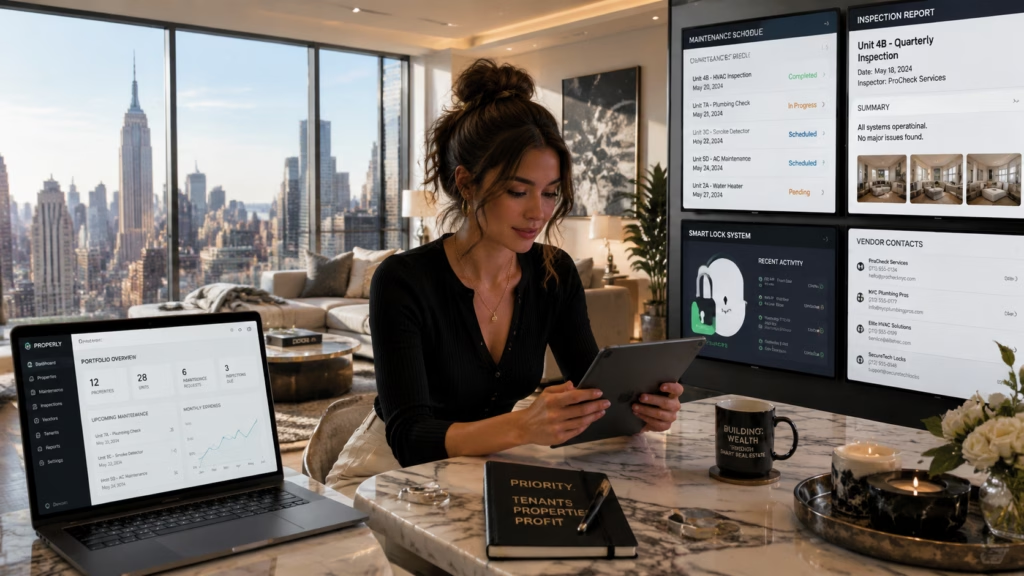
A simple dashboard can prevent a lot of confusion. It should include the property address, tenant contact information, lease dates, rent amount, security deposit, insurance policy, HOA information, utility providers, vendor contacts, inspection dates, lockbox details, emergency procedures, and renewal timeline.
You can maintain this in a spreadsheet or property management platform. The format matters less than the habit.
When everything is organized in one place, you are less likely to miss a lease deadline, forget an inspection, lose a vendor contact, or scramble during an emergency.
Want To Skip the Costly Learning Curve in Real Estate Investing and Property Management?
Access comprehensive real estate investing guides written by a CCIM-certified expert with over three decades of experience.