Foreign Countries Dumping Treasuries and Real Estate

When foreign countries reduce their holdings of U.S. Treasury securities, the immediate story may sound like a bond-market issue. For real estate investors, however, the impact can become very practical very quickly. Treasury yields influence mortgage rates, commercial real estate financing, cap rates, refinancing risk, and the relative appeal of real estate compared with other…
Read MoreBest Real Estate Marketing Software for Agents and Brokers

Real estate marketing software has become a core part of how agents, teams, and brokers generate leads, promote listings, stay in front of prospects, and manage follow-up. The right platform can help an agent build an IDX website, automate email campaigns, track lead sources, organize client communication, create listing materials, and understand which marketing efforts…
Read MoreNotice to Vacate Letter for Landlords [Free Template]

A notice to vacate is one of the most important written notices a landlord may need to prepare. It tells a tenant that the landlord is ending the tenancy, declining to renew the lease, or requiring the tenant to leave by a specific date. For landlords, the goal is not simply to send a letter.…
Read MoreChanging Demand for Student Housing

Student housing has been one of the stronger real estate niches in recent years, but the next phase is likely to be more uneven. Demand is not disappearing. In many university markets, beds are still leasing, occupancy remains solid, and students continue to need housing near campus. What is changing is the source, quality, and…
Read MoreBest Rental Property Accounting Software for Landlords
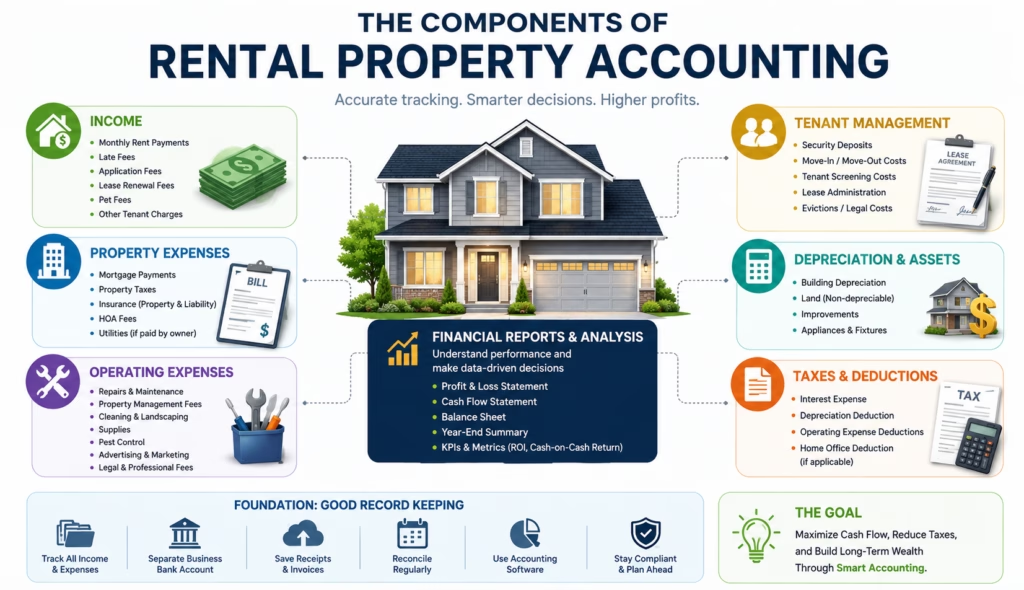
Finding the best rental property accounting software depends on the size of your portfolio, how involved you want to be in bookkeeping, and whether you need basic income and expense tracking or a full property management accounting system. A landlord with two single-family rentals may need a simple free tool with Schedule E reporting. A…
Read MoreHow AI Infrastructure Spending Is Impacting Real Estate
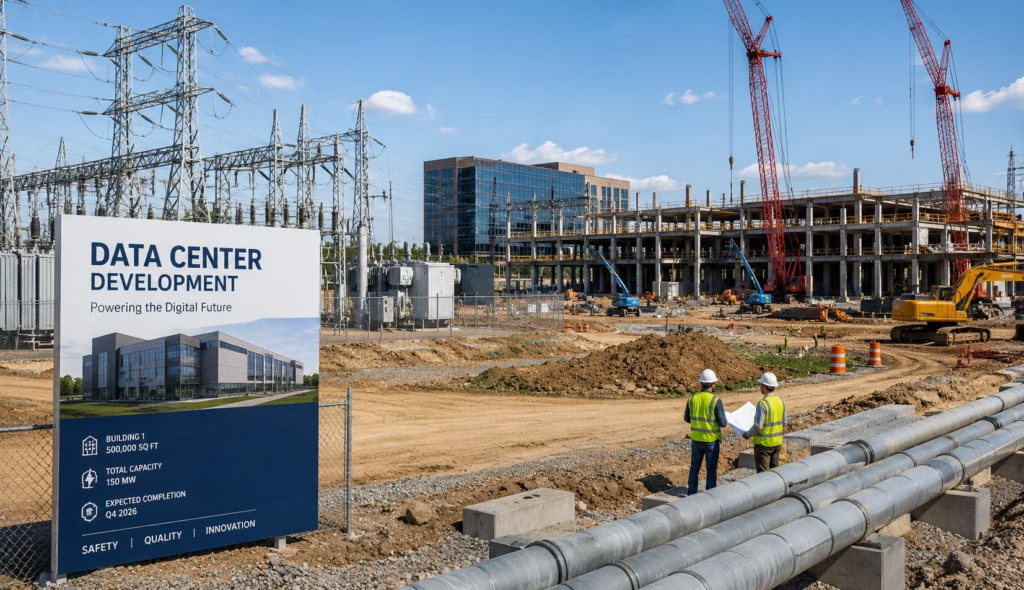
Artificial intelligence is often discussed as software, but its first major economic impact is physical. Before AI can transform offices, leasing, property management, logistics, or investment analysis, it needs data centers, chips, power, cooling systems, fiber networks, substations, and highly specialized construction. That is why AI infrastructure spending has become one of the most important…
Read MoreBest Free Property Management Software for Landlords

Finding the best free property management software for landlords starts with one important caveat: “free” does not mean the same thing across every platform. Some software providers offer a free landlord plan. Others are free for landlords because tenants or applicants pay screening, application, or payment processing fees. Some are free to start, but advanced…
Read MoreBetter Rental Property Analysis for Investors: Key Tips & Tricks

A rental property can look attractive on paper and still become a poor long-term investment. Strong advertised rent, a low purchase price, or a seemingly high cap rate may draw attention, but those numbers do not tell the full story. For real estate investors, the real question is not only, “Will this property cash flow?”…
Read More