Best Landlord Insurance Sources for Landlords
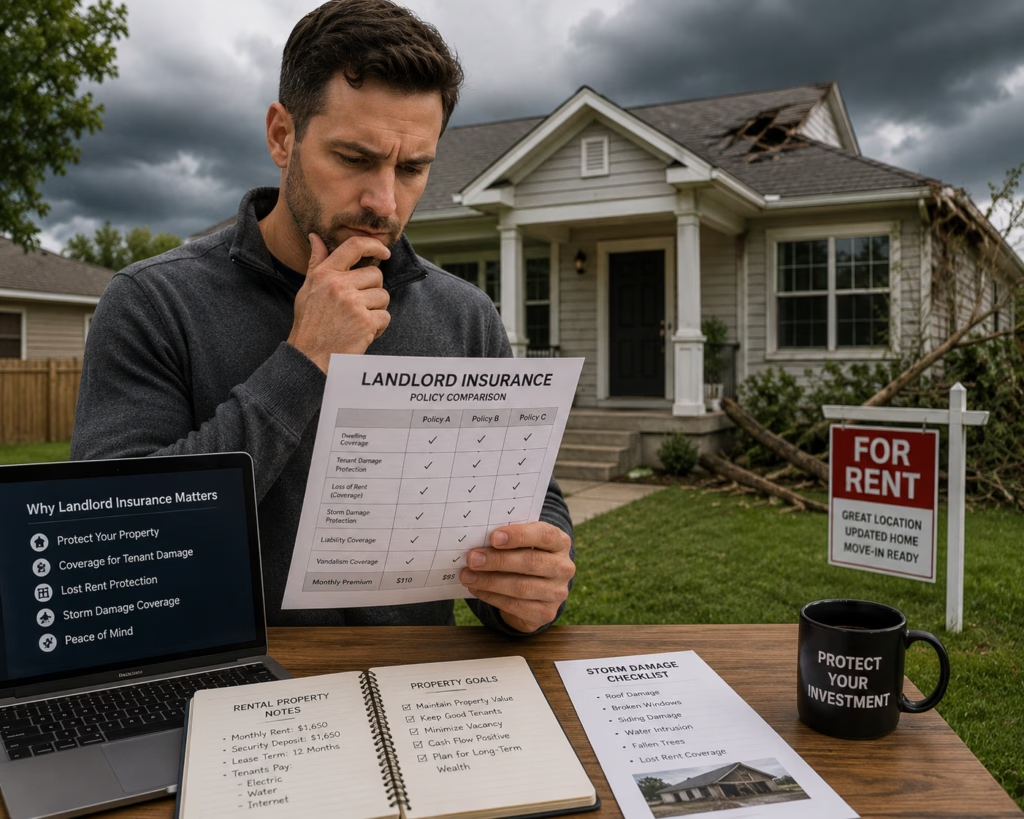
Landlord insurance is not the same as homeowners insurance. A homeowners policy is typically designed for an owner-occupied residence, while a landlord policy is designed for a property rented to tenants. That distinction matters because rental properties create different risks, including tenant-related damage, premises liability, vacancy exposure, loss of rental income, and property damage that may interrupt cash flow.
According to the National Association of Insurance Commissioners, landlord property insurance may cover the insured home, other structures, landlord-owned contents, and lost rental income. That makes landlord insurance a core risk-management tool for rental property owners, not just another version of homeowners insurance.
This list is not inclusive. It is intended as a practical starting point for landlord research. Policy availability, coverage terms, exclusions, deductibles, and pricing vary by state, property type, claim history, occupancy status, and underwriting guidelines. Landlords should compare multiple quotes and speak with a licensed insurance professional before choosing coverage.
How This List Was Created
This list was built using several screens designed specifically for rental property owners. First, each company or platform had to offer landlord insurance, rental dwelling insurance, rental property insurance, multifamily insurance, or real estate investor insurance. The goal was to focus on insurance sources for landlords, not general homeowners coverage.
Second, the list favored providers that address the main risks rental property owners face. As Investopedia’s landlord insurance overview explains, landlord insurance commonly helps cover property damage, liability, and rental income loss. Those three categories are essential because a landlord is protecting both a physical asset and an income stream.
Third, customer experience and claims handling were considered. The J.D. Power 2025 U.S. Home Insurance Study evaluates property insurance satisfaction using factors such as product offerings, problem resolution, price, trust, digital tools, and ease of doing business. Claims service is also important, so the research considered the J.D. Power 2025 U.S. Property Claims Satisfaction Study, which reviews settlement fairness, communication, speed, trust, and ease of resolution.
Fourth, the list balanced different quote channels. Some landlords prefer large national carriers with local agents. Others prefer online-first landlord insurance platforms, real estate investor insurance agencies, or multifamily-focused insurance sources. A landlord with one single-family rental may need a different solution than an investor with vacant properties, renovation projects, short-term rentals, or a multifamily portfolio.
Finally, third-party comparison sources were reviewed for additional context. Investopedia’s 2026 landlord insurance review named American Family as its best overall landlord insurance company and also highlighted companies such as Steadily and biBerk. Construction Coverage’s 2026 landlord insurance comparison guide highlighted companies including Liberty Mutual, Allstate, American Family, Travelers, and Foremost across different landlord use cases.
What Landlords Should Compare Before Buying
The cheapest landlord insurance quote is not always the best policy. A lower premium may come with a higher deductible, lower liability limits, weaker loss-of-rent coverage, or exclusions that matter for rental property owners.
Before buying a policy, landlords should compare:
- Building or dwelling coverage
- Other structures coverage
- Landlord-owned personal property coverage
- Premises liability limits
- Medical payments coverage
- Loss of rent or fair rental income coverage
- Vandalism and theft coverage
- Water backup coverage
- Ordinance or law coverage
- Vacancy rules
- Short-term rental eligibility
- Renovation or construction exclusions
- Flood, wind, hurricane, wildfire, and earthquake limitations
- Umbrella liability availability
- Multi-property or portfolio billing options
Pricing can vary significantly. Property age, location, roof condition, replacement cost, construction type, tenant occupancy, claim history, deductible, and coverage limits can all affect the final quote. For that reason, the best landlord insurance source is usually the one that fits the specific rental property, not simply the one with the lowest advertised price.
1. State Farm
State Farm is one of the largest and most recognizable insurance companies in the United States. For landlords, its rental dwelling insurance can help cover property damage, liability claims, and loss of rental income when a rental property is damaged by a covered loss. That makes State Farm a practical starting point for landlords who want a traditional insurer with local agent support.
State Farm may work well for landlords with single-family rentals, small multifamily properties, or rental condos. It may be especially appealing to owners who want to discuss their coverage with an agent rather than rely only on an online quote form. Landlords should ask about dwelling limits, fair rental value coverage, liability limits, umbrella options, and state-specific exclusions before comparing State Farm against other providers.
Visit State Farm
2. Allstate
Allstate offers landlord insurance for rental property owners and includes coverage categories that may apply to sudden and accidental losses, liability protection, medical protection, and fair rental income. Fair rental income coverage can be especially important for landlords because it may help replace lost rent if a covered claim makes the property temporarily uninhabitable.
Allstate may be a good fit for landlords who want a mainstream carrier with recognizable coverage categories and access to agents. It may also be useful for owners who already use Allstate for other insurance needs and want to explore bundling opportunities. Landlords should confirm whether the quoted policy includes coverage for vandalism, building code upgrades, water backup, vacancy, and short-term rental use if any of those risks apply.
Visit Allstate
3. American Family Insurance
American Family offers a dedicated landlord insurance product that includes building coverage, rental payment loss coverage while repairs are made, and general liability coverage. The company also publishes landlord resources, which may be useful for newer rental property owners who want educational support in addition to insurance.
American Family stands out because it was named best overall in Investopedia’s 2026 landlord insurance review. That does not mean it is the best choice for every property, but it does make American Family a strong company to include in a landlord’s quote comparison. It may be most useful for landlords in states where American Family writes coverage and for owners who want customizable coverage through an agent.
Visit American Family Insurance
4. Liberty Mutual
Liberty Mutual is a large national insurer with landlord insurance options for rental property owners. Its landlord insurance materials describe coverage for the rental property structure, liability exposure, and loss of rent. For landlords who prefer an established brand with broad property insurance experience, Liberty Mutual may be a useful comparison quote.
Liberty Mutual may be a good fit for landlords who want a mainstream insurer, potential bundling, and customizable coverage options. It was also highlighted as a top landlord insurance provider in Construction Coverage’s 2026 landlord insurance comparison guide. Landlords should still review the policy carefully, especially covered perils, loss-of-rent terms, liability limits, and exclusions in markets with higher wind, wildfire, flood, or insurance-capacity risk.
Visit Liberty Mutual
5. Travelers
Travelers offers landlord insurance for rental properties, including apartments, condominiums, and one-to-four-unit single-family or multifamily homes rented to others. Its landlord insurance materials describe coverage that may include the rental property, other structures, landlord-owned personal property, premises liability, medical payments, and fair rental value or loss-of-use protection, depending on the policy.
Travelers may be a strong option for landlords with smaller residential rental properties who want coverage from a major property insurer. It may be especially relevant for owners of one-to-four-unit rentals who want agent support and a policy designed for non-owner-occupied rental property. Landlords should ask about umbrella liability, tenant-caused damage, loss of rent, condo rental eligibility, and small multifamily coverage before making a decision.
Visit Travelers
6. Foremost
Foremost, a Farmers Insurance company, offers landlord and rental home insurance for different rental dwelling situations. Its materials indicate that eligible rental properties may include one-to-four-family dwellings, student rentals, vacation rentals, and short-term rental properties, depending on state availability and underwriting approval.
Foremost may be worth reviewing for landlords whose properties do not fit neatly into standard carrier guidelines. That can include older rental homes, lower-value properties, student rentals, short-term rentals, or owners with multiple rental properties. Landlords should confirm coverage availability, occupancy requirements, valuation method, vacancy provisions, and optional endorsements before relying on a quote.
Visit Foremost
7. Farmers
Farmers offers landlord and rental property insurance through its agent network. This can be useful for landlords who prefer to work directly with an agent and discuss property-specific coverage questions rather than complete the entire process online. Farmers may also be a natural starting point for owners who already have other policies with the company.
Farmers may be most appropriate for landlords who want a traditional quote process and relatively straightforward rental property coverage. Depending on the policy and state, landlords may be able to discuss coverage for the dwelling, other structures, landlord personal property, liability, and loss of rent. Because landlord coverage can vary, owners should ask the agent to explain what is included in the base policy and what requires an endorsement.
Visit Farmers
8. Steadily
Steadily is a landlord-focused insurance platform built for rental property owners and real estate investors. The company states that it was founded in 2020 and designed specifically around landlord insurance. That focus may appeal to landlords who want a quote process built for rental property rather than an owner-occupied home insurance workflow.
Steadily may be a good fit for owners who want online quotes, investor-specific coverage options, and support for different rental property types. The company states that it serves single-family rentals, multifamily rentals, apartment buildings, condo units, vacant or restoration properties, manufactured homes, and short-term rentals. Landlords should still confirm the carrier, policy form, covered perils, deductible, vacancy terms, and loss-of-rent coverage before purchasing.
Visit Steadily
9. Obie
Obie is an online insurance platform built for landlords and real estate investors. Its landlord insurance page emphasizes instant quotes and coverage for single units, multifamily properties, and other rental property types. This makes it relevant for investors who want a digital-first quote process rather than a traditional local-agent appointment.
Obie may be useful for landlords who buy, refinance, or manage multiple rental properties and need to move quickly. It may also appeal to investors who want coverage options aligned with lender requirements and investment-property ownership. As with other insurance platforms, landlords should confirm the actual insurance carrier, policy form, liability limits, replacement cost assumptions, exclusions, and whether the policy fits long-term rentals, short-term rentals, or multifamily properties.
Visit Obie
10. National Real Estate Insurance Group
National Real Estate Insurance Group, commonly called NREIG, is an insurance source focused on real estate investors. Its rental property insurance materials describe custom property and liability coverage for rental properties, including single-family rentals and apartment buildings. This makes NREIG different from general consumer insurance companies that primarily serve owner-occupied homeowners.
NREIG may be especially relevant for landlords with multiple properties, entity-owned rentals, vacant properties, renovation projects, or properties that move between occupancy statuses. Its investor-oriented model may fit landlords who need portfolio scheduling, monthly reporting, vacant property coverage, renovation coverage, or liability options across multiple assets. Owners should review program terms carefully and confirm how coverage changes when a property is vacant, under renovation, leased, or newly acquired.
Visit National Real Estate Insurance Group
11. Honeycomb Insurance
Honeycomb Insurance is a real estate insurance platform focused on building owners, property managers, condo associations, and developers. Its landlord insurance materials emphasize multifamily property coverage, which makes Honeycomb especially relevant for landlords who own buildings rather than only single-family rental homes.
Honeycomb may be a strong research option for landlords with multifamily buildings or more complex real estate assets. It may also appeal to property owners who want a technology-driven quote process and insurance underwriting designed around real estate operations. Landlords should confirm state availability, building-size eligibility, construction type, occupancy requirements, deductibles, liability limits, and whether Honeycomb’s coverage fits their specific rental property.
Visit Honeycomb Insurance
Quick Comparison Chart
| Company | Best Fit | Why It May Belong on a Landlord’s Research List |
|---|---|---|
| State Farm | Agent-based rental dwelling coverage | Large national carrier with rental dwelling coverage and local agent support |
| Allstate | Traditional landlord coverage | Offers landlord coverage categories including liability, medical protection, and fair rental income |
| American Family | Customizable landlord insurance | Dedicated landlord product and strong third-party recognition |
| Liberty Mutual | Mainstream carrier comparison | Large insurer with landlord coverage and broad property insurance infrastructure |
| Travelers | One-to-four-unit rental properties | Landlord policies designed for condos, apartments, and one-to-four-unit properties |
| Foremost | Nonstandard or multiple rental properties | May fit student rentals, short-term rentals, older homes, and multiple-property landlords |
| Farmers | Agent-guided landlord insurance | Useful for landlords who already use Farmers or prefer local agent support |
| Steadily | Online landlord-focused quotes | Built specifically around rental property owners and real estate investors |
| Obie | Digital-first investor insurance | Designed for landlords and real estate investors with online quote capability |
| NREIG | Real estate investor portfolios | Focuses on investment properties, vacant properties, renovations, and portfolio schedules |
| Honeycomb | Multifamily and real estate assets | Real-estate-focused platform with emphasis on multifamily landlord insurance |
Are You Looking To Connect With Property Owners, Landlords, and Real Estate Investors?
Grow your business by connecting with property professionals with our cost-effective advertising options.

Master the art of real estate investing with The Real Estate Property Management Guide: Premium Edition – your comprehensive roadmap to successful property management.
Whether you’re a novice investor or seasoned professional, this guide covers everything from selecting the right investment properties to tenant management and property marketing.
The author, Jeff Rohde writing as Jeffrey Roark, is a professional with over 25 years of real estate experience.
This Premium Edition includes the valuable bonus book Investment Real Estate Analysis: A Case Study to help you identify hidden opportunities and evaluate properties like a professional.
Access practical, actionable strategies for both residential and commercial properties, from single-family homes to office buildings and shopping centers.