House Flipping Mistakes: What New Investors Must Avoid
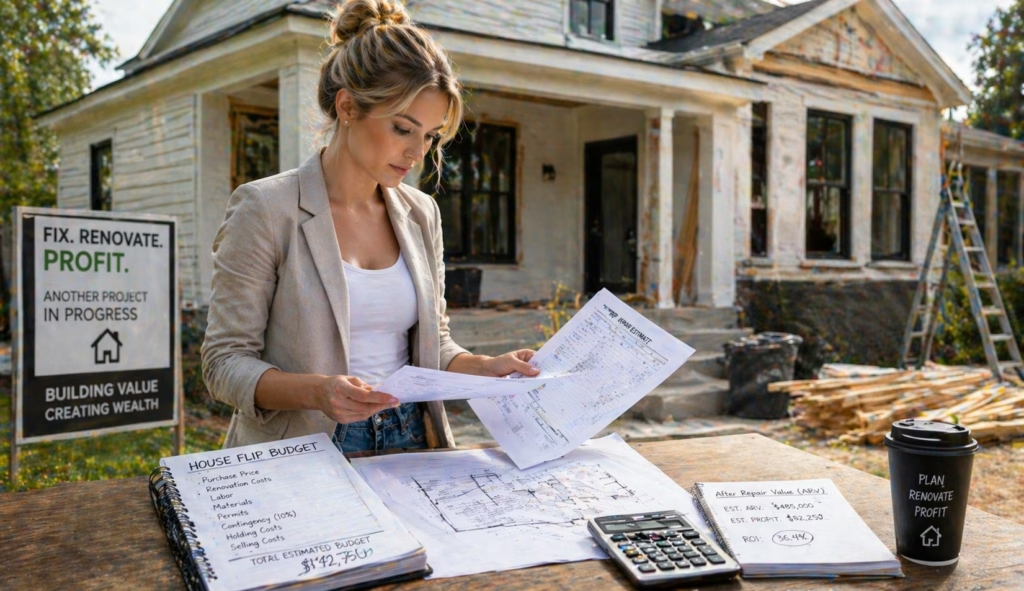
House flipping can be highly profitable when executed correctly, but it is also one of the fastest ways to lose money in real estate if mistakes are made early. Many new investors focus on potential profits without fully understanding the risks involved in acquisition, renovation, and resale.
Avoiding common house flipping mistakes is critical to protecting capital and achieving consistent results. Most failed flips are not due to bad luck—they are the result of poor planning, inaccurate assumptions, or avoidable execution errors.
Get Practical Property Management Tips Twice a Week
Want smarter systems for managing rentals, screening tenants, handling maintenance, and improving property performance? Sign up for our 2X weekly newsletter and get practical property management and real estate investing insights delivered straight to your inbox.
Underestimating Renovation Costs
One of the most common and costly mistakes is underestimating the true cost of repairs. Initial budgets often fail to account for hidden issues such as structural damage, outdated electrical systems, or plumbing problems.
A realistic renovation budget should include a contingency buffer. Many experienced investors add at least 10% to 20% to their projected costs to account for unexpected expenses.
Without this margin, even a small surprise can quickly eliminate profit.
Overpaying for the Property
Profit in house flipping is largely determined at the time of purchase. Paying too much for a property leaves little room for error and increases financial risk.
New investors often rely on optimistic projections instead of conservative analysis. A disciplined approach involves calculating the after-repair value (ARV) and working backward to determine a maximum purchase price.
Guidance from the National Association of Realtors can help investors understand market conditions and pricing trends when evaluating deals.
Ignoring the Local Market
Not all markets support the same flipping strategies. Buying in the wrong area or misjudging demand can lead to extended holding periods and reduced returns.
Before purchasing a property, evaluate:
- Comparable sales in the immediate area
- Buyer demand and time on market
- Neighborhood trends and future development
Market research is essential to ensure that the finished property will attract buyers at the expected price point.
Poor Project Management
Even a well-planned deal can fail due to poor execution during the renovation phase. Delays, cost overruns, financing and contractor issues are common challenges.
Effective project management requires:
- Clear scope of work before starting
- Reliable contractors with verified references
- Regular oversight to ensure timelines and budgets are maintained
Lack of control during renovation often leads to missed deadlines and increased holding costs.
Over-Improving the Property
Another frequent mistake is over-renovating beyond what the market supports. Adding high-end finishes in a mid-range neighborhood rarely results in higher sale prices.
The goal should be to match the expectations of buyers in that specific market. Upgrades should be strategic, focusing on areas that provide the highest return, such as kitchens, bathrooms, and curb appeal.
Underestimating Holding Costs
Holding costs can quietly erode profits, especially if the property takes longer to sell than expected.
These costs may include:
- Mortgage payments or financing costs
- Property taxes and insurance
- Utilities and maintenance
- Marketing and selling expenses
Longer timelines increase these expenses, reducing overall profitability. Accurate time projections are just as important as accurate cost estimates.
Skipping Proper Inspections
Some investors attempt to save money by skipping inspections, especially in competitive markets. This decision often leads to larger expenses later.
Professional inspections can reveal structural issues, safety concerns, and major repair needs before purchase. Identifying these risks early allows investors to adjust their offer or walk away from a bad deal.
Poor Exit Strategy Planning

A successful flip requires a clear exit strategy from the beginning. Relying on a single outcome—such as selling quickly at a high price—can be risky.
Investors should consider alternative scenarios, such as renting the property if the market slows or adjusting pricing strategies based on buyer demand. Consider holding an open house to attract motivated tenants.
Data from the Federal Housing Finance Agency can help investors track price trends and make more informed decisions about timing their exit.
Emotional Decision-Making
House flipping should be approached as a business, not a personal project. Emotional decisions often lead to overspending or unrealistic expectations.
Sticking to a predefined budget and investment criteria helps maintain discipline. If a deal no longer meets your financial requirements, it is better to walk away than to justify a poor investment.
Lack of Financial Reserves
Unexpected costs and delays are common in house flipping. Investors who operate without sufficient reserves are at greater risk of financial strain.
Having access to additional capital provides flexibility and allows you to manage unforeseen challenges without compromising the project.
Wondering Where the Savviest Investors Find Their Best Deals?
Access the largest database of foreclosure properties nationwide and discover below-market deals before other investors. Start your search today!

Are you a contrarian investor with the foresight to spot opportunities where others see only chaos?
Rental Property Management in a Market Crash is your essential guide to navigating turbulent economic waters.
Learn how to capitalize on market downturns that inevitably occur, drawing parallels between the Global Financial Crisis of 2007-09 and current market conditions.
This book offers invaluable insights into the dynamics of the housing market during a downturn, equipping you with the knowledge to make informed decisions and build a resilient investment portfolio.
Don’t just weather the storm – thrive in it!