Posts Tagged ‘Beginner’
Rental Property Maintenance Schedule for Landlords (Free Download)

Owning a rental property is not just about collecting rent. For first-time landlords, one of the most important responsibilities is keeping the property safe, functional, and attractive to tenants. A clear rental property maintenance schedule helps prevent small problems from becoming expensive repairs, reduces tenant complaints, and protects the long-term value of the investment. The…
Read MoreFirst-Time Landlord Guide to Getting Started

Becoming a landlord for the first time can be both exciting and intimidating. Rental property can create monthly income, long-term equity, and valuable tax advantages, but it also comes with legal, financial, and operational responsibilities that should not be treated casually. This first-time landlord guide is designed to help new rental owners understand the basics…
Read MoreTop Kansas City Property Management Companies

Kansas City is a two-state rental market. Landlords may own property in Kansas City, Missouri, Kansas City, Kansas, Johnson County, Wyandotte County, Northland, Overland Park, Olathe, Lee’s Summit, Independence, or smaller nearby communities. The tenant base can shift quickly from one side of the metro to another. That makes local execution important. A rental in…
Read MoreTop Detroit Property Management Companies
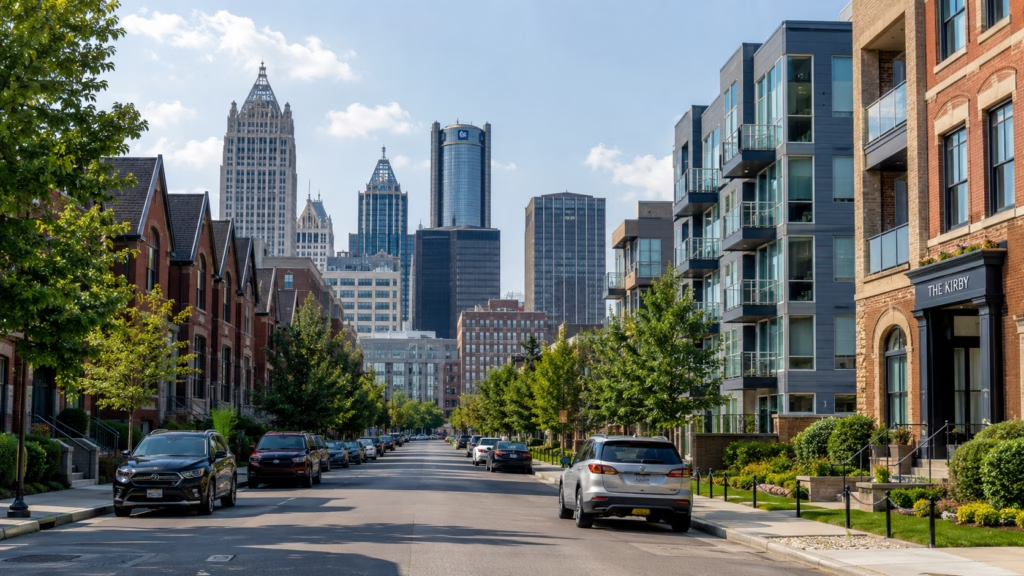
Detroit can be attractive to rental property investors because entry prices are often lower than in many major metros. That does not mean the market is easy. Landlords must pay close attention to property condition, neighborhood selection, city compliance, repairs, tenant quality, and rent collection. A Detroit rental can perform well when the numbers are…
Read MoreTop Philadelphia Property Management Companies

Philadelphia rental property management comes with a different set of challenges than many newer rental markets. The city has rowhomes, duplexes, small apartment buildings, mixed-use properties, and older multifamily assets. Many properties also require careful attention to maintenance, licensing, inspections, and neighborhood-level rent expectations. A rental in Fishtown will not operate exactly like one in…
Read MoreTop Chicago Property Management Companies
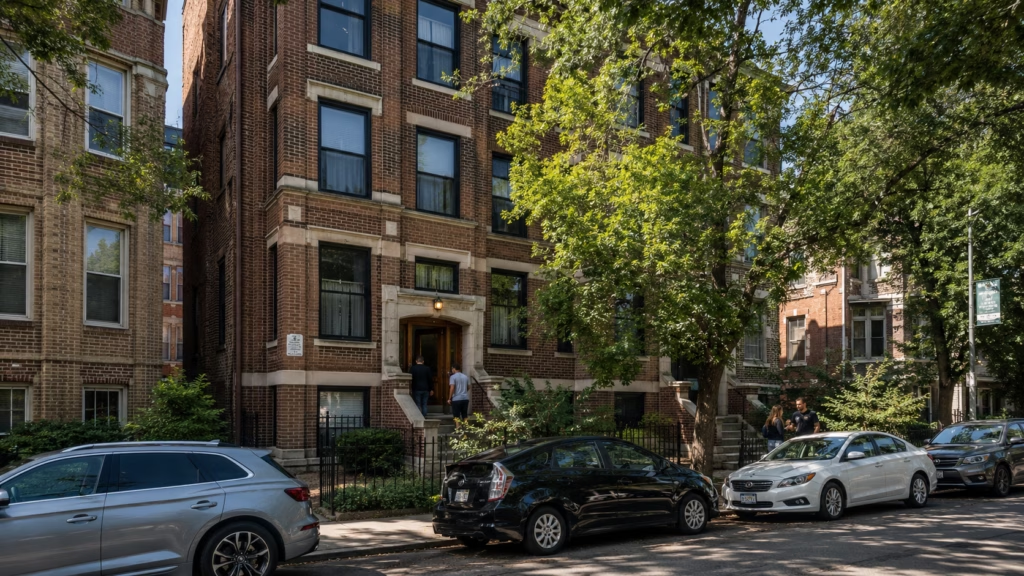
Chicago is a different kind of rental market than many newer Sun Belt metros. Landlords often deal with older buildings, dense neighborhoods, multifamily properties, condo associations, strict local rules, and wide rent differences from one neighborhood to the next. A rental in Lincoln Park will not operate like a building in Logan Square, Bronzeville, Bridgeport,…
Read MoreTop Fayetteville Springdale Rogers Property Management Companies

Northwest Arkansas is not built around one dominant city. Fayetteville, Springdale, Rogers, and Bentonville function as a connected regional market. That makes rental management more localized than it may first appear. A rental near the University of Arkansas may attract a different tenant profile than a home in Rogers, a duplex in Springdale, or a…
Read MoreTop Huntsville Property Management Companies

Huntsville has become one of the most closely watched rental markets in the Southeast. The city benefits from aerospace, defense, engineering, technology, and regional population growth. It is also known as “The Rocket City” because of its long connection to U.S. space missions. For landlords, that creates a practical challenge. Huntsville rentals may attract relocating…
Read More