Changing Demand for Student Housing
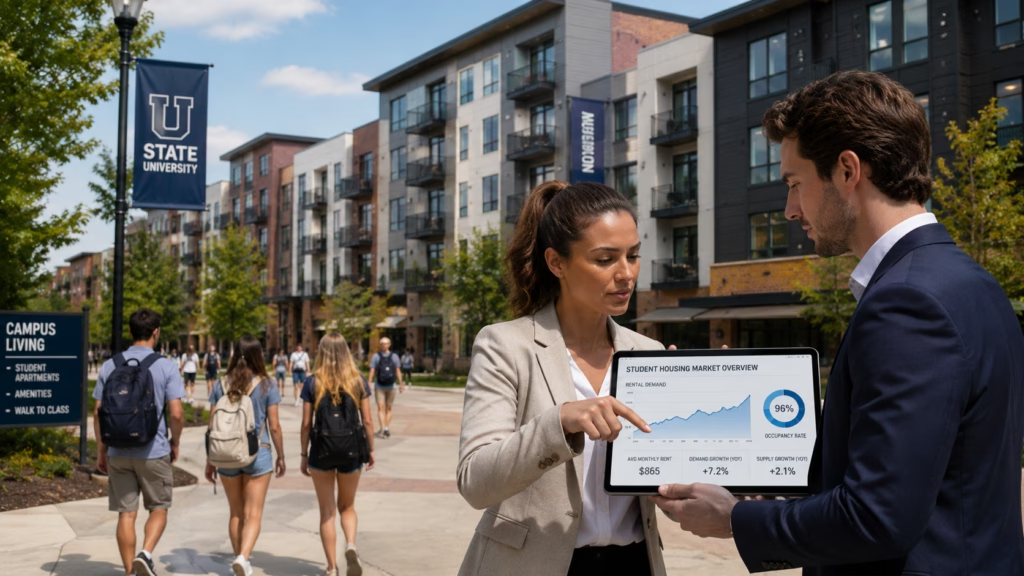
Student housing has been one of the stronger real estate niches in recent years, but the next phase is likely to be more uneven. Demand is not disappearing. In many university markets, beds are still leasing, occupancy remains solid, and students continue to need housing near campus. What is changing is the source, quality, and reliability of that demand.
For landlords and real estate investors, this matters because student housing is not just a rental category. It is tied directly to college enrollment, household formation, parent finances, student loan policy, international student flows, university budgets, and the local supply of purpose-built housing. When those factors shift, the strongest markets can remain highly competitive while weaker campuses lose pricing power.
The practical takeaway is simple: student housing should no longer be underwritten as one broad national trend. It should be evaluated campus by campus.
Why Student Housing Demand Is Entering a New Phase
The most important long-term issue is demographics. The U.S. is reaching the point where the large high school graduating classes created before the post-2007 birth decline begin aging into college. According to WICHE’s high school graduate projections, the number of U.S. high school graduates is expected to peak in 2025 and then decline steadily through 2041, with a projected 13% decline from the peak by the end of the projection period.
That does not mean every college market will shrink. It means the pool of traditional college-age students will become more competitive. Flagship universities, selective schools, major public systems, and institutions in growing states may continue to attract applicants. Smaller private colleges, regional schools in slow-growth states, and institutions with weak finances may face more pressure.
For landlords, the distinction matters. A rental property near a growing state university in Texas, Florida, North Carolina, Tennessee, or South Carolina may behave very differently from a similar-looking property near a financially stressed institution in a declining region.
Current Enrollment Data Is Stronger Than the Headline Fear
The demographic cliff is real, but it is not the same thing as an immediate enrollment collapse. Recent enrollment data still shows recovery from the pandemic-era decline. The National Student Clearinghouse enrollment data showed that fall 2025 postsecondary enrollment exceeded 19.4 million students, up 1.0% from the prior year, with undergraduate enrollment rising 1.2% while graduate enrollment was roughly stable.
That data is important because it shows why student housing has not suddenly weakened across the board. Many campuses are still full. Some are growing. Community colleges, public four-year institutions, certificate programs, and adult-learning pathways are all part of a changing higher education landscape.
However, not all enrollment growth translates equally into student housing demand. A student taking classes part time at a local community college may not create the same housing demand as a full-time freshman relocating to a flagship campus. Online, hybrid, commuter, and certificate-based enrollment can increase headcount without increasing demand for beds near campus.
That distinction is becoming more important. A university can report stable enrollment while the nearby rental market still weakens if more students are commuting, taking hybrid classes, living at home, or choosing lower-cost housing farther from campus.
Get Practical Property Management Tips Twice a Week
Want smarter systems for managing rentals, screening tenants, handling maintenance, and improving property performance? Sign up for our 2X weekly newsletter and get practical property management and real estate investing insights delivered straight to your inbox.
Student Housing Is Still Leasing, but Rent Growth Is Slowing
Purpose-built student housing has remained resilient, but the market is no longer in the same high-growth environment seen immediately after the pandemic. According to Yardi Matrix student housing research, student housing preleasing for the 2026–2027 academic year reached 65.5% as of March, 340 basis points ahead of the prior year’s final March estimate. At the same time, rent growth has slowed sharply compared with the stronger increases seen in 2024 and 2025.
This combination is important. Strong preleasing suggests that demand remains intact in many major student housing markets. Slower rent growth suggests that operators may have less ability to push pricing aggressively.
For landlords, that creates a more disciplined operating environment. The easy strategy of raising rents simply because student housing is popular may not work as well. Properties with better locations, cleaner units, stronger internet, safer access, parking, and predictable lease terms may still outperform. Poorly maintained rentals farther from campus may face more resistance from students and parents.
The Demand Shift Will Favor Stronger Institutions

One likely outcome is a widening gap between strong and weak college markets. Student housing demand should hold up better around institutions with several advantages.
Flagship and Major Public Universities
Large public universities often have broad applicant pools, athletic visibility, research funding, alumni networks, and political support. They may also benefit from affordability concerns as families look for lower-cost alternatives to expensive private colleges.
For landlords, this does not mean every large university market is automatically attractive. Some flagship markets already have heavy new supply. Others have strict rental rules, expensive property prices, or seasonal leasing patterns that leave little room for mistakes. Still, a large public university with steady enrollment is usually a stronger foundation than a small college with shrinking freshman classes.
Campuses in Growing States
Demographics are not uniform. Some states are expected to see sharper declines in high school graduates than others, while certain growth-state and Sun Belt markets may hold up better. That can support enrollment and student housing demand in selected university towns.
Landlords should look beyond national college enrollment headlines and review regional trends. A rental property near a university in a growing metro area may benefit from multiple renter groups, including students, graduate students, faculty, young professionals, and health care workers. A property near a more isolated campus may depend almost entirely on student enrollment.
Schools With Strong Employment Outcomes
Students and parents are paying closer attention to return on investment. Universities with strong placement in engineering, health care, business, technology, logistics, accounting, education, and skilled professional fields may have more durable demand.
This matters for housing because students are less likely to relocate for a school if they question the value of the degree. Campuses with credible career pipelines may remain attractive even as the national pool of traditional college-age students declines.
Institutions With Limited On-Campus Housing
Some universities cannot house all students on campus, especially upperclassmen. In those markets, private landlords can benefit from structural off-campus demand. This can be especially valuable when the school has limited land for new dormitories, strong enrollment, and a long-standing culture of students living in nearby private rentals.
However, landlords should still watch for new public-private housing partnerships. A university that adds several thousand beds can change the off-campus rental market quickly, especially if the new supply targets freshmen, sophomores, or graduate students who previously rented nearby apartments.
Financially Weak Colleges Create Hidden Housing Risk
Student housing investors often focus on occupancy and rent comps but overlook the financial health of the nearby institution. That can be a mistake. If a college cuts programs, reduces faculty, merges departments, closes housing, or loses enrollment, nearby rental demand can weaken quickly.
Small private colleges are especially vulnerable when they depend heavily on tuition revenue and have limited endowments. Regional public universities can also be exposed if state funding tightens, enrollment falls, or local population growth slows.
For landlords, the risk is not always a full campus closure. More often, it is gradual erosion.
Fewer Incoming Freshmen
A smaller first-year class eventually reduces demand from sophomores, juniors, and seniors living off campus. This can take time to show up in the rental market. By the time a landlord sees weaker leasing, the enrollment problem may have been developing for several years.
Program Cuts
If a university eliminates majors, graduate programs, or specialized departments, demand can fall in specific neighborhoods or property types. Graduate students, for example, may prefer quieter apartments, smaller units, or housing close to labs and research facilities. If those programs shrink, the demand profile changes.
Lower Student Purchasing Power
Students under financial pressure may double up, commute from home, choose cheaper rentals, or avoid premium units. Parents may also become more selective about lease terms, deposits, utilities, and safety features. That can reduce demand for older properties priced too close to newer student housing.
More Competition From University-Owned Housing
A financially pressured university may try to increase housing revenue by requiring more students to live on campus or by expanding dormitory capacity. That can pull renters out of the private market, especially freshmen and sophomores.
Build a Stronger Rental Property Business
Subscribe to our 2X weekly newsletter to learn more about managing tenants, protecting cash flow, improving rental operations, and making better real estate investment decisions.
International Students Are a Wild Card
International enrollment can be a major driver in certain student housing markets, especially around large research universities and graduate-heavy institutions. The U.S. hosted nearly 1.18 million international students in the 2024–2025 academic year, according to Open Doors data from the Institute of International Education.
But the forward picture is less certain. The fall 2025 snapshot showed a decline in total international students for the 2025–2026 academic year and a much sharper drop in new international enrollment.
This matters because international students often lease near campus, may favor furnished apartments, and may be less likely to commute from family housing. A decline in new international students could reduce demand in markets where graduate programs, STEM departments, and international enrollment are major housing drivers.
Landlords should not assume international student demand is stable. In markets where it matters, review enrollment by student type, not just total enrollment.
What This Means for Small Landlords
Small landlords do not need institutional-level research tools to make better decisions. They do need to ask sharper questions before buying or renewing a student rental strategy.
Review Campus Enrollment Trends
Look at total enrollment, freshman enrollment, graduate enrollment, retention, and applications. A campus can show stable total enrollment while new student intake is weakening.
A practical review should include several years of data, not just one enrollment update. One strong year does not prove a durable trend. One weak year does not always mean the market is deteriorating. The pattern matters.
Check the School’s Financial Condition
Search for budget deficits, program cuts, bond rating changes, layoffs, mergers, and declining tuition revenue. These are warning signs for future housing demand.
A landlord does not need to become a higher education analyst. But if a university is repeatedly in the news for enrollment problems, budget cuts, or potential restructuring, that information should affect how aggressively the rental property is priced, financed, and improved.
Understand the Student Profile
A commuter-heavy school may not support the same rent premiums as a residential campus. A graduate-heavy university may support different unit layouts than an undergraduate-heavy campus. A school with many local students may have less demand for furnished units, while a school with many out-of-state or international students may have stronger demand for move-in-ready housing.
The more a landlord understands the student profile, the easier it becomes to match the property to the renter.
Watch Preleasing Behavior
In strong student markets, leasing often begins months before the academic year. If preleasing slows, concessions rise, or parents negotiate more aggressively, pricing power may be weakening.
Landlords should track when leases are signed, how many inquiries come in, how many showings convert, and whether renewal rates are changing. These operating details can reveal a shift before it appears in market reports.
Compare Your Rental to Purpose-Built Competition
New student housing communities can pressure older houses and small multifamily units. If new buildings offer gyms, study rooms, furnished units, individual leases, roommate matching, high-speed internet, and modern security features, smaller landlords need to compete on price, location, simplicity, or flexibility.
That does not mean every small landlord must renovate to luxury standards. Many students still want practical, affordable housing close to campus. But older rentals need to be clean, safe, functional, and priced realistically.
Property Types Likely to Perform Best
The changing demand for student housing should favor properties that solve practical problems for students and parents.
Walkable Rentals Near Campus
Location remains one of the strongest defenses. Students value proximity to classes, dining, libraries, transit, and social life. Parents also tend to value walkability when it reduces transportation and safety concerns.
A well-located property can remain competitive even if it is older. A poorly located property may need a larger rent discount, better amenities, or a broader renter strategy.
Smaller Multifamily Near Strong Campuses
Duplexes, triplexes, fourplexes, and small apartment buildings can perform well when they are close to campus and easier to maintain than scattered single-family rentals. They can also provide multiple income streams while keeping operations manageable for a small landlord.
The key is to avoid assuming that every unit will lease just because students are nearby. Layout, parking, bedroom count, internet readiness, and maintenance response still matter.
Units With Flexible Layouts
Student renters often care about bedroom count, bathroom count, privacy, parking, and common space. A four-bedroom house with only one bathroom may be less competitive than a three-bedroom unit with two bathrooms. A rental that works for students, graduate students, or young professionals may carry less risk than a house configured only for one narrow renter group.
Well-Maintained Older Housing
Older properties can still perform if they are clean, safe, and functional. Reliable HVAC, internet readiness, laundry access, lighting, locks, and responsive maintenance matter more than luxury finishes in many student markets.
In a slower rent-growth environment, practical improvements may produce a better return than cosmetic upgrades. Landlords should prioritize items that reduce complaints, support renewals, and make the unit easier to lease.
Property Types That May Face More Pressure
Some student rentals may become harder to operate as demand becomes more selective.
Farther-Out Rentals With Weak Transit
If students need a car, parking, and extra commute time, the rent discount must be meaningful. Properties farther from campus may still work if they appeal to graduate students, faculty, local workers, or non-student renters. But landlords should be cautious about underwriting them as premium student rentals.
Low-Quality Houses Priced Like Premium Housing
Students and parents may tolerate older properties, but they are less likely to accept poor maintenance at elevated rents. A house with dated finishes can still lease. A house with unreliable heat, weak locks, water problems, pest issues, or poor communication from the landlord is much more vulnerable.
Rentals Near Declining Campuses
A property may look affordable based on current rent, but if enrollment falls, the exit value can weaken. This is one of the largest risks in student housing because the property’s value may depend heavily on a single institution.
Before buying near a smaller college, landlords should ask a direct question: if student demand weakened, who else would rent this property?
Oversupplied Luxury Student Housing
In some markets, new purpose-built supply has already absorbed much of the premium renter pool. High-end units may still lease, but rent growth may be harder to achieve if supply keeps expanding.
Smaller landlords should not automatically copy luxury student housing. Competing with institutional operators on amenities can be difficult. Competing on location, price, responsiveness, and lease simplicity may be more realistic.
How Landlords Should Adjust Their Strategy
The best response is not to avoid student housing. It is to underwrite it more carefully.
Use a Campus Scorecard
Before buying, score the university on enrollment growth, freshman demand, graduate enrollment, financial health, local population trends, housing supply, and off-campus rental rules.
A simple scorecard can prevent emotional buying. A rental near a college campus can feel safe because the tenant base seems obvious. But the real question is whether the campus will support demand for the next five to ten years.
Free Campus Scorecard Download
Thinking about buying a student rental or reviewing an existing college-town property? Download our free Student Housing Campus Scorecard when you sign up for the Basic Property Management 2X weekly newsletter. You’ll get an editable Word and fillable PDF version to help evaluate campus enrollment trends, university financial health, off-campus housing supply, property fit, regulatory risk, and backup rental demand before making your next decision.
Stress-Test Rent Assumptions
Do not underwrite aggressive annual rent growth unless the campus and local supply picture clearly support it. A flat-rent scenario should still work.
This is especially important when financing costs are high. If the deal only works with annual rent increases, low vacancy, and minimal repairs, the margin of safety may be too thin.
Build Reserves for Turnover
Student housing often has concentrated turnover at the end of the school year. Budget for cleaning, repairs, painting, vacancy gaps, and faster maintenance response.
Landlords should also plan for timing. A unit that misses the main leasing window may sit longer than expected, even in a decent market. Student housing is more seasonal than many traditional rentals.
Strengthen Parent-Facing Marketing
Parents often influence student housing decisions. Clear lease terms, safety features, professional photos, maintenance standards, and transparent pricing can improve conversion.
A strong listing should answer practical questions quickly. How close is the property to campus? Is parking included? Are utilities included? Is internet available? Who handles maintenance? What security features are in place? When are payments due?
Avoid Over-Reliance on One Tenant Segment
A property that can also appeal to young professionals, graduate students, hospital workers, or local employees may carry less risk than a rental designed only for undergraduates.
This is especially important near smaller campuses. If the local employment base is weak and the campus is shrinking, the property may have limited backup demand. If the local economy is diverse, the landlord has more flexibility.
Questions to Ask Before Buying a Student Rental
Before purchasing a student housing property, landlords should ask:
- Is the nearby institution growing, stable, or shrinking?
- Is freshman enrollment increasing or declining?
- Does the school rely heavily on international students?
- Is the property close enough to campus to remain competitive?
- Are new dorms or purpose-built student housing projects being developed?
- Can the unit appeal to non-student renters if needed?
- Are local rental rules becoming more restrictive?
- Does the property still cash flow with flat rents and higher turnover costs?
These questions do not eliminate risk, but they make the risk more visible.
Final Thoughts on Student Housing Demand
The projected changing demand for student housing is not a simple bearish story. Current enrollment remains healthier than many expected, and student housing preleasing is still strong in many major university markets. But the market is becoming more selective.
The demographic cliff, international enrollment uncertainty, university financial stress, and slowing rent growth all point in the same direction: investors need to choose campuses more carefully and operate properties more professionally.
For landlords, the best student housing opportunities will likely be near financially strong institutions with durable enrollment, limited housing supply, and clear off-campus demand. The weakest opportunities will be near shrinking schools, oversupplied markets, or campuses where students can easily commute instead of rent.
Student housing can still be attractive. It just requires better underwriting than it did during the post-pandemic rebound.
Are You Looking To Connect With Property Owners, Landlords, and Real Estate Investors?
Grow your business by connecting with property professionals with our cost-effective advertising options.