
Best Short Term Rental Markets for Investors in 2026

Short-term rentals can still be attractive investments in 2026, but the market is more selective than it was during the post-pandemic travel boom. Strong returns are no longer just about buying a house in a popular vacation town and listing it online. Investors now need to evaluate acquisition cost, occupancy, local demand drivers, competition, regulation, seasonality, and the operating discipline required to manage a hospitality-style asset.
This list is designed as a starting point for investor research, not a complete or universal ranking. A market that works for one investor may not work for another. Financing terms, local rules, property type, furnishing costs, cleaning costs, insurance, taxes, management fees, and personal operating skill can all change the investment outcome.
How We Chose These Short Term Rental Markets
To build this list, we reviewed a mix of short-term rental data, investor search behavior, and vacation rental market commentary. The goal was not simply to identify the most famous vacation destinations. Instead, we looked for markets that may offer a combination of revenue potential, buyer interest, diversified demand, and realistic entry points for investors.
The main data foundation came from AirDNA’s 2026 short-term rental market research, as summarized by Realtor.com’s report on the top U.S. cities to invest in short-term rentals. That source is useful because it includes investor-focused metrics such as average home price, annual revenue potential, expected yield, occupancy rate, and booked listing growth. We also reviewed AirDNA’s 2026 outlook, which provides broader context on supply, demand, occupancy, average daily rates, and revenue per available rental.
According to Realtor.com’s summary of AirDNA’s 2026 ranking, the top short-term rental investment markets averaged more than $40,000 in annual revenue potential and a 13.7% expected yield.
AirDNA’s broader 2026 outlook also suggests that investors should be more selective, with occupancy projected to ease by about 1% and available listings projected to grow by 4.6%.
In other words, the market is still investable, but performance is likely to depend more on disciplined underwriting and local market selection than on broad industry growth.
The AirDNA data also shows why the best opportunities are not limited to famous vacation towns:
- Port Arthur, Texas, for example, was reported with a $243,000 average home price, $35,000 in annual revenue potential, a 14.4% expected yield, and 77.6% occupancy.
- Abilene, Texas showed $336,000 in average home price, $55,000 in revenue potential, a 16.4% expected yield, and 77.2% occupancy.
- Lebanon, Pennsylvania was reported with a $265,000 average home price, $42,000 in revenue potential, a 15.7% expected yield, and 59.2% occupancy.
- Downtown St. Paul, Minnesota showed $331,000 in average home price, $45,000 in revenue potential, a 13.5% expected yield, and 64.1% occupancy.
Those market-level figures are useful screening tools, not property-level guarantees. A specific short-term rental can still underperform in a strong market if it is poorly located, overleveraged, badly furnished, restricted by local rules, or managed without a professional pricing and guest-service strategy.
Deeper Dive Into STR and Vacation Rental Demand
To understand where investors are actually searching, we used Rabbu’s 2026 first-party buyer search analysis, which reviewed more than 9,000 saved buyer searches. We also reviewed Rabbu’s data-driven guide to buying Airbnb property in 2026, which is useful for thinking through occupancy, ADR, RevPAR, seasonality, supply growth, and regulation.
For more traditional vacation rental markets, we referenced RedAwning’s 2026 vacation rental location guide, which highlights leisure-driven destinations such as beach, mountain, wine country, and regional tourism markets.
We also considered broader investor commentary from BiggerPockets, including its 2026 short-term rental outlook and its analysis of different short-term rental property types.
These sources help frame a key point for 2026: short-term rentals are not passive investments. The best-performing properties often require careful underwriting, smart design, competitive pricing, active management, and a clear understanding of guest demand.
What Makes a Strong Short Term Rental Market in 2026
A strong short-term rental market does not have to be a famous resort destination. In fact, some of the most interesting opportunities are in smaller cities where demand is driven by infrastructure projects, healthcare, military bases, ports, universities, state government, conventions, and regional tourism.
For investors, that matters because diversified demand can reduce dependence on a single travel season. A beach rental may perform extremely well during peak months and slow sharply in the off-season. A market with business travelers, traveling nurses, contractors, visiting families, students, and leisure guests may offer a more stable occupancy profile.
The best markets also need to be reviewed through a local regulatory lens. Short-term rental rules can vary by city, county, zoning district, HOA, condo association, and property type. Before purchasing, investors should verify licensing rules, occupancy limits, tax requirements, owner-occupancy rules, permitting caps, parking requirements, and enforcement trends.
20 of the Best Short Term Rental Markets for Investors in 2026
Port Arthur, Texas

Port Arthur may not be the first city most investors imagine when thinking about vacation rentals, but that is part of its appeal. Located on the Texas Gulf Coast near the Louisiana border, the market combines industrial demand with regional leisure travel. Energy, refining, port activity, and infrastructure work can create temporary housing demand from contractors, engineers, and other traveling workers.
For investors, Port Arthur is less about luxury tourism and more about practical lodging demand. A well-located short-term rental may serve business travelers during the week and Gulf Coast visitors on weekends or holidays. The market’s lower acquisition cost compared with major vacation destinations may make it especially interesting for investors who want yield potential without paying resort-market prices.
Abilene, Texas

Abilene is another market that does not rely on traditional vacation demand alone. Its lodging demand is supported by Dyess Air Force Base, healthcare, colleges, regional business activity, and infrastructure investment. That mix can create a more durable short-term rental profile than a market dependent only on peak-season travelers.
Investors should think of Abilene as a practical-stay market. Guests may include military families, traveling medical professionals, construction workers, university visitors, and families attending local events. Properties that are clean, functional, well-furnished, and located near employment centers or medical facilities may be better positioned than purely decorative vacation homes.
Downtown St. Paul, Minnesota

Downtown St. Paul offers an urban short-term rental profile with demand from state government, conventions, sports, hospitals, colleges, corporate travel, and events. It gives investors exposure to a major metro area without necessarily requiring the same acquisition cost as larger coastal cities.
This market is best suited for investors who understand urban lodging demand. Condos, townhomes, and smaller homes may appeal to business travelers, families visiting students, event attendees, and guests who want access to downtown amenities. The key risk is regulation and building-level restrictions, so investors need to carefully review city rules and HOA or condo policies before buying.
Charleston, West Virginia

Charleston, West Virginia offers a state-capital demand profile with government, healthcare, business, and regional tourism components. It is not a classic beach or mountain resort market, but it may appeal to investors looking for affordable entry points and multiple demand sources.
The opportunity in Charleston is likely to be practical, comfortable lodging rather than luxury vacation stays. A short-term rental near medical centers, government offices, downtown attractions, or event venues could serve traveling professionals, visiting families, and regional tourists. Investors should focus on conservative underwriting and avoid assuming that a low purchase price automatically produces strong returns.
Springfield, Illinois

Springfield has several demand drivers that make it worth reviewing for short-term rental investment. As the Illinois state capital and the home of major Abraham Lincoln historic sites, it attracts government travelers, history tourists, families, school groups, and event visitors. That mix gives the market more depth than a small city dependent on only one source of demand.
For investors, Springfield may be a good example of a lower-cost market where property selection matters. Homes near historic areas, downtown, medical facilities, or government buildings may perform differently from properties in less convenient neighborhoods. Investors should also evaluate seasonality, local hotel competition, and whether there is enough year-round guest demand to support their target revenue.
Lake Charles, Louisiana

Lake Charles combines industrial, energy, casino, port, aviation, and regional leisure demand. It sits in a part of Louisiana where business travel and recreation can overlap, creating potential use cases for short-term rentals that serve both workers and visitors.
Investors may find opportunity in properties that can function for extended stays as well as weekend trips. A well-equipped home with workspace, parking, laundry, and strong Wi-Fi may appeal to contractors and business travelers, while proximity to casinos, water, events, or local attractions can support leisure demand. Insurance, storm exposure, and maintenance reserves deserve careful attention in this region.
Montgomery, Alabama

Montgomery offers demand from state government, military connections, universities, healthcare, civil rights tourism, and regional events. It may not have the same vacation image as a beach or mountain town, but it has multiple reasons for visitors to need short-term lodging.
For investors, Montgomery may work best as a diversified-demand market. Guests could include government workers, military families, medical visitors, college parents, conference attendees, and tourists interested in the city’s historical sites. The opportunity is likely to be strongest for properties that are well-located, professionally presented, and priced competitively against both hotels and other STRs.
Akron, Ohio

Akron offers a mix of medical, university, corporate, and outdoor recreation demand. Its proximity to Cuyahoga Valley National Park also gives it a leisure component that many similar Midwestern cities do not have. This creates a potentially useful blend of weekday and weekend guest demand.
Investors should view Akron as a market where submarket selection is critical. A property near hospitals, universities, downtown amenities, or outdoor attractions may have a more compelling short-term rental use case than a generic residential home. As with many affordable STR markets, the risk is overestimating demand or underestimating operating costs, especially in older housing stock.
Lebanon, Pennsylvania

Lebanon, Pennsylvania sits in a region with access to Hershey, Lancaster County, Harrisburg, and other Central Pennsylvania attractions. It may attract families, regional travelers, outdoor visitors, military-related guests, and people looking for a more affordable base near better-known destinations.
This market may appeal to investors who want a practical regional travel location rather than a nationally famous vacation market. A comfortable home with family-friendly amenities could serve guests visiting Hershey attractions, Amish Country, local events, or nearby relatives. Investors should compare Lebanon’s revenue potential against nearby markets to determine whether lower acquisition costs offset any difference in nightly rates.
Jackson, Mississippi

Jackson has demand from healthcare, government, universities, conventions, cultural tourism, and regional business travel. It is not usually framed as a vacation rental hotspot, but that can create an opening for investors who are willing to study less obvious markets.
The opportunity in Jackson depends heavily on neighborhood, guest type, and property presentation. A rental near hospitals, universities, downtown, or event venues may have a stronger case than a property selected only because it appears inexpensive. Investors should also examine safety perceptions, insurance costs, property condition, and the depth of competing STR supply before committing capital.
Gatlinburg and Pigeon Forge, Tennessee

Gatlinburg and Pigeon Forge are among the best-known short-term rental markets in the country. The Great Smoky Mountains, cabin rentals, family attractions, hiking, and drive-to tourism give the region a clear vacation identity. Unlike some emerging markets, guests already understand why they would book a stay there.
The tradeoff is competition. Investors entering the Smokies should expect a sophisticated market with professional operators, themed cabins, hot tubs, mountain views, game rooms, and strong guest expectations. This can still be a compelling market, but underwriting needs to account for purchase price, furnishing costs, management fees, cleaning costs, seasonality, and the need to differentiate the property.
Orlando and Kissimmee, Florida

Orlando and Kissimmee remain central to the U.S. vacation rental conversation. Theme parks, family travel, conventions, sports, events, and year-round tourism create deep guest demand. The area also has a mature short-term rental ecosystem, including vacation homes designed specifically for families visiting Central Florida attractions.
For investors, the advantage is liquidity and proven demand. The challenge is competition and regulation. Properties that perform well often need to be located in STR-friendly communities, offer amenities families expect, and compete with both hotels and professionally managed vacation homes. Investors should pay close attention to HOA rules, county rules, resort fees, property taxes, insurance, and management quality.
Fredericksburg, Texas

Fredericksburg offers a strong lifestyle-driven vacation rental story. Wine tourism, Hill Country scenery, festivals, boutique shopping, restaurants, weddings, and weekend trips from Austin and San Antonio all support visitor demand. The market has a clear identity, which can make it easier for guests to understand the value of a stay.
The opportunity is especially strong for properties that match the local experience. Cottages, guesthouses, cabins, and homes with outdoor gathering spaces may fit the market better than generic suburban rentals. Investors should be cautious about purchase prices, local STR saturation, and regulatory changes, but Fredericksburg remains a compelling market for investors seeking a polished leisure destination.
Chattanooga, Tennessee

Chattanooga has become a popular regional travel market because of its outdoor recreation, riverfront setting, trails, climbing, kayaking, museums, restaurants, and family attractions. It offers a scenic-city profile without the same national-price pressure found in some larger mountain or beach destinations.
For investors, Chattanooga may work well for properties that appeal to active travelers and weekend visitors. Homes with outdoor space, mountain or river access, family amenities, or proximity to downtown can stand out. Investors should evaluate whether the property is better positioned for weekend leisure stays, extended stays, or a hybrid of both.
Myrtle Beach, South Carolina

Myrtle Beach is a classic vacation rental market with strong brand recognition. Beaches, golf, family attractions, restaurants, events, and drive-to tourism create a large pool of potential guests. It is also a familiar market for investors, which can help with financing, management, and resale liquidity.
The challenge is that Myrtle Beach is not undiscovered. Investors need to account for seasonality, HOA restrictions, insurance, competition from condos and resorts, and the need for strong photos, amenities, and pricing strategy. Ocean proximity, building quality, parking, pool access, and guest reviews can materially affect performance.
Pinellas County and St. Pete Clearwater, Florida

Pinellas County gives investors access to some of Florida’s most recognizable Gulf Coast destinations, including St. Petersburg, Clearwater, and nearby beach communities. The region benefits from beaches, warm weather, restaurants, arts, boating, events, and a large base of domestic travelers.
This market may appeal to investors who want a Florida vacation rental with broad name recognition and year-round appeal. However, it requires careful regulatory review because rules can vary significantly by municipality and property type. Investors should also consider hurricane risk, insurance costs, property taxes, condo rules, and whether the target property is legally permitted for short-term rental use.
Destin, Florida
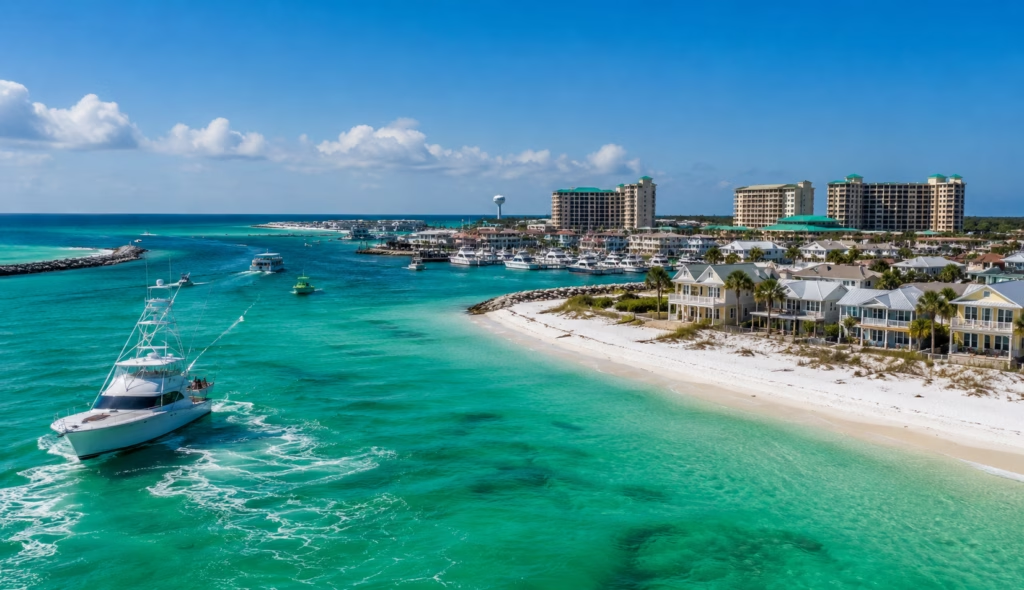
Destin is one of the strongest-known Gulf Coast vacation rental markets. Its beaches, fishing, boating, family travel, and established vacation infrastructure create a clear demand story. Guests looking for a Gulf Coast beach trip already understand the destination.
For investors, Destin may offer strong revenue potential, but it is rarely a low-cost market. The best opportunities may depend on buying the right property in the right micro-location and managing it at a professional level. Amenities, beach access, bedroom count, parking, pools, and design can all influence revenue. Insurance and storm exposure also need to be built into the investment model.
Galveston, Texas

Galveston offers Gulf Coast beach access, historic charm, cruise-related travel, regional tourism, events, and drive-to demand from Houston. It may appeal to investors who want a coastal market with a mix of beach, culture, and weekend travel.
The market can support a range of property types, from beach houses to historic homes closer to town. Investors should evaluate flood zones, insurance, maintenance exposure, and local STR rules before buying. A property that feels like a true coastal getaway may perform better than a generic rental that happens to be near the water.
Orange Beach, Alabama
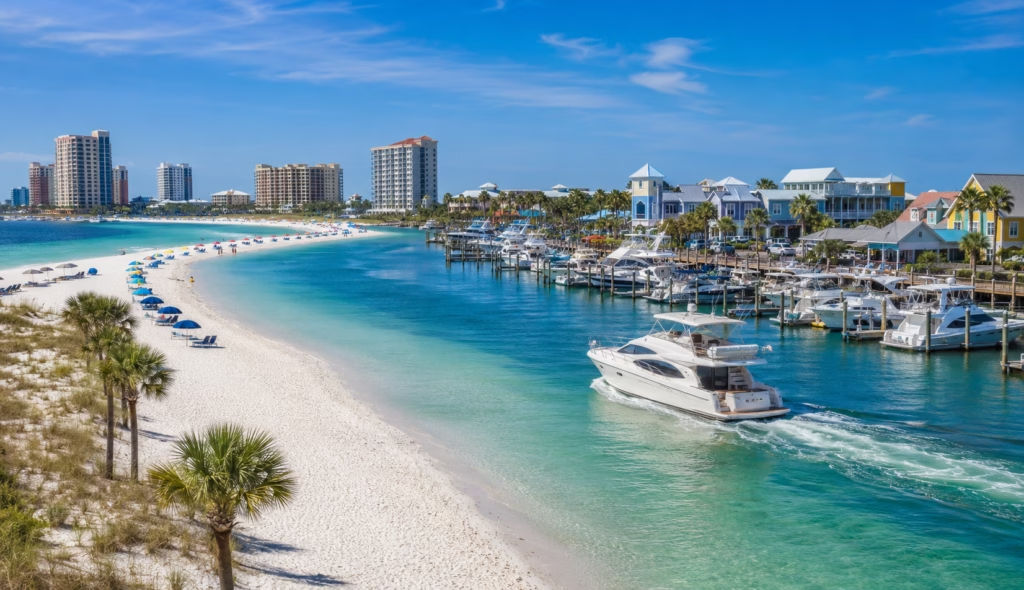
Orange Beach is a strong Gulf Coast leisure market with beaches, boating, fishing, water sports, restaurants, and family vacation demand. It shares some demand characteristics with other Gulf Coast markets but has its own identity as an Alabama beach destination.
For investors, Orange Beach may be attractive because guests are often specifically searching for beach-focused stays. Condos and vacation homes can both work, depending on location, amenities, and building rules. The main underwriting concerns are acquisition price, HOA costs, insurance, seasonality, and competition from professionally managed units.
Miami, Florida

Miami is not a simple market, but it belongs in a comprehensive short-term rental discussion because demand is so deep. Beaches, nightlife, business travel, international tourism, events, cruises, healthcare, luxury travel, and major sporting events can all contribute to lodging demand.
The issue is that Miami also carries higher complexity. Acquisition costs, building rules, local regulations, taxes, insurance, and neighborhood-level enforcement can change the investment case quickly. This is a market where investors need very specific local guidance before buying. Miami may reward experienced operators, but it is not an ideal market for investors who want a simple first STR purchase.
How Investors Should Compare These Markets
A useful way to compare these markets is to separate them into two groups. The first group includes emerging or under-the-radar markets such as Port Arthur, Abilene, Charleston, Springfield, Lake Charles, Montgomery, Akron, Lebanon, and Jackson. These markets may offer better entry prices and stronger yield potential, but they require careful demand validation.
The second group includes established vacation rental destinations such as Gatlinburg, Orlando, Kissimmee, Fredericksburg, Chattanooga, Myrtle Beach, Pinellas County, Destin, Galveston, Orange Beach, and Miami. These markets are easier for guests to understand, but they can come with higher prices, more competition, heavier regulation, and more professionalized operations.
Investors should compare each market across the following categories:
- Local STR legality and permit requirements
- Average purchase price
- Expected annual revenue
- Occupancy trends
- Average daily rate
- Revenue per available rental
- Seasonality
- Insurance and property tax costs
- Cleaning and labor availability
- Professional management options
- Guest demand drivers
- Competing hotel and STR supply
- Resale liquidity
Final Thoughts on STRs and Vacation Rentals
The best short term rental markets for investors in 2026 are not limited to famous beach towns or mountain resorts. Some of the most interesting opportunities are in smaller markets where business travel, government, healthcare, military, infrastructure, universities, and regional tourism create steady lodging demand.
That does not mean investors should ignore traditional vacation destinations. Markets such as Gatlinburg, Orlando, Kissimmee, Myrtle Beach, Destin, Galveston, Orange Beach, and Miami still offer powerful demand stories. However, they require careful underwriting because stronger demand often comes with higher prices, more competition, and more regulatory scrutiny.
The right market depends on the investor’s budget, risk tolerance, operating ability, financing terms, and property strategy. This list should be used as a research starting point. Before purchasing, investors should confirm local regulations, build a conservative pro forma, review comparable STR listings, understand insurance and tax costs, and stress-test the investment against lower occupancy or weaker nightly rates.
Are You Looking To Connect With Property Owners, Landlords, and Real Estate Investors?
Grow your business by connecting with property professionals with our cost-effective advertising options.

Dive deep into the world of real estate investment with this comprehensive case study that brings theory to life.
Investment Real Estate Analysis: A Case Study offers an unparalleled look at the decision-making process behind successful property investments.
Follow along as we dissect a real-world scenario, revealing the critical factors that seasoned investors consider before making a move.
From crunching numbers to assessing market conditions, this book walks you through every step of the analysis process. Learn how to evaluate potential investments like a pro, understanding key metrics such as cap rates, cash-on-cash returns, and internal rate of return.
Whether you’re a novice investor or looking to refine your skills, this case study will equip you with the tools to make informed investment decisions in the competitive real estate market.