Class B and C Property Conversion: A How-To Guide
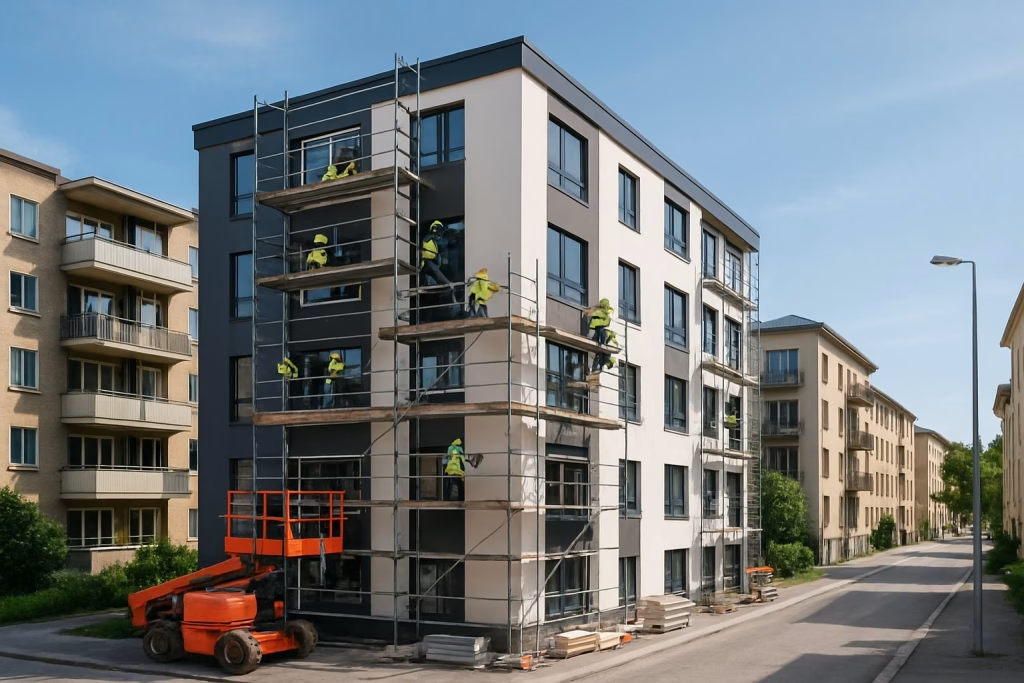
Converting older commercial properties into upgraded assets offers investors a pathway to higher returns in a competitive real estate market. Class B and C property conversions involve acquiring underperforming buildings and implementing strategic renovations to increase value, attract higher-quality tenants, and boost rental income. This strategy lets you purchase properties at lower prices and create equity through targeted improvements.
Understanding the differences between property classifications is essential for a successful conversion strategy. Class B properties are typically older buildings with lower income tenants that may need updates, while Class C properties are generally over 20 years old and located in less desirable areas with lower rental rates. These characteristics create opportunities for investors who can identify which improvements will generate the best returns.
The conversion process requires careful planning to balance renovation costs against potential income increases. You need to evaluate market conditions, assess tenant demand, and determine which upgrades will meaningfully improve your property’s classification and appeal to quality tenants.
Key Takeaways
- Converting Class B and C properties involves strategic renovations to increase value and attract better tenants
- Success depends on understanding commercial property management classifications and identifying cost-effective improvements
- Proper planning balances renovation expenses with potential rental income growth and appreciation
Class B and C Property Conversion Fundamentals
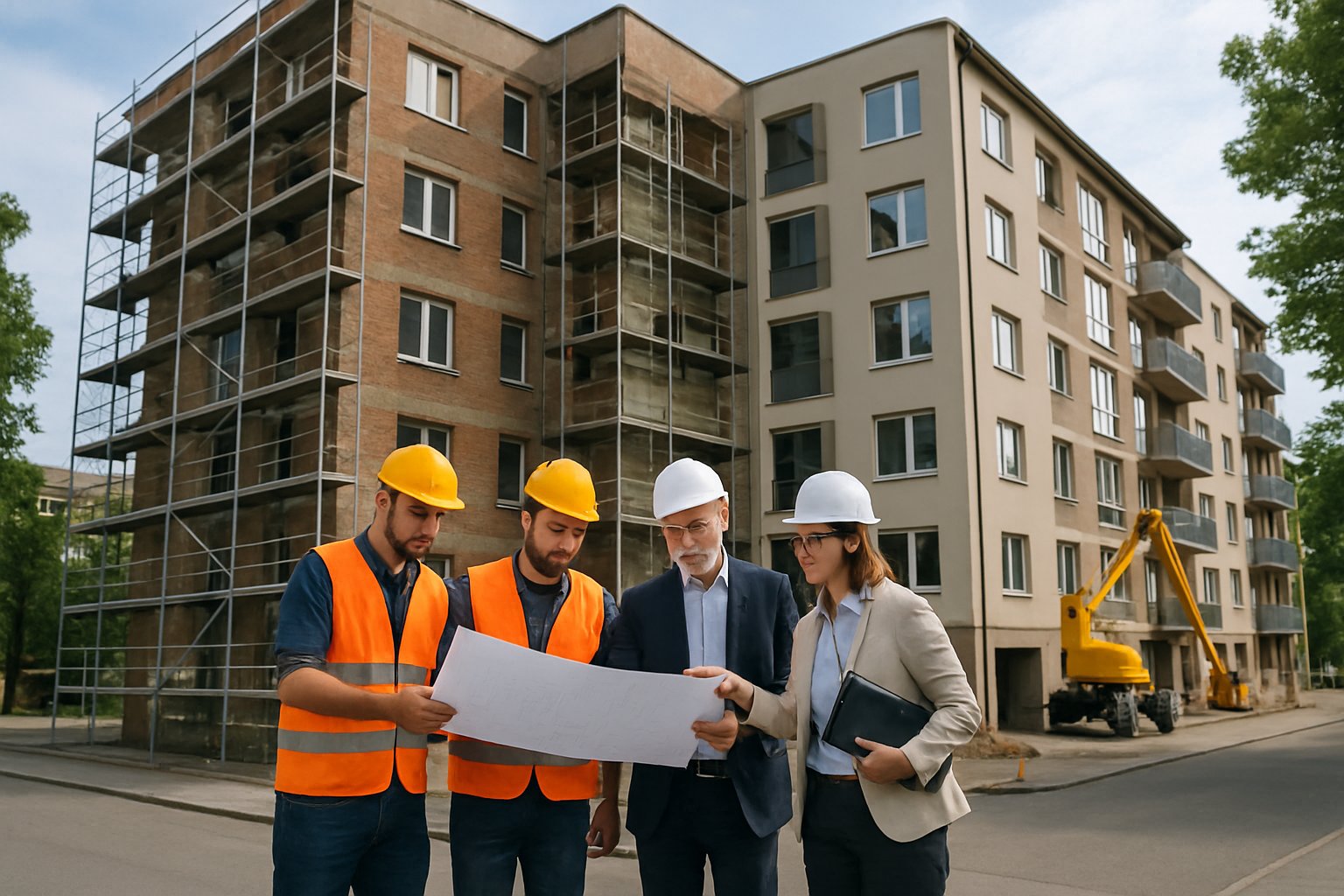
Property conversion upgrades lower-tier real estate assets to command higher rents and attract better tenants. You need to understand how property classifications work in commercial real estate and identify which improvements deliver the strongest returns on your investment capital.
Definition and Purpose of Class B and C Property Conversion
Class B and C property conversion refers to the strategic renovation and repositioning of older or underperforming assets to achieve a higher property classification. You purchase a lower-tier asset at a reduced price, implement targeted improvements, and increase its value through forced appreciation.
The primary purpose is to bridge the gap between acquisition cost and potential market value. When you convert class C properties into class B properties, you add amenities, update systems, and improve aesthetics to justify higher rental rates. Converting Class B properties into Class A status requires premium finishes and modern amenities that appeal to higher-income tenants.
This strategy appeals to value-add investors because it generates returns through both rental income increases and capital appreciation. You drive value through deliberate property improvements and operational enhancements, rather than relying solely on market forces.
Differences Between Class A, B, and C Properties
Recognizing the distinctions between Class A, B, and C properties helps you identify conversion opportunities and set renovation budgets that align with your investment objectives.
Class A Properties:
- Built within the last 10-15 years
- Premium locations with excellent access
- High-end finishes and modern amenities
- Attract six-figure earners as tenants
- Command highest rental rates in the market
Class B Properties:
- Typically 10-20 years old
- Good locations in middle-class neighborhoods
- Above-average finishes and standard amenities
- Appeal to cost-conscious professionals
- Offer moderate rental rates
Class C Properties:
- Often 20+ years old with deferred maintenance
- Working-class neighborhoods
- Basic finishes and limited amenities
- House lower-income tenant base
- Generate lowest rental income per unit
The classification system for property types varies by market. A building considered Class A in one city might rank as Class B in a more competitive market.
Role of Property Classifications in Real Estate Investment
Property classifications provide a risk-return framework for investment decisions. Each tier presents distinct risk profiles, capital requirements, and potential returns that support different investment strategies.
Class A properties require the highest capital outlays but offer stability through quality tenants and lower maintenance costs. You trade higher acquisition prices for predictable cash flows and fewer operational challenges.
Class B properties occupy the middle ground. They demonstrate resilience across economic cycles by attracting upwardly mobile renters during downturns and value-conscious professionals during expansions. Conversion strategies here focus on selective upgrades that justify rent increases without overimproving for the neighborhood.
Class C properties offer the lowest entry prices but require hands-on management and significant renovation capital. You face higher tenant turnover and maintenance costs, but the potential for forced appreciation is greatest. Converting these assets allows you to acquire properties at steep discounts and create value through systematic improvements.
Key Considerations and Strategies for Successful Conversion

Converting Class B and C properties requires attention to infrastructure needs, understanding how tenant demographics will shift, and analyzing financial metrics that determine project viability. These three areas form the foundation for transforming underperforming commercial assets into profitable residential investments.
Physical Upgrades and Infrastructure Improvements
Your conversion project will require substantial updates to building systems not designed for residential use. HVAC systems in office buildings typically operate on business-hour schedules, but residential tenants need 24/7 climate control in individual units. Replace centralized systems with unit-specific heating and cooling.
Plumbing presents another major challenge. Office space has minimal plumbing compared to residential units that require full kitchens and bathrooms. Install new water supply lines, waste lines, and upgrade the building’s main plumbing infrastructure to handle increased demand.
Elevators in older commercial buildings often fail to meet residential codes for frequency and capacity. Add elevators or modernize existing ones to accommodate resident traffic patterns. Class B and C office buildings require these upgrades to compete in residential markets.
Electrical systems need complete overhauls. Commercial buildings have different electrical loads than residential properties. Add circuits, panels, and upgrade service capacity to support kitchen appliances, washers, dryers, and individual unit needs.
Tenant Base Shifts and Rental Income Potential
Your tenant base will shift from corporate lessees to individual residents with different expectations and payment patterns. Office tenants typically sign multi-year leases with stable rental income streams, while residential tenants often prefer one-year terms with higher turnover potential.
Rental rates for converted properties depend on location and unit quality. You can command higher rental income in downtown areas where Class C buildings often sit, especially if you target young professionals seeking urban living. The tenant income requirements you set will determine your vacancy rates and collection consistency.
Shopping centers and traditional commercial real estate generate income through triple-net leases where tenants pay operating expenses. Residential conversions shift these costs to you as the landlord, changing your expense calculations. Factor utilities, maintenance, and common area upkeep into your rental rates.
Your marketing approach changes when targeting residential tenants instead of businesses. Compete with purpose-built apartments by offering amenities and finishes that meet current renter expectations in your market.
Financial Metrics: Cap Rates, Vacancy Rates, and Value Creation
Cap rates for converted properties typically range between 4% and 7%, depending on market conditions and building class. Class C buildings often have higher cap rates pre-conversion due to their distressed state, which creates opportunities for value creation through repositioning.
Key Financial Metrics to Track:
| Metric | Pre-Conversion | Post-Conversion Target |
|---|---|---|
| Cap Rate | 7-9% (office) | 4-7% (residential) |
| Vacancy Rate | 20-40% | 5-10% |
| Operating Expenses | 30-35% of NOI | 40-50% of NOI |
Converted buildings often stabilize at 5-10% vacancy after lease-up, compared to 20-40% vacancy in underperforming office assets. This reduction increases net operating income and property value.
Budget for 15-20% lower conversion costs compared to new construction, as conversions typically cost less than ground-up development. However, hidden infrastructure issues can erode these savings quickly if you skip thorough due diligence. Engage experienced contractors early and allocate contingency funds for unforeseen building system repairs.
Value creation relies on the spread between distressed commercial pricing and stabilized residential values. Calculate total project costs—including acquisition, renovation, carrying costs, and lease-up periods—against projected stabilized cash flows to assess conversion viability. Use conservative assumptions for rent growth and absorption to stress-test your pro forma.
Are You Looking To Connect With Property Owners, Landlords, and Real Estate Investors?
Grow your business by connecting with property professionals with our cost-effective advertising options.

Dive deep into the world of real estate investment with this comprehensive case study that brings theory to life.
Investment Real Estate Analysis: A Case Study offers an unparalleled look at the decision-making process behind successful property investments.
Follow along as we dissect a real-world scenario, revealing the critical factors that seasoned investors consider before making a move.
From crunching numbers to assessing market conditions, this book walks you through every step of the analysis process.
Learn how to evaluate potential investments like a pro, understanding key metrics such as cap rates, cash-on-cash returns, and internal rate of return.
Whether you’re a novice investor or looking to refine your skills, this case study will equip you with the tools to make informed investment decisions in the competitive real estate market.