Property Management Cost Benchmarking Guide
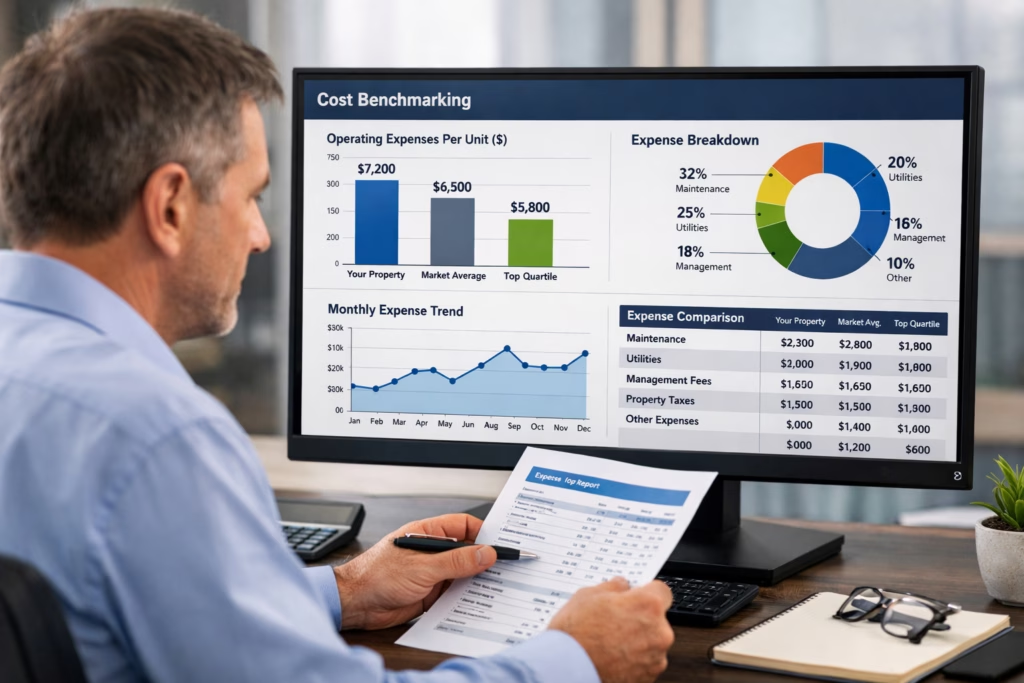
Understanding how your property management costs compare to industry standards is one of the most effective ways to improve performance and protect your bottom line. Property management cost benchmarking gives investors and operators a structured way to evaluate fees, identify inefficiencies, and make informed decisions that enhance long-term returns.
Whether you own a single rental or manage a larger portfolio, benchmarking introduces clarity. Instead of relying on assumptions about what is “typical,” you begin working with real data that reflects how your property is actually performing.
What Is Property Management Cost Benchmarking?
Property management cost benchmarking is the process of comparing your property’s operating expenses against industry averages or similar assets. The objective is not simply to reduce costs, but to understand whether those costs are aligned with performance and value.
In practice, benchmarking typically includes reviewing:
- Management fees
- Leasing and tenant placement costs
- Maintenance and repair expenses
- Administrative and overhead costs
- Vacancy-related losses
When evaluated together, these categories provide a comprehensive view of operational efficiency.
Why Benchmarking Matters
Many property owners accept management costs at face value, especially when working with established firms. Without reliable comparison data, however, it is difficult to determine whether those costs are competitive.
Benchmarking helps uncover inefficiencies that might otherwise go unnoticed. It also highlights areas where higher spending may be justified. For example, investing more in maintenance or tenant services can reduce turnover and vacancy, ultimately improving long-term returns.
The real advantage of benchmarking is that it supports proactive decision-making rather than reactive cost control.
Typical Property Management Cost Benchmarks

While exact figures vary by market, property type, and service level, there are widely accepted ranges that can serve as useful reference points.
- Residential management fees typically range from 8% to 12% of monthly rent
- Commercial management fees often fall between 4% and 8% of gross revenue
- Leasing fees are commonly 50% to 100% of one month’s rent
- Maintenance costs average 1% to 4% of property value annually
- Stabilized vacancy rates are often targeted at 5% to 10% annually
These benchmarks are not rigid rules, but they provide a baseline for evaluating whether your property’s performance is in line with expectations.
How to Benchmark Your Property Management Costs
The first step in benchmarking is gathering accurate and complete financial data. This includes organizing all expenses into clear categories and ensuring that your records are consistent and reliable.
Next, compare your data against credible industry sources. Organizations such as the Institute of Real Estate Management, the National Apartment Association, and the Urban Land Institute provide valuable research and benchmarking reports.
You can explore their resources here:
After gathering comparison data, normalize your figures to ensure meaningful analysis. This may involve adjusting for property size, location, and asset class so that you are comparing similar properties.
Once normalized, review your results carefully. Look for meaningful variances rather than minor differences. The goal is to identify areas where costs deviate significantly and determine whether those differences are justified.
Key Cost Drivers to Watch
Certain expense categories tend to have the greatest impact on overall performance. Paying close attention to these areas can help you identify opportunities for improvement.
- Maintenance and repairs: Unexpected spikes may indicate deferred maintenance or inefficient vendor management
- Tenant turnover: Higher turnover increases leasing costs, vacancy losses, and operational strain
- Management fees: Lower fees are not always better if they result in reduced service quality or oversight
Understanding how these drivers interact is essential for making informed decisions.
Turning Benchmark Insights Into Action
Benchmarking is only valuable if it leads to action. Once you have identified areas where costs exceed industry norms, the next step is to determine how those costs can be optimized.
In some cases, this may involve renegotiating management agreements or evaluating alternative service providers. In others, it may require investing more strategically in areas that drive long-term value, such as preventive maintenance or tenant retention initiatives.
The focus should always be on aligning cost with performance. Reducing expenses without considering impact can lead to unintended consequences, including higher turnover or declining property condition.
Making Benchmarking an Ongoing Process
Property management cost benchmarking should be part of a regular review cycle rather than a one-time exercise. Markets evolve, costs change, and property performance shifts over time.
Many investors benefit from reviewing their costs on a quarterly or annual basis. Tracking trends over time provides deeper insight than a single snapshot and allows for more effective long-term planning.
Technology can further support this process by simplifying data collection and reporting. With the right tools, benchmarking becomes an integrated part of property management rather than a separate task.
Are You Looking To Connect With Property Owners, Landlords, and Real Estate Investors?
Grow your business by connecting with property professionals with our cost-effective advertising options.

Master the art of real estate investing with The Real Estate Property Management Guide: Premium Edition – your comprehensive roadmap to successful property management.
Whether you’re a novice investor or seasoned professional, this guide covers everything from selecting the right investment properties to tenant management and property marketing.
The author, Jeff Rohde writing as Jeffrey Roark, is a professional with over 25 years of real estate experience.
This Premium Edition includes the valuable bonus book Investment Real Estate Analysis: A Case Study to help you identify hidden opportunities and evaluate properties like a professional.
Access practical, actionable strategies for both residential and commercial properties, from single-family homes to office buildings and shopping centers.