Rental Property Operating Expense Ratio Made Simple

When evaluating rental property investments, you need a reliable metric to measure operational efficiency. The operating expense ratio (OER) measures the cost to operate a rental property compared to the income it generates, calculated by dividing operating expenses minus depreciation by gross operating income. This ratio quantifies what percentage of rental income supports property operations.…
Read MoreHow to Remotely Manage Real Estate

Owning rental properties in different cities or states can expand your investment portfolio, but managing assets from afar requires effective systems to maintain property standards and tenant satisfaction. To manage rental properties remotely, build a reliable local team, automate routine tasks with technology, and establish clear communication channels with tenants and service providers. Managing property…
Read MoreNet Operating Income in Real Estate: The Definitive Guide

Understanding net operating income lets you measure whether a real estate asset delivers operational profit or erodes capital. Rather than focusing only on gross rents, experienced investors use NOI to evaluate true property performance after all operating expenses. This metric drives property valuations, shapes financing strategies, and highlights operational strengths and weaknesses. Net operating income…
Read MoreHarnessing the Power of Rental Market Data for Investors

Rental market data provides the foundation for evaluating potential investment properties by revealing rental rates, vacancy patterns, property values, and local market conditions that directly impact your return on investment. Without accurate data on what properties rent for in your target market, you risk acquiring assets that fail to meet your cash flow targets. Access…
Read MoreMortgage: How It Works Explained for Homebuyers and Owners

Buying a home represents one of the largest financial decisions in real estate. A mortgage is a loan from a lender that enables property acquisition by borrowing funds and repaying them over 15 to 30 years with interest, using the property as collateral. If borrowers default, lenders can take ownership through foreclosure. Understanding how mortgages…
Read MoreHome Inspection for Investment Property Secrets
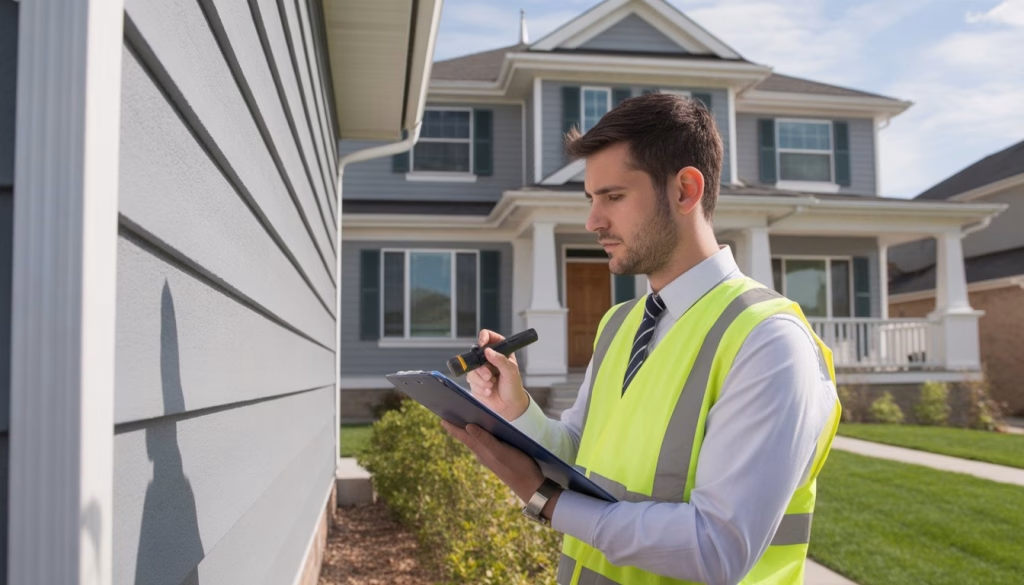
Buying an investment property without a thorough inspection exposes you to costly surprises that can diminish your returns. A comprehensive home inspection reveals the true condition of a property before you commit your capital, allowing you to avoid expensive repairs and negotiate a fair purchase price. For real estate investors, accurately calculating repair costs, estimating…
Read MoreForeclosure Cash Flow Analysis for Investors: Essential Strategies

Foreclosure properties offer substantial profit potential, but without thorough cash flow analysis, investors risk turning a perceived bargain into a financial liability. To analyze foreclosure cash flow, calculate your maximum offer as (After Repair Value × 0.70) – Repair Costs – Holding Costs – Profit Margin, then subtract all monthly expenses—including mortgage, taxes, insurance, maintenance,…
Read MoreWhat Is a Modified Gross Lease? CRE Guide

A modified gross lease is a commercial rental agreement where landlords and tenants share responsibility for operating expenses. Unlike traditional gross leases when landlords cover all costs or net leases where tenants bear most expenses, this hybrid approach splits costs like utilities, property taxes, and maintenance between both parties. In a modified gross lease, you…
Read More