Property Analysis
Can You Make Money in Wholesale Real Estate?

Wholesale real estate offers one of the lowest barriers to entry in property investing, enabling you to generate income without purchasing, renovating, or managing properties. Instead of buying real estate outright, you act as an intermediary, connecting motivated sellers with cash buyers and collecting a fee for facilitating the transaction. This strategy has gained traction…
Read MoreReview HOA Documents Due Diligence: A Buyer Guide

Purchasing property governed by a homeowners association requires a detailed examination of governing documents before committing to the investment. Thorough HOA due diligence involves reviewing financial statements, CC&Rs, bylaws, reserve studies, and meeting minutes to assess the association’s stability and identify potential red flags that could affect property value. This process protects investors and property…
Read MoreWhat is a Real Estate Tax Lien

When property taxes go unpaid, the local government places a legal claim—known as a real estate tax lien—against the asset. A property tax lien attaches directly to the property and authorizes the government to collect the unpaid debt, including interest and penalties, which can exceed 40% of the original tax bill within the first year.…
Read MoreRental Property Operating Expense Ratio Made Simple

When evaluating rental property investments, you need a reliable metric to measure operational efficiency. The operating expense ratio (OER) measures the cost to operate a rental property compared to the income it generates, calculated by dividing operating expenses minus depreciation by gross operating income. This ratio quantifies what percentage of rental income supports property operations.…
Read MoreNet Operating Income in Real Estate: The Definitive Guide

Understanding net operating income lets you measure whether a real estate asset delivers operational profit or erodes capital. Rather than focusing only on gross rents, experienced investors use NOI to evaluate true property performance after all operating expenses. This metric drives property valuations, shapes financing strategies, and highlights operational strengths and weaknesses. Net operating income…
Read MoreHome Inspection for Investment Property Secrets
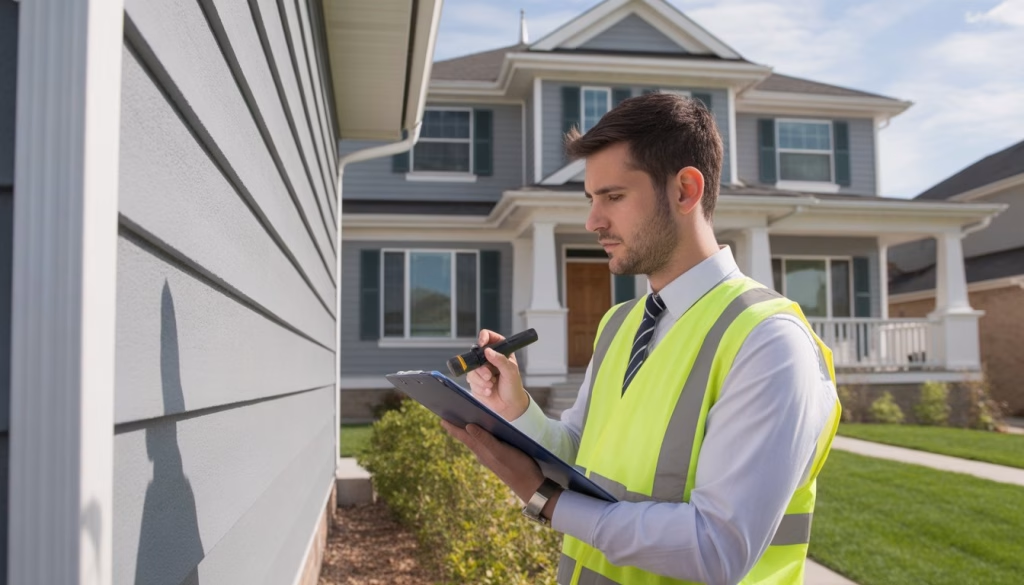
Buying an investment property without a thorough inspection exposes you to costly surprises that can diminish your returns. A comprehensive home inspection reveals the true condition of a property before you commit your capital, allowing you to avoid expensive repairs and negotiate a fair purchase price. For real estate investors, accurately calculating repair costs, estimating…
Read MoreForeclosure Cash Flow Analysis for Investors: Essential Strategies

Foreclosure properties offer substantial profit potential, but without thorough cash flow analysis, investors risk turning a perceived bargain into a financial liability. To analyze foreclosure cash flow, calculate your maximum offer as (After Repair Value × 0.70) – Repair Costs – Holding Costs – Profit Margin, then subtract all monthly expenses—including mortgage, taxes, insurance, maintenance,…
Read MoreOptimizing Foreclosure Flipping Timelines for Profit

Flipping foreclosed properties requires careful attention to timing, as delays quickly erode profit margins through holding costs and extended financing. Most successful foreclosure flips are completed within 8 to 12 weeks from acquisition to sale, though the exact timeline depends on property condition, renovation scope, and local market dynamics. Understanding each phase of this process…
Read MoreForeclosure Property Staging for Maximum Profit

Foreclosure properties present unique challenges in the real estate market, but proper staging can transform these distressed assets into attractive homes that sell quickly and command better prices. Staging a foreclosure property involves strategically furnishing and decorating an empty or poorly maintained space to help potential buyers visualize themselves living there, which can reduce time…
Read MoreAccurate Foreclosure Property Valuation Methods

Foreclosure property valuation requires specialized methodologies distinct from traditional real estate appraisals. When evaluating distressed properties, adjust standard valuation approaches to account for limited access, property condition issues, and market stigma. Foreclosed homes typically sell for less than their estimated market value, with the discount varying significantly by region and property condition. Understanding this valuation…
Read MoreCommercial Foreclosure Investing for Beginners

Commercial foreclosure investing enables investors to acquire valuable properties at below-market prices when owners default on mortgage obligations. These distressed assets offer unique opportunities but require specialized knowledge of the foreclosure process, market analysis, and legal considerations that differ from traditional real estate investments. Commercial foreclosures can provide substantial returns for investors who know how…
Read More