Financing
What Is Fix-and-Flip Real Estate Investing?

Fix-and-flip real estate investing remains a popular strategy for generating quick profits in real estate. Fix-and-flip investing involves purchasing distressed properties at below-market prices, renovating them to increase their value, and selling them quickly for a profit. This approach attracts investors seeking substantial returns within a shorter timeframe compared to traditional buy-and-hold strategies. Television shows…
Read MoreYour Guide to Financing a Foreclosure Purchase

Buying a foreclosed home can offer significant savings, but securing financing requires preparation and a clear understanding of your options. If a foreclosed property is in decent condition and you have a strong credit history, financing can work like a traditional home purchase. The key is to identify which loan products best suit foreclosure purchases…
Read MoreUsing the BRRRR Method with Foreclosures for Your Portfolio
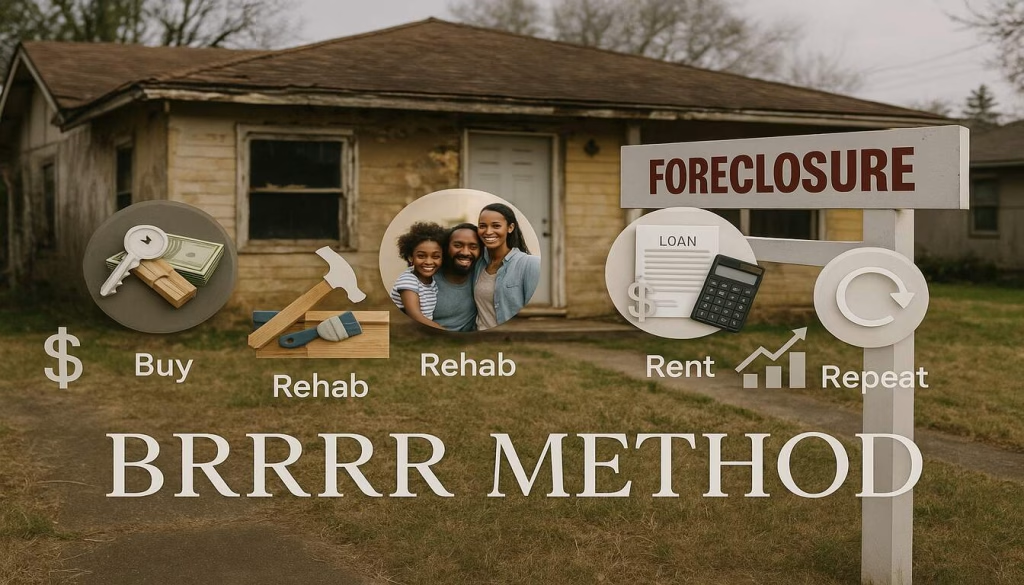
Real estate investors are always looking for new ways to build their portfolios. The BRRRR method is a popular strategy for acquiring and growing a rental portfolio. When combined with purchasing foreclosed properties, it can be a powerful combination. This article will explore how to use the BRRRR method with foreclosures. We will cover the…
Read MoreReal Estate Equity: Key Concepts, Investment Methods & Value

Real estate equity represents the portion of a property you actually own after subtracting any outstanding mortgage debt from its current market value. Real estate equity is calculated as the difference between your property’s market value and your outstanding mortgage balance, representing your true ownership stake in the property. This financial concept forms the foundation…
Read MoreA Beginner’s Guide to REO Properties Investing

Real Estate Owned (REO) properties are bank-owned properties that failed to sell at foreclosure auctions, creating unique investment opportunities for buyers seeking discounted assets. Lenders often offer these properties at significant discounts to quickly convert non-performing assets into cash. REO properties can offer substantial profit margins because they are frequently priced below market value, giving…
Read MoreHow to Qualify for VA Mortgages

VA mortgages offer qualifying veterans, service members, and surviving spouses a path to homeownership with significant financial advantages. These government-backed loans remove many traditional barriers that prevent military families from purchasing homes. VA home loans require no down payment and don’t require private mortgage insurance, making homeownership more accessible and affordable for those who served.…
Read MoreUnderstanding CRE Conduit Spreads

Commercial real estate conduit spread represents the difference between the yield on commercial mortgage-backed securities and a benchmark rate, typically Treasury bonds. This spread serves as a critical indicator of investor confidence and risk appetite in the commercial real estate financing market. Understanding these spreads helps investors and lenders gauge market conditions and pricing for…
Read MoreReal Estate Escrow: A Step-by-Step Guide

Real estate escrow is a straightforward process that protects both buyers and sellers during property transactions. Escrow is a financial arrangement where a neutral third party holds funds or assets on behalf of two parties involved in a real estate deal until all conditions are met. When you buy or sell a home, an escrow…
Read MoreA Guide to Understanding CRE Loan Spreads

Commercial real estate loan spreads represent the difference between the interest rate charged on CRE loans and a benchmark rate, typically Treasury securities or LIBOR. These spreads serve as a critical pricing mechanism that reflects perceived risk, market conditions, and lender competition in commercial real estate financing. CRE loan spreads have widened significantly in recent…
Read MoreThe Ins and Outs of Earnest Money in Real Estate

When making an offer on a property, buyers submit earnest money to show serious intent to purchase, usually ranging from 1% to 5% of the purchase price. Earnest money is a deposit that signals commitment to a transaction and provides financial assurance to sellers. This good faith deposit in real estate transactions demonstrates that buyers…
Read MoreDown Payment in Real Estate: Key Facts for Buyers

Buying a home represents one of the largest financial decisions you’ll make, and understanding the down payment requirement is crucial for success. A down payment is cash you pay at closing to take ownership of a house, typically ranging from 3-20% of the purchase price. This upfront investment directly impacts your mortgage terms, monthly payments,…
Read More